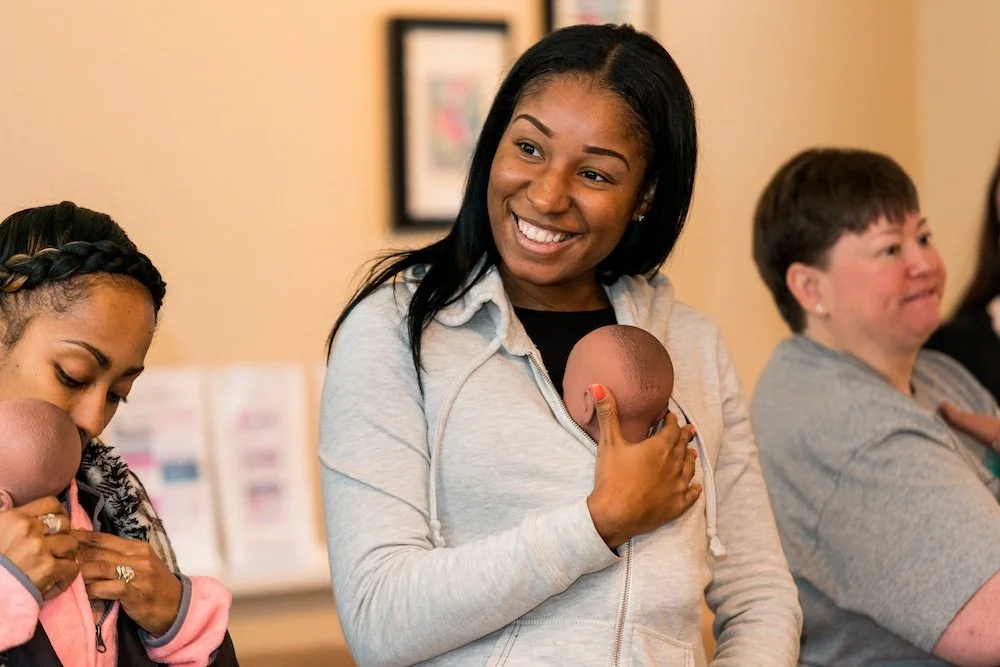
Childbirth Educator Certification Course
Learn to teach evidence-based childbirth classes and support expectant parents. Study at your own pace and earn your Certified Childbirth Educator (CCE) credential.
One payment. Lifetime access. No hidden fees.
- Accredited by ICPCAS
- 100% online and self-paced
- Job placement with our partner BornBir
- 24/7 teacher support
- Certificate verifiable via VeriForward™
- Evidence-based curriculum
- Mentors and educators worldwide
- No degree or teaching background needed
-
-
Lesson 1.0: Course Overview — Welcome to Childbirth Education
This overview introduces the Childbirth Educator Certification course and gives you a clear picture of what to expect. You’ll learn how the course is organized, what topics you’ll cover, and how this training helps prepare you to support families through pregnancy, birth, and early postpartum education.
This overview introduces the Childbirth Educator Certification course and gives you a clear picture of what to expect. You’ll learn how the course is organized, what topics you’ll cover, and how this training helps prepare you to support families through pregnancy, birth, and early postpartum education.
-
Lesson 1.1: The Role of a Childbirth Educator
This lesson introduces the purpose and responsibilities of childbirth educators. You’ll learn what makes this role unique, how educators build trust with families, and why cultural sensitivity and clear communication are essential. We’ll also talk about how educators work alongside other professionals in birth and postpartum care.
This lesson introduces the purpose and responsibilities of childbirth educators. You’ll learn what makes this role unique, how educators build trust with families, and why cultural sensitivity and clear communication are essential. We’ll also talk about how educators work alongside other professionals in birth and postpartum care.
-
Lesson 1.2: Overview of Pregnancy and Birth Around the World
Birth looks different around the world. In this lesson, we’ll explore how cultural traditions, medical systems, and personal values shape the pregnancy and birth experience. You’ll gain insight into global trends in birth outcomes and learn how informed decision-making can vary depending on access, education, and support.
Birth looks different around the world. In this lesson, we’ll explore how cultural traditions, medical systems, and personal values shape the pregnancy and birth experience. You’ll gain insight into global trends in birth outcomes and learn how informed decision-making can vary depending on access, education, and support.
-
Lesson 1.3: Adult Learning Principles and Teaching Strategies
Teaching adults requires different strategies than teaching children. This lesson covers how adults learn best, how to engage different learning styles, and how to create a class environment that’s inclusive, respectful, and effective for a wide range of participants.
Teaching adults requires different strategies than teaching children. This lesson covers how adults learn best, how to engage different learning styles, and how to create a class environment that’s inclusive, respectful, and effective for a wide range of participants.
-
-
-
Lesson 2.1: Pregnancy Anatomy and Fetal Development
We start with the basics of how pregnancy works—how the body changes, how the baby develops, and how hormones prepare the body for birth. You’ll also hear how different cultures view and support pregnancy, which can help you better connect with the families you teach.
We start with the basics of how pregnancy works—how the body changes, how the baby develops, and how hormones prepare the body for birth. You’ll also hear how different cultures view and support pregnancy, which can help you better connect with the families you teach.
-
Lesson 2.2: The Stages of Labor and Birth
This lesson walks you through the stages of labor, from early contractions to the delivery of the baby and placenta. We’ll talk about the signs of labor, common experiences, and how labor support may differ depending on where and how a person gives birth.
This lesson walks you through the stages of labor, from early contractions to the delivery of the baby and placenta. We’ll talk about the signs of labor, common experiences, and how labor support may differ depending on where and how a person gives birth.
-
Lesson 2.3: Variations and Interventions in Labor
Not every labor goes according to plan. Here, you’ll learn about common variations—like long labors, fast births, or when labor stalls—and explore the interventions that might be recommended. You’ll also gain tools to help families weigh their options and make informed, confident choices.
Not every labor goes according to plan. Here, you’ll learn about common variations—like long labors, fast births, or when labor stalls—and explore the interventions that might be recommended. You’ll also gain tools to help families weigh their options and make informed, confident choices.
-
-
-
Lesson 3.1: Non-Pharmacological Pain Relief
There are many ways to manage labor pain without medication. This lesson introduces comfort techniques like breathing, movement, massage, and water immersion. You’ll also explore traditional practices from around the world and how to present them respectfully and effectively.
There are many ways to manage labor pain without medication. This lesson introduces comfort techniques like breathing, movement, massage, and water immersion. You’ll also explore traditional practices from around the world and how to present them respectfully and effectively.
-
Lesson 3.2: Partner Support and the Birth Team
Labor support isn’t just about the educator—it’s also about partners, doulas, family, and friends. In this lesson, you’ll learn how to coach support people so they feel confident and helpful, and how to recognize cultural and family dynamics that may shape their role.
Labor support isn’t just about the educator—it’s also about partners, doulas, family, and friends. In this lesson, you’ll learn how to coach support people so they feel confident and helpful, and how to recognize cultural and family dynamics that may shape their role.
-
Lesson 3.3: Medical Pain Management Options
From epidurals to IV pain meds, families have choices when it comes to managing labor pain with medication. This lesson helps you explain how those options work, their pros and cons, and how to support informed, respectful conversations with care providers.
From epidurals to IV pain meds, families have choices when it comes to managing labor pain with medication. This lesson helps you explain how those options work, their pros and cons, and how to support informed, respectful conversations with care providers.
-
-
-
Lesson 4.1: Cultural Competency in Childbirth Education
Every family brings their own traditions, beliefs, and values into the birth space. This lesson helps you recognize cultural influences on birth, use inclusive language, and adapt your teaching so it feels welcoming and relevant to everyone.
Every family brings their own traditions, beliefs, and values into the birth space. This lesson helps you recognize cultural influences on birth, use inclusive language, and adapt your teaching so it feels welcoming and relevant to everyone.
-
Lesson 4.2: Trauma-Informed Approaches to Birth Education
Some families come to birth classes with past trauma—from medical experiences to birth or personal trauma. You’ll learn how to create a safe, supportive classroom, avoid triggering language, and teach in a way that respects emotional boundaries.
Some families come to birth classes with past trauma—from medical experiences to birth or personal trauma. You’ll learn how to create a safe, supportive classroom, avoid triggering language, and teach in a way that respects emotional boundaries.
-
Lesson 4.3: Serving LGBTQ+, BIPOC, and Disabled Families
Childbirth education must be accessible and affirming for all. In this lesson, we focus on how to support families who may face systemic bias, discrimination, or health disparities. You’ll learn how to use inclusive visuals and language, and how to make your classes truly welcoming.
Childbirth education must be accessible and affirming for all. In this lesson, we focus on how to support families who may face systemic bias, discrimination, or health disparities. You’ll learn how to use inclusive visuals and language, and how to make your classes truly welcoming.
-
-
-
Lesson 5.1: Designing a Childbirth Education Curriculum
This lesson walks you through how to plan and structure your classes—from one-time workshops to multi-session series. You’ll learn how to create lesson plans, activities, and handouts that work for different learning environments and communities.
This lesson walks you through how to plan and structure your classes—from one-time workshops to multi-session series. You’ll learn how to create lesson plans, activities, and handouts that work for different learning environments and communities.
-
Lesson 5.2: Legal, Insurance, and Documentation Essentials
Running a childbirth education business comes with responsibilities. We’ll cover the basics of protecting yourself legally, including liability insurance, client agreements, and how to keep clear records. We’ll also touch on working with hospitals and community clinics.
Running a childbirth education business comes with responsibilities. We’ll cover the basics of protecting yourself legally, including liability insurance, client agreements, and how to keep clear records. We’ll also touch on working with hospitals and community clinics.
-
Lesson 5.3: Marketing and Growing Your Birth Education Practice
Whether you want to teach locally or offer online classes around the world, this lesson helps you build a plan. You’ll learn how to market your services, build relationships with other professionals, and grow your practice in a way that aligns with your values.
Whether you want to teach locally or offer online classes around the world, this lesson helps you build a plan. You’ll learn how to market your services, build relationships with other professionals, and grow your practice in a way that aligns with your values.
-
-
-
Step 1: Final Exam (30 min)
Complete a 30-minute final exam to assess your understanding of childbirth education topics, including labor support strategies, inclusive teaching practices, anatomy and physiology, curriculum design, and ethical guidelines for working with expectant families.
Complete a 30-minute final exam to assess your understanding of childbirth education topics, including labor support strategies, inclusive teaching practices, anatomy and physiology, curriculum design, and ethical guidelines for working with expectant families.
-
Step 2: Practical Skills Evaluation (1 hr)
Assess practical competence in educating and supporting expectant families, including delivering evidence-based information on pregnancy and birth, fostering inclusive and trauma-informed learning environments, promoting informed decision-making, and modeling professional, ethical care.
Assess practical competence in educating and supporting expectant families, including delivering evidence-based information on pregnancy and birth, fostering inclusive and trauma-informed learning environments, promoting informed decision-making, and modeling professional, ethical care.
-
Step 3.1: Interview Assignment (1 hr)
As part of the Childbirth Educator certification process, you are required to complete two recorded interviews: one with a certified childbirth educator and one with a parent or caregiver who has recently attended a childbirth class. These interviews are designed to help you gain diverse, real-world insights into birth education practices and family experiences. You will also strengthen your professional communication skills while upholding confidentiality and ethical standards.
As part of the Childbirth Educator certification process, you are required to complete two recorded interviews: one with a certified childbirth educator and one with a parent or caregiver who has recently attended a childbirth class. These interviews are designed to help you gain diverse, real-world insights into birth education practices and family experiences. You will also strengthen your professional communication skills while upholding confidentiality and ethical standards.
-
Step 3.2: Optional Guided Interview Pathway (1 hr)
No connections? No problem. The Optional Guided Interview Pathway pairs you with two experienced mentors in your field through warm introductions arranged by our team. You’ll get the chance to learn real-world skills, ask meaningful questions, and practice professional communication in a supportive setting. These guided interviews count toward your certification requirement and give you the confidence and connections to grow in your career.
No connections? No problem. The Optional Guided Interview Pathway pairs you with two experienced mentors in your field through warm introductions arranged by our team. You’ll get the chance to learn real-world skills, ask meaningful questions, and practice professional communication in a supportive setting. These guided interviews count toward your certification requirement and give you the confidence and connections to grow in your career.
-
Step 3.3: Interview Critique Form
You’ll submit one Interview Critique Form completed by the professional you interviewed. This form provides feedback on your strengths, areas for growth, and confirms your professionalism and communication skills during the interview process.
You’ll submit one Interview Critique Form completed by the professional you interviewed. This form provides feedback on your strengths, areas for growth, and confirms your professionalism and communication skills during the interview process.
-
Step 4: Recommendation Letters
For the Childbirth Educator certification, you must submit two recommendation letters from individuals who can attest to your professionalism, communication skills, and readiness for this role—such as employers, mentors, colleagues, clients, friends, or family members.
For the Childbirth Educator certification, you must submit two recommendation letters from individuals who can attest to your professionalism, communication skills, and readiness for this role—such as employers, mentors, colleagues, clients, friends, or family members.
-
Step 5: Certification Award (3-5 Business Days)
After completing all course requirements, your materials will be reviewed. Within 3–5 business days, you’ll receive your official Certified Childbirth Educator digital certificate and unique certification ID, confirming your credential: CCE (DNT Network).
After completing all course requirements, your materials will be reviewed. Within 3–5 business days, you’ll receive your official Certified Childbirth Educator digital certificate and unique certification ID, confirming your credential: CCE (DNT Network).
-
Why students choose DNT Network
Certified educators on what the course was like and what it changed for them.
Where education meets empathy
Morgan, a DNT Network certified Childbirth Educator, on why the trauma-informed approach stood out: learning to support joyful births and also families living with fear, hardship and past trauma.
“I never thought I could afford to become a certified childbirth educator—other programs are well over $1,000. DNT Network made it possible for me to start this career without going into debt.”Erica M.
“This course was packed with evidence-based strategies and real-world tools I can actually use in class. I didn’t have to choose between quality and affordability—DNT delivers both.”Sasha R.
“DNT is changing the game. With lifetime access, no hidden fees, and a price that reflects access over privilege, I felt fully empowered to train on my own time and terms. No gatekeeping, just opportunity.”Denise L.
Trusted and approved by Medicaid, Carrot and insurance partners
Health plans, benefit programs and employers that recognize DNT Network certification.




What you'll learn, module by module
Five modules, 16 lessons, 60 learning hours. Pick a module to see what's inside.
60 learning hours in total. Every module ends with an assessment.

Foundations of Childbirth Education
What a childbirth educator does, how birth differs around the world, and how adults learn.
- 1.0Course overview: welcome to childbirth education Free preview
- 1.1The role of a childbirth educator
- 1.2Pregnancy and birth around the world
- 1.3Adult learning principles and teaching strategies

Anatomy, Physiology and the Birth Process
How pregnancy works, what happens in each stage of labor, and what to explain when labor doesn't go to plan.
- 2.1Pregnancy anatomy and fetal development
- 2.2The stages of labor and birth
- 2.3Variations and interventions in labor

Evidence-Based Comfort Measures
Breathing, movement, massage and water, how to coach partners, and how to explain medical pain relief fairly.
- 3.1Non-pharmacological pain relief
- 3.2Partner support and the birth team
- 3.3Medical pain management options

Teaching Inclusive and Trauma-Informed Classes
Make every family feel welcome and safe, including those carrying past trauma or facing bias in care.
- 4.1Cultural competency in childbirth education
- 4.2Trauma-informed approaches to birth education
- 4.3Serving LGBTQ+, BIPOC and disabled families

Curriculum Design and Business Setup
Plan your own classes, protect yourself legally, and find your first families, locally or online.
- 5.1Designing a childbirth education curriculum
- 5.2Legal, insurance and documentation essentials
- 5.3Marketing and growing your practice

Show what you can do
An exam, a practical evaluation, two interviews and two recommendation letters, then your certificate.
- 1Final exam, 30 minutes
- 2Practical skills evaluation, 1 hour
- 3Two recorded interviews, or the guided mentor pathway
- 4Two recommendation letters
- 5Certificate awarded in 3–5 business days
Try a technique you'll teach
Slow, paced breathing is one of the first comfort measures in Lesson 3.1. Follow the circle for three breaths, the way you would guide a class through it.
In for 4 seconds, out for 6. Takes 30 seconds.
How you earn the certificate
After the five modules, the final assessment has five parts. No contacts in the field yet? We'll introduce you to two mentors for your interviews.

Final exam
Covers labor support, anatomy, inclusive teaching, curriculum design and ethics.

Practical skills
Show you can teach evidence-based content in a safe, inclusive way.

Two interviews
Talk with a certified educator and a recent class parent, or take the guided mentor pathway.

Two letters
Recommendations from people who know your professionalism, such as employers, mentors or clients.

Your certificate
Digital certificate and unique certification ID: CCE (DNT Network).
DNT Network next to other programs
The same credential path, for one payment that covers the course, the certificate and everything after it.
Other programs differ from one another. Compare the details of any course before you enroll.
Start in three steps
No application, no waiting list, no degree required. You can open the first lesson today.

Enroll
Sign up and get instant access to every lesson and certification requirement, on any device.
About 2 minutes
Learn
Work through five self-paced modules with lessons, videos and quizzes. Teachers answer questions 24/7.
60 learning hoursCertify
Pass the final assessment and receive your digital certificate and certification ID. No hidden fees.
Awarded in 3–5 business daysFAQs
Answers to what people ask before they enroll.
Yes, the $249 fee is all you’ll pay—and it covers everything: full access to our comprehensive training, final assessment, and official certification through the DNT Network.
Unlike many programs that charge $1,200–$1,500 upfront—plus extra for registration, textbooks, or re-certification—we don’t believe in hidden fees or gatekeeping. Our mission is to intentionally keep fees affordable, breaking down financial barriers so more people can access maternal care and caregiving education.
With DNT Network, you can focus on learning, growing, and getting certified—without worrying about surprise costs.
Yes. You are welcome to enroll even if English is not your primary language. Our team currently supports learners in many widely spoken languages and can provide guidance throughout your certification process.
We commonly support learners in:
- Spanish (Español)
- Mandarin Chinese (中文 – 普通话)
- Hindi (हिन्दी)
- Arabic (العربية)
- Bengali (বাংলা)
- Portuguese (Português)
- Russian (Русский)
- Japanese (日本語)
- Punjabi (ਪੰਜਾਬੀ)
- German (Deutsch)
- Javanese (Basa Jawa)
- Wu Chinese (吴语)
- Korean (한국어)
- French (Français)
- Telugu (తెలుగు)
- Marathi (मराठी)
- Tamil (தமிழ்)
- Turkish (Türkçe)
- Vietnamese (Tiếng Việt)
- Urdu (اردو)
- Italian (Italiano)
- Thai (ภาษาไทย)
- Gujarati (ગુજરાતી)
- Polish (Polski)
- Ukrainian (Українська)
- Persian / Farsi (فارسی)
- Malay (Bahasa Melayu)
- Indonesian (Bahasa Indonesia)
- Romanian (Română)
- Dutch (Nederlands)
If you need to complete interviews or written assignments in another language, please contact our support team—we’re happy to work with you.
Our course offers comprehensive training that covers everything from pregnancy and the stages of labor to comfort measures, informed decision-making, teaching strategies, and postpartum education. You’ll gain access to interactive lessons, video tutorials, evidence-based tools, and real-life teaching scenarios. A dedicated support team is also available to help you grow your skills with confidence and care.
The course is self-paced, allowing you to move through the modules at your convenience. On average, students complete the training in 3–4 weeks, but you can finish faster or take more time depending on your schedule.
Once you’ve completed all course requirements, you can submit your materials for review at any time. The review and approval process typically takes 3-5 business days, after which you’ll receive your official certification.
We believe quality training should be affordable. Some childbirth educator certification programs cost over $1,000, often with additional fees for materials or certification. At DNT Network, our $249 program includes everything you need to complete your training and earn your certification.
Because our courses are fully online and self-paced (with optional live 1:1 mentor and guidance), we can keep operating costs low and pass those savings on to our students. You still receive comprehensive, evidence-based training developed by experienced professionals, with no hidden fees and lifetime access to your course materials.
Yes. DNT Network offers bundle options that can help you save significantly—often more than 50% compared to enrolling individually.
If you’re interested in combining 2–4 certifications (or more), you can view our current bundle options and pricing here: dntnetwork.com/pricing
Bundles are a great option for professionals who want to build complementary skills across birth, postpartum, newborn care, lactation, and more.
Families near you are looking for a good class. Teach it.
Start today, study when it suits you, and keep your course and credential for life.
Join Us Today!