Module 1: Foundations of End-of-Life Doula Work — 10 Hours
Topics Covered:
Why End-of-Life Doulas Matter
○ Understand why end-of-life doulas are needed during the dying process.○ Explore how they help ease fear, uncertainty, and emotional stress for individuals and families.
What an End-of-Life Doula Does
○ Learn how doulas provide presence, emotional support, comfort, and guidance.○ See how they support planning conversations, bedside care, legacy work, and family needs.
How Doulas Fit Into the Care Team
○ Clarify how end-of-life doulas are different from hospice staff, nurses, chaplains, social workers, and caregivers.○ Understand how doulas work alongside other professionals by adding non-medical, personal support.
IN THIS LESSON

DNT Network · Certified End-of-Life Doula Training
The Purpose of End-of-Life Doula Care
In the news
When actress Nicole Kidman publicly announced she was studying to become a death doula, the headlines rippled far beyond celebrity tabloids. Journalists, hospice workers, and curious readers all asked the same question: What exactly is a death doula? The fact that a global public figure found this calling compelling enough to pursue tells us something important — the world is waking up to the idea that dying deserves the same human care and intention that we give to birth. This lesson is your introduction to that idea, and to the profession you are beginning to explore.
When actress Nicole Kidman publicly announced she was studying to become a death doula, the headlines rippled far beyond celebrity tabloids. Journalists, hospice workers, and curious readers all asked the same question: What exactly is a death doula? The fact that a global public figure found this calling compelling enough to pursue tells us something important — the world is waking up to the idea that dying deserves the same human care and intention that we give to birth. This lesson is your introduction to that idea, and to the profession you are beginning to explore.
Why This Role Exists
Death is one of the few guaranteed experiences of human life, yet most of us arrive at it underprepared — emotionally, practically, and spiritually. Over the past century, dying moved out of homes and into hospitals. That shift brought enormous medical advances, but it also stripped away something essential: the quiet, human-centered accompaniment that communities once offered naturally to those who were leaving.
Physicians, nurses, and hospice teams do extraordinary work. But they operate under real constraints — packed caseloads, clinical documentation requirements, and systems that measure outcomes in vital signs and medication adjustments. What they rarely have time to offer is two hours sitting beside someone who needs to talk about regrets, or a patient presence during a night when fear and uncertainty feel unbearable.
End-of-life doulas exist to fill exactly that space.
Meet Ellen & Michaela — A Scenario in Practice
Ellen, a 69-year-old woman with late-stage ALS, has elected to remain at home with hospice support. Her medical team manages her symptom care expertly. But Ellen is afraid — of being forgotten, of leaving things unsaid, of the long quiet hours between nurse visits.
Her doula, Michaela, visits daily — not to provide clinical care, but to help Ellen record voice messages for her grandchildren, light candles during visits, and facilitate gentle conversations between Ellen and her estranged sister about unresolved memories that have weighed on them both for years.
Michaela's steady, unhurried presence brings emotional comfort that medical providers simply don't have the time or specialized training to offer. Ellen reports, for the first time in months, feeling genuinely accompanied.
Her doula, Michaela, visits daily — not to provide clinical care, but to help Ellen record voice messages for her grandchildren, light candles during visits, and facilitate gentle conversations between Ellen and her estranged sister about unresolved memories that have weighed on them both for years.
Michaela's steady, unhurried presence brings emotional comfort that medical providers simply don't have the time or specialized training to offer. Ellen reports, for the first time in months, feeling genuinely accompanied.
Ellen's situation isn't unusual. Research consistently shows that the dying and their families experience unmet needs in the emotional, spiritual, and psychosocial dimensions of care — the very dimensions that an end-of-life doula is specifically trained to address (Rawlings et al., 2019).
What Fear, Uncertainty, and Isolation Actually Look Like
To understand why the doula role matters, it helps to name the specific human experiences that so often go unaddressed at the end of life. These aren't abstract concepts — they show up in real, recognizable ways.
Fear
Fear of pain, of loss of control, of what (if anything) comes after. Sometimes fear of being a burden. Often hardest to voice aloud to a loved one.
Uncertainty
Not knowing timelines, what the body will do, whether decisions made were right. Families feel it just as deeply as the dying person.
Emotional Overwhelm
Grief before death — anticipatory grief — is real and consuming. The dying process asks people to hold more than most have ever been asked to hold.
Need for Companionship
Dying alone, or feeling alone while surrounded by others focused only on clinical tasks, is among the most frequently voiced fears in palliative care.
These experiences don't have pharmaceutical solutions or clinical protocols. They require presence, listening, patience, and skill — and that is the doula's domain.
Another Scenario — James & His Family
James, 78, has been given a terminal cancer diagnosis. His adult children are attentive but visibly distressed every time he tries to bring up his wishes for after his death. The conversations collapse into tears or topic changes. James has things he needs to say — about his life, his regrets, his pride in his family — and no one to say them to without causing pain.
His doula, Priya, creates a protected space for exactly that. She interviews James over several visits, building what they call his "life story letter" — a document that becomes one of his most treasured final acts. His family receives it after he passes, and they describe it as the greatest gift he could have given them.
His doula, Priya, creates a protected space for exactly that. She interviews James over several visits, building what they call his "life story letter" — a document that becomes one of his most treasured final acts. His family receives it after he passes, and they describe it as the greatest gift he could have given them.
The Four Dimensions of Non-Medical Support
End-of-life doula care is often described along four interconnected dimensions. These don't operate in isolation — a single doula visit might touch all four. But naming them helps clarify the scope of the role.
| Dimension | What It Includes | Example in Practice |
|---|---|---|
| Emotional | Holding space for grief, fear, anger, and love without judgment or agenda | Sitting quietly with a client who needs to cry, or helping a family member articulate what they're feeling |
| Spiritual | Supporting meaning-making, ritual, and connection to something larger — whether religious or not | Lighting candles, reading aloud from a favorite text, facilitating a forgiveness conversation |
| Practical | Helping with logistics, legacy projects, advance directives, vigil planning, communications | Recording voice messages for grandchildren, organizing final documents, supporting a death-at-home plan |
| Educational | Helping clients and families understand what is happening and what to expect | Explaining what the final hours may look and sound like, so families aren't frightened by normal signs of dying |
Critically, none of these dimensions involve medical care. End-of-life doulas do not administer medication, provide diagnoses, or replace any clinical role. They work alongside the medical team — adding depth and continuity to an experience that medicine alone cannot fully hold.
How the Doula Differs from Hospice & Palliative Care
Students often wonder: isn't this what hospice does? The honest answer is — partly. Hospice teams provide truly remarkable interdisciplinary care, and a skilled hospice social worker or chaplain offers real emotional and spiritual support. But there are structural differences that matter:
| Hospice / Palliative Care | End-of-Life Doula | |
|---|---|---|
| Primary Focus | Clinical comfort, pain & symptom management | Emotional, spiritual, practical, and legacy support |
| Eligibility | Usually requires 6-month prognosis or less | Can begin at any point — diagnosis, early illness, or family bereavement |
| Time Available | Visits measured in minutes; caseloads are high | Extended, unhurried presence; relationship-centered |
| Scope of Presence | Defined clinical roles (nurse, SW, chaplain, aide) | Flexible; follows the person's unique needs |
| Payment | Covered by Medicare, Medicaid, most insurances | Private pay; sometimes covered by nonprofits or grants |
| Relationship to Team | Integrated clinical team | Complementary; does not replace any provider |
The research is clear that these roles are complementary, not competitive. Krawczyk & Rush (2020), in their landmark international study of end-of-life doula practices across four countries, found that the doula role fills documented gaps that formal healthcare systems — however well-intentioned — consistently leave unaddressed.
About Your Certifying Body
Why DNT Network Stands Apart
Not all end-of-life doula training is equal. As the field has grown rapidly — propelled in part by cultural moments like Nicole Kidman's public embrace of the role, or the coverage sparked by end-of-life awareness movements globally — training programs have multiplied quickly. Quality, depth, and recognition vary enormously.
✦
Widely Accepted, Internationally Recognized: DNT Network certification is designed to meet a standard recognized by healthcare institutions and independent practitioners in the United States and internationally — giving you a credential that travels.
✦
Evidence-Informed Curriculum: DNT Network's training is built around the growing body of peer-reviewed research on end-of-life doula practice — not just tradition or anecdote. What you learn here is grounded in what the evidence actually says works.
✦
Pedagogically Structured: Unlike many short-format programs, DNT training is sequenced and scaffolded — meaning each lesson builds on the last, preparing you for the full complexity of real-world doula practice before you encounter it.
✦
Practical Readiness: DNT graduates leave with frameworks for handling difficult conversations, navigating family dynamics, partnering with clinical teams, and building a sustainable practice — not just conceptual knowledge.
✦
Community and Continuing Education: Certification is the beginning, not the end. DNT Network connects you with a community of practitioners and ongoing learning opportunities in a field that is evolving quickly.
A Field Whose Moment Has Come
The end-of-life doula role is not new in its essence. Communities have always had people — often women — who accompanied the dying, prepared bodies, and helped families navigate loss. What is new is the formal recognition, the structured training, and the growing body of research confirming that this kind of support produces measurably better outcomes for dying people and their families.
End-of-life doulas have captured widespread attention across the global North. They are working with people at the end of life in varied roles that are still evolving — and can be described as a new direction for personalized care directly controlled by the dying person.
— Rawlings et al., 2019, Health & Social Care in the CommunityIn the United States, the National Hospice and Palliative Care Organization (NHPCO) has formally acknowledged the end-of-life doula role through an advisory council, noting that doulas act as an extension of the patient's support network and care team. Internationally, studies from Australia, Canada, the United Kingdom, and beyond all document the same pattern: families who work with end-of-life doulas consistently describe a more dignified, less frightening, better-supported experience of dying (Krawczyk & Rush, 2020).
The timing of your training matters. You are entering a field that is moving from grassroots practice into formal healthcare integration. The credential you earn with DNT Network places you at the front of that wave — not chasing it.
The Three Lessons Ahead
This is the first of three public lessons in Module 1. Together, they will give you a clear picture of what end-of-life doula care is, who it serves, and what kind of person is drawn to this work. By the end of Module 1, you will have the foundation to begin exploring the practical and relational skills that make a doula truly effective.
Key Terms from This Lesson
- End-of-Life Doula (EOLD)
- A non-medical companion trained to provide emotional, spiritual, practical, and educational support to dying people and their families. Also referred to as a death doula or death midwife.
- Anticipatory Grief
- The grief that begins before a death occurs, as people mourn losses already happening and those still to come. A common, normal experience that doulas are trained to recognize and hold.
- Legacy Work
- Projects and practices that help a dying person preserve meaning, relationships, and personal history — recordings, letters, life-story projects, memory books.
- Vigil
- The period of active dying, often the final hours or days. End-of-life doulas are trained to be present during vigils, supporting both the dying person and those who love them.
- Death Positivity Movement
- A growing cultural movement that challenges the stigma and silence around death, advocating for open, personalized, and humanized end-of-life experiences.
Reflection Prompts
- Think of a death you have witnessed or been close to — whether of a person or a beloved animal. What kind of non-medical support was present? What was missing?
- In Ellen's scenario above, Michaela's most important contribution was simply being present without a clinical agenda. Why do you think that kind of presence is rare in modern dying — and why do you think it matters so much?
- The NHPCO describes end-of-life doulas as an "extension" of the care team. How does that framing sit with you, and how might you describe your own role in relation to clinical providers?
References
-
Rawlings, D., Tieman, J., Miller-Lewis, L., & Swetenham, K. (2019). What role do death doulas play in end-of-life care? A systematic review. Health & Social Care in the Community, 27(3), e82–e94.
https://doi.org/10.1111/hsc.12660 -
Krawczyk, M., & Rush, M. (2020). Describing the end-of-life doula role and practices of care: Perspectives from four countries. Palliative Care and Social Practice, 14, 2632352420973226.
https://doi.org/10.1177/2632352420973226 -
Rawlings, D., Litster, C., Miller-Lewis, L., Tieman, J., & Swetenham, K. (2020). The voices of death doulas about their role in end-of-life care. Health & Social Care in the Community, 28(1), 12–21.
https://doi.org/10.1111/hsc.12833
Nicole Kidman Bursts Into Tears Dedicating PSIFF Award to Late Mom

DNT Network · Certified End-of-Life Doula Training
What an End-of-Life Doula Does
In the last lesson, we explored why end-of-life doulas exist and the gap they fill in modern dying. This lesson gets more concrete. What does a doula actually do when they walk through someone's door? What does a session look like? What kinds of support does a family receive over weeks or months of engagement? The answer — as you'll see — is both broader and more specific than most people expect.

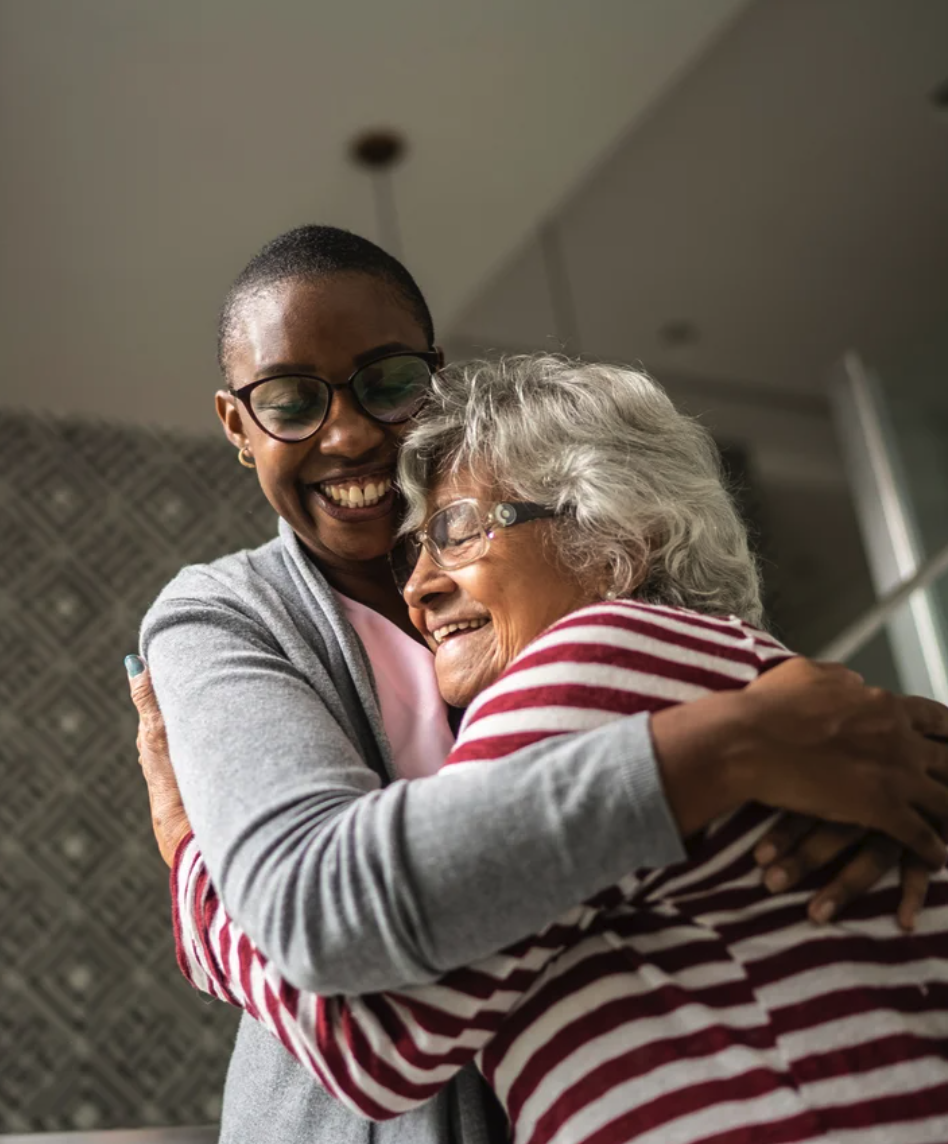
The work of an end-of-life doula begins with presence. DNT Network's End-of-Life Doula/Death Doula Certification Course prepares students to bring calm, grounded support into deeply human moments.
Presence as Practice
Before we get to tasks and services, it's worth saying something that can feel counterintuitive at first: the most important thing a doula brings is not a skill set — it is a quality of presence. Every practice described in this lesson flows from that foundation.
What does that mean in practice? A doula arrives without a clinical agenda. There is no chart to update, no symptom to assess, no intervention to recommend. That freedom — from the institutional pressures that shape every medical encounter — creates something rare: an unhurried, undivided human presence. The dying person and their family feel it. Research on doula engagement consistently identifies this quality of presence as among the most meaningful contributions doulas make (Yoong et al., 2022).
Scenario — Teresa & Her Husband David
David, 71, is in the final weeks of congestive heart failure. His wife Teresa has been his sole caregiver for eight months. She is exhausted, frightened, and — though she would never say it aloud — quietly resentful. When their doula, Carmen, first visits, she doesn't open with a checklist or intake form. She makes tea. She asks David what he's been thinking about. She asks Teresa how she's sleeping.
That first hour, Carmen mostly listens. She notices that David lights up when he talks about fishing. She notices that Teresa tenses every time the hospice nurse's number appears on her phone. She leaves without completing a single task — and both David and Teresa later say it was the most helpful visit they'd had in months.
That first hour, Carmen mostly listens. She notices that David lights up when he talks about fishing. She notices that Teresa tenses every time the hospice nurse's number appears on her phone. She leaves without completing a single task — and both David and Teresa later say it was the most helpful visit they'd had in months.
Carmen's unhurried listening wasn't passive — it was skilled assessment. By the end of that visit, she had a clear picture of what this family needed, what they feared, and where she could be most useful. Presence is not the absence of skill; it is the container in which all the other skills operate.
Emotional Support: Holding Without Fixing
People facing death — and those who love them — often carry emotions that are too large, too complicated, or too frightening to express to the people closest to them. They hold back to protect their family. They hold back because they worry about being a burden. They hold back because the medical system rewards stoicism and problem-solving, not feeling.
An end-of-life doula creates a specific kind of protected space — sometimes called "holding space" in the literature — where those feelings can surface without judgment and without the pressure to resolve them. The doula does not try to fix the grief, manage the fear, or redirect toward positivity. This is a discipline. Most people are not trained to sit with another person's pain without trying to relieve it. Doulas are.
Active Listening
Giving full, undivided attention. Reflecting back what is heard. Asking open questions that invite depth, not efficiency.
Holding Space
Being present with difficult emotions without trying to change or resolve them. Witnessing grief, anger, and fear without flinching.
Comfort Practices
Gentle touch, guided breathing, soft music, aromatherapy, or simply sitting in companionable silence — whatever brings ease to this particular person.
Family Bridging
Helping family members find words for what they feel, or facilitating conversations between loved ones that have felt too difficult to begin alone.
It is worth noting what emotional support is not: it is not therapy, counseling, or psychological treatment. Doulas do not diagnose mental health conditions or offer clinical interventions. When a client's needs exceed the doula's scope — for example, when a family member is experiencing complicated grief or crisis — a skilled doula knows how to recognize that and how to connect the person with appropriate professional support.
Planning Conversations: Before the Crisis Hits
One of the most distinctive and valuable things an end-of-life doula does is help people have conversations while there is still time and clarity to have them. These are conversations that most families avoid — not because they don't care, but because the subject feels too painful, too final, or simply too hard to start.
A doula creates the conditions for those conversations to happen. They may ask gentle but direct questions: What do you hope your last days look like? Who do you want present? Is there anything left unsaid that needs saying? What does a good death mean to you? These aren't morbid — they are, in fact, the most loving questions anyone can ask a person facing the end of life.
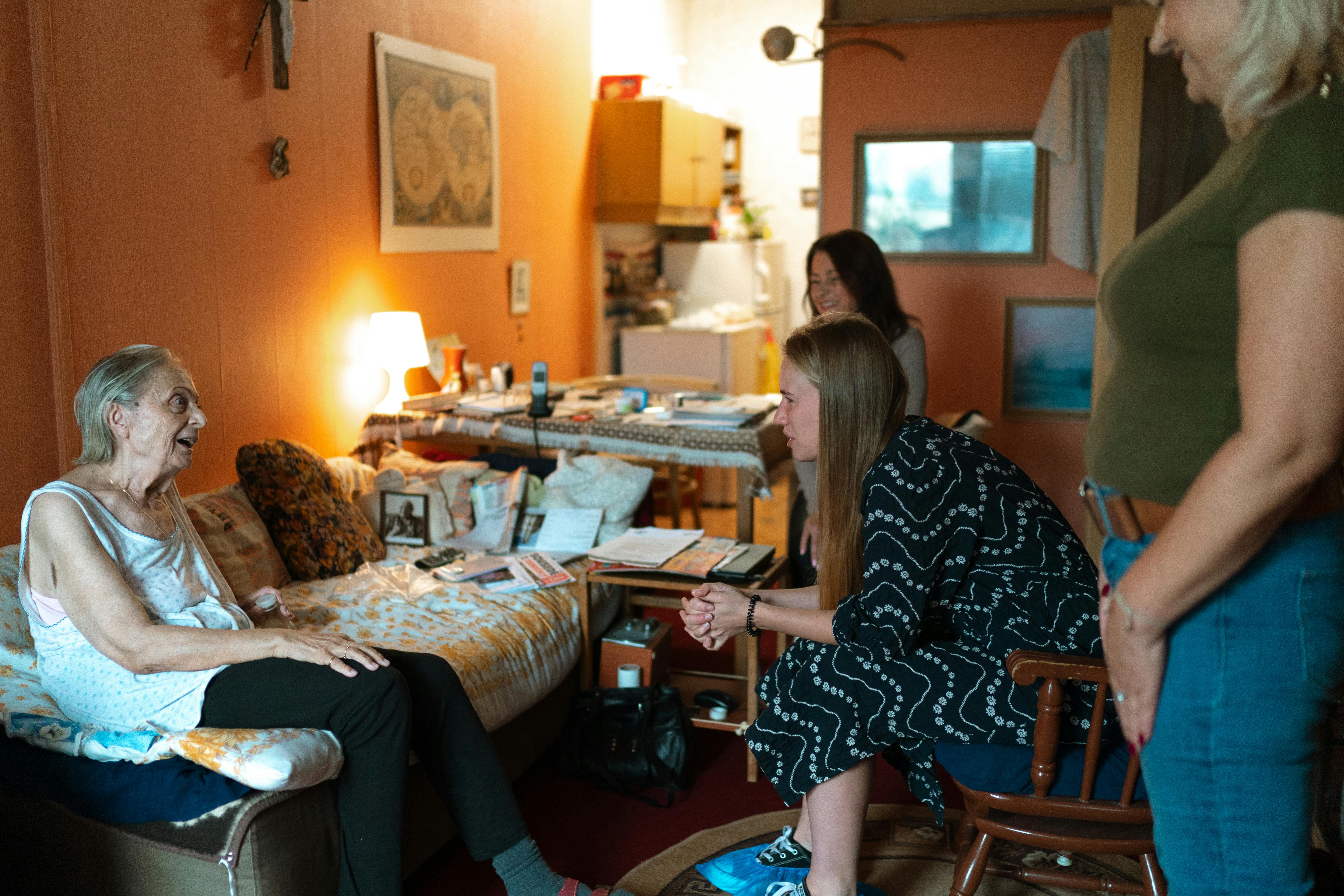
Planning conversations are part of compassionate care. DNT Network's End-of-Life Doula/Death Doula Certification Course teaches students how to support meaningful dialogue before a crisis forces decisions.
| Type of Conversation | What a Doula Helps Navigate |
|---|---|
| Wishes & Preferences | Where to die, who to have present, preferred environment, music, rituals, and atmosphere at the bedside |
| Advance Directives | Understanding documents like DNR orders, healthcare proxies, and living wills — and ensuring family members know where they are and what they mean |
| Unfinished Business | Facilitating opportunities to say what needs to be said — forgiveness, gratitude, goodbyes — between the dying person and those they love |
| After-Death Wishes | Burial preferences, memorial service desires, how loved ones want to be remembered and honored |
| Family Communication | Helping family members who are struggling to talk with each other about the dying process, or who hold different views about care |
Research across four countries found that structured conversations about advance care planning and after-death wishes were among the most consistently offered doula services — and among the most valued by families (Krawczyk & Rush, 2020). The doula's role here is not to make decisions for anyone, but to make sure the dying person's voice is heard and honored while they still have the capacity to express it.
Scenario — Robert & His Sons
Robert, 84, has advanced dementia and a terminal lung condition. He can no longer speak reliably. His two adult sons disagree about the level of intervention he should receive. One wants every possible measure taken. The other believes their father would have wanted to be allowed to go peacefully. Neither is wrong — they are both loving their father as best they know how. But the disagreement is creating pain and conflict precisely when the family needs to be unified.
Their doula, Marcus, doesn't take sides. Instead, he asks both sons what they remember about how their father talked about death and dying when he was well. He guides them in reviewing old family conversations, letters, and records together. Slowly, a shared picture of Robert's values emerges — and with it, a path forward the family can walk together.
Their doula, Marcus, doesn't take sides. Instead, he asks both sons what they remember about how their father talked about death and dying when he was well. He guides them in reviewing old family conversations, letters, and records together. Slowly, a shared picture of Robert's values emerges — and with it, a path forward the family can walk together.
Bedside Care: Presence During the Active Dying Process
As death draws closer — the days and hours of active dying — the doula's presence takes on particular importance. This is a time when families often feel most lost, most frightened, and most in need of someone who has been there before and knows how to accompany them through it.
The doula does not provide clinical care during this time. But they offer something just as essential: steady, informed presence. They can explain what the family is observing — the changes in breathing, the cooling of the extremities, the shifts in consciousness — so that what is frightening becomes understandable. They can guide family members in simple acts of comfort: speaking softly to their loved one, holding a hand, playing a piece of music, reading aloud. They help the dying person's wishes be honored in those final hours.
What Bedside Doula Support Looks Like
During active dying, a doula may hold vigil for extended periods so that a family caregiver can rest without their loved one being alone. They may guide family members through gentle touch or breath practices that bring comfort to the dying person. They help create the sensory environment the person requested — particular lighting, scents, music, or meaningful objects nearby. When death occurs, they support family members in taking unhurried time with the body before it is moved, if that is what the family wishes.
This kind of continuous bedside presence is something the modern healthcare system rarely makes available. Hospice nurses, however skilled and caring, typically cannot remain at a bedside for twelve or twenty-four consecutive hours. Doulas can — and often do. Across the published research on doula services, continuous presence at vigil is identified as one of the most impactful and irreplaceable contributions of the doula role (Yoong et al., 2022).
Legacy Work: Preserving What Matters
Legacy work refers to any practice that helps a dying person preserve their story, their voice, and their relationships beyond the physical fact of their death. It is one of the most powerful and uniquely doula-centered services in the field — and one that families consistently describe as among the most healing things they received.
The forms legacy work can take are as individual as the people involved. What they share is an intention: to give the dying person a way to continue speaking to those they love, and to give those left behind something tangible to hold onto.
Voice & Video Recordings
Capturing stories, advice, messages for milestones — births, graduations, weddings — that the person knows they won't live to attend.
Letters & Written Words
Composing or dictating letters to children, grandchildren, friends, or estranged loved ones. Including things that were never said.
Life Review & Story Work
Guided conversations and documented oral histories that capture the arc of a life — formative memories, values, what mattered most.
Memory Objects & Art
Creating or gathering meaningful objects — a memory box, handprint artwork, a curated collection of photographs — as tangible keepsakes for loved ones.
Death doulas offer valuable interpersonal services like legacy and grief work, as well as practical services like logistical end-of-life planning — filling roles in the complex healthcare system that clinical providers do not have the capacity to fill.
— DeDiego et al., 2023, Journal of Pain and Symptom ManagementScenario — Grace & Her Grandchildren
Grace, 77, has pancreatic cancer and is acutely aware that her youngest grandchildren are too small to form lasting memories of her. She is devastated by this. Her doula, Nadia, suggests they spend three sessions recording Grace — not making formal statements, but just talking. Talking about her childhood, her favorite recipes, the sound of her mother's voice, what it felt like to hold each grandchild for the first time.
Nadia edits these recordings into a short audio album and a companion booklet. Grace's daughter cries when she hears it. Two years later, she writes to Nadia: "The children ask to listen to Grandma's voice regularly. She's still teaching them who she was."
Nadia edits these recordings into a short audio album and a companion booklet. Grace's daughter cries when she hears it. Two years later, she writes to Nadia: "The children ask to listen to Grandma's voice regularly. She's still teaching them who she was."
Supporting the Family: Before, During, and After
End-of-life care is not something that happens only to the dying person. It happens to everyone who loves them. Families navigating a death in their midst face caregiver exhaustion, anticipatory grief, logistical overwhelm, strained relationships, and — after the death — a grief that the world tends to rush them through. The doula's support extends to all of this.
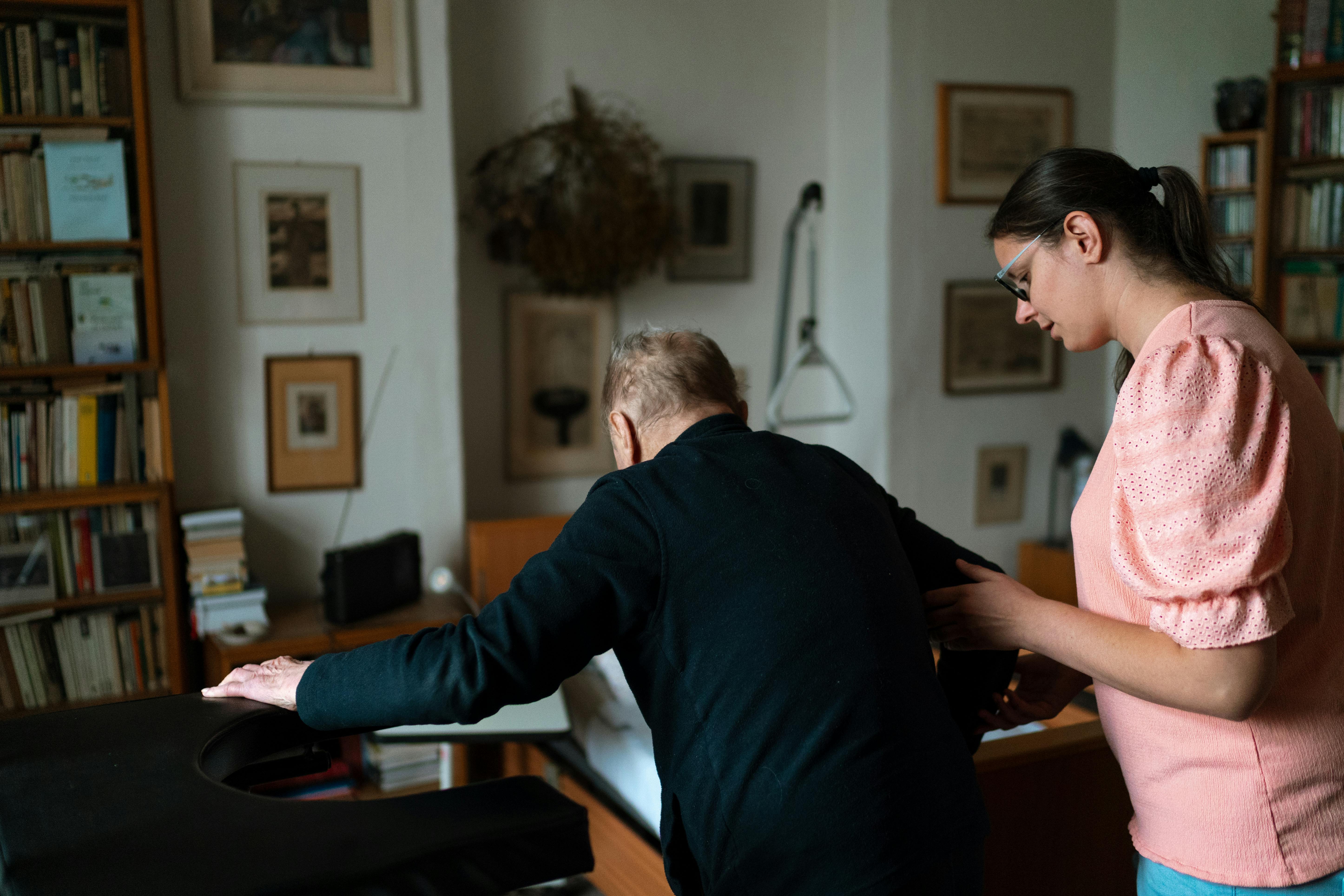
End-of-life doula care extends to the whole family. DNT Network's End-of-Life Doula/Death Doula Certification Course emphasizes support that is steady, relational, and responsive before, during, and after a death.
1
Early Engagement — Weeks to Months Before Death
Building relationship with the dying person and family. Conducting needs assessment. Beginning planning conversations. Introducing legacy work. Helping the family understand what the dying process will look like.
2
Active Care — The Final Days and Weeks
Increasing presence and support. Coordinating with hospice and medical team. Preparing the family for what to expect physically. Holding vigil. Honoring the dying person's wishes for their final hours.
3
At and After Death
Supporting family members in the immediate aftermath of death. Allowing time with the body. Assisting with after-death care if desired. Providing early bereavement support and, when appropriate, referral to grief professionals.
Importantly, doulas work with whoever is in the care circle — not just the immediate family. They may support a close friend, a neighbor who has become a primary caregiver, or a partner who has no other family present. And they may be the first to recognize when someone in that circle needs additional professional support for their own mental health, and can guide them toward it.
A scoping review of the death doula literature found that the positive impacts families report include not just the services themselves, but the holistic and personalized quality of care — the feeling that someone was paying attention to this specific person, this specific family, and this specific death (Yoong et al., 2022).
What a Doula Does Not Do
Understanding the boundaries of the doula role is just as important as understanding its scope. These boundaries are not limitations — they are what keeps the role coherent, ethical, and complementary to the medical care the dying person is already receiving.
| A Doula Does | A Doula Does Not |
|---|---|
| Provide emotional, spiritual, and practical support | Provide clinical or medical care of any kind |
| Facilitate planning conversations and advance directives | Make medical decisions or advise on treatment |
| Hold vigil and offer comfort during active dying | Administer medication or manage symptoms |
| Support the family through grief and transition | Provide formal psychotherapy or counseling |
| Complement and collaborate with the care team | Replace, override, or conflict with clinical providers |
| Recognize when referral to other professionals is needed | Operate beyond their training or area of competence |
The boundaries of the role aren't restrictions — they are what makes a doula trustworthy to clinical teams, families, and the dying person alike. A doula who oversteps creates confusion and erodes the trust that makes their presence possible in the first place. Part of professional doula training is learning exactly where those lines are, and why honoring them is an act of care.
Key Terms from This Lesson
- Holding Space
- The practice of being fully present with another person's experience — especially painful or difficult emotions — without trying to fix, redirect, or resolve it. A core discipline of the doula role.
- Active Dying
- The final phase of the dying process, typically the last hours to days before death, marked by specific physical changes. Doulas are trained to recognize and explain these changes to families.
- Vigil
- Continuous, attentive presence at the bedside of a dying person — often during the final hours. One of the most distinctive and valuable services an end-of-life doula can offer.
- Life Review
- A structured or informal guided process of exploring and documenting the story of a person's life. Both therapeutic and archival — it helps the dying person find meaning, and gives family members a lasting record.
- Advance Directive
- A legal document, such as a living will or healthcare proxy, that records a person's wishes regarding medical treatment if they become unable to communicate those wishes directly.
- Bereavement Support
- Care offered to family members and loved ones after a death. A doula may provide early bereavement support and refer to grief counselors or therapists when needs exceed the doula's scope.
Reflection Prompts
- Think about the difference between Carmen's first visit with David and Teresa (no tasks completed, just listening) and a typical healthcare visit. What does that difference reveal about what families actually need?
- Legacy work is described as one of the most healing services doulas offer. Can you think of a time — in your own life or someone else's — when a piece of legacy work (a letter, a story, an object) carried emotional weight far beyond its physical form?
- The doula does not make medical decisions or provide clinical care. Does that constraint feel like a limitation to you, or a strength? What does maintaining that boundary make possible?
References
-
Krawczyk, M., & Rush, M. (2020). Describing the end-of-life doula role and practices of care: Perspectives from four countries. Palliative Care and Social Practice, 14, 2632352420973226.
https://doi.org/10.1177/2632352420973226 -
Yoong, S. Q., Goh, H. S., & Zhang, H. (2022). Death doulas as supportive companions in end-of-life care: A scoping review. Palliative Medicine, 36(5), 795–809.
https://doi.org/10.1177/02692163221080659 -
Rawlings, D., Tieman, J., Miller-Lewis, L., & Swetenham, K. (2019). What role do death doulas play in end-of-life care? A systematic review. Health & Social Care in the Community, 27(3), e82–e94.
https://doi.org/10.1111/hsc.12660
A death doula's perspective on beauty in death

❋
Key Topics in Depth

DNT Network · Certified End-of-Life Doula Training
How Doulas Fit Into the Care Team
By now you understand why end-of-life doulas exist and what they do. This final lesson of Module 1 turns to a question that every doula will encounter in practice: How do I work alongside nurses, chaplains, social workers, and hospice staff without stepping on toes — or disappearing into the background? Getting this right is one of the most important professional skills you will develop. It shapes how clinical teams receive you, how families experience your presence, and how effective your work ultimately is.

End-of-life doula care often begins with quiet, compassionate presence. DNT Network's End-of-Life Doula/Death Doula Certification Course prepares students to bring grounded, relational support into the wider care team.
The Care Team as a Circle, Not a Hierarchy
When someone is dying at home or in a care setting, they are often surrounded by multiple providers — a hospice nurse who visits twice a week, a physician who oversees the care plan, a social worker who checks in on family dynamics, a chaplain available for spiritual conversations, and family members who provide daily care. Then, in a growing number of cases, a doula.
It is tempting to think of this as a hierarchy with the physician at the top and the doula somewhere near the bottom. That framing is both inaccurate and unhelpful. A more useful image is a circle, with the dying person at the center — and every provider, including the doula, occupying a distinct position around that circle, contributing something the others cannot fully replicate.
The Care Circle — Who Does What
Physician
Diagnosis, treatment decisions, symptom management, prescribing
Hospice Nurse
Clinical assessment, medication management, family education on physical care
The Dying Person & Family
At the center of every decision and every relationship
Chaplain
Religious or spiritual care, formal pastoral guidance, sacraments
Social Worker
Psychosocial assessment, resource navigation, systems coordination
End-of-Life Doula
Continuous presence, personal support, legacy work, family companionship
What the circle model makes clear is that the doula does not compete with any other role. Each position in that circle serves a need that the others cannot fully cover — not because those providers are inadequate, but because each role has a distinct scope, a distinct training, and a distinct relationship to the dying person. The doula's contribution is specific and real, and the circle is stronger with them in it.
Role by Role: What Makes Each Position Distinct
One of the most common questions new doulas face — from families, from clinical providers, and from themselves — is: What exactly is the difference between what you do and what a hospice nurse does? Or a chaplain? These are fair questions, and being able to answer them clearly is part of professional doula practice. Here is how the roles sit alongside each other.
Hospice Nurse
Their primary focus
Clinical comfort and symptom management. Hospice nurses assess pain levels, manage medication, monitor physical changes, and educate families on what to expect medically. They typically visit on a scheduled basis — often two to three times per week — and their time is structured around clinical priorities.
Continuous bedside presence and emotional companionship; explaining what families are observing in plain, unhurried terms; holding vigil during the hours between nurse visits when families need someone steady.
Physician / Palliative Care Doctor
Their primary focus
Medical oversight, diagnosis, and care planning. The physician establishes the clinical plan and manages complex symptom decisions. In palliative care, physicians work specifically to align treatment with patient goals — but their time with any one patient is limited and focused on medical decision-making.
Helping the family understand and absorb the medical information provided; supporting them emotionally as they process prognosis and treatment decisions; ensuring the patient's personal wishes stay visible to the care team.
Chaplain
Their primary focus
Religious and spiritual care delivered through a professional pastoral framework. Chaplains provide sacraments, religious rites, and formal spiritual counseling. They are trained within specific theological or interfaith traditions and bring institutional religious authority to their work.
Non-denominational, personalized meaning-making and ritual support; supporting spiritual needs that are not tied to a specific religious tradition; facilitating legacy work and values-based conversations for clients who are not religious but still seek depth and meaning.
Social Worker
Their primary focus
Psychosocial assessment, resource coordination, and systemic advocacy. Social workers are trained to evaluate mental health, identify community resources, navigate insurance and benefit systems, and address complex family dynamics within an institutional framework. They carry formal licensure and conduct structured assessments.
Reinforcing the social worker's relational work by staying close to the bedside; facilitating family communication in real time; providing the ongoing human presence between formal social work visits; noticing emerging needs and communicating them to the broader team.
Family Caregiver
Their primary focus
Daily hands-on care driven by love — but often without training, rest, or emotional support for themselves. Family caregivers are frequently exhausted, frightened, and grieving while still being the primary source of care. Their needs are real, ongoing, and frequently invisible to the clinical team.
Supporting the caregiver as much as the dying person; providing relief, recognition, and practical guidance; helping caregivers feel capable and informed rather than overwhelmed; identifying when caregiver burnout is becoming serious enough to require additional professional support.
What the Doula Offers That No One Else Can
Reading the role descriptions above, a pattern emerges. Every clinical and professional role on the care team is constrained in a specific way — by time, by caseload, by licensure, by institutional structure, or by the formal nature of their relationship to the dying person. The doula is the one figure on the team who operates outside all of those constraints.

What a doula often adds is time, steadiness, and continuity. DNT Network's End-of-Life Doula/Death Doula Certification Course emphasizes the personal support families remember long after the moment has passed.
The biggest gift end-of-life doulas give is time. Today, hospice has been absorbed into the medical model, and all kinds of things have taken away from the time needed in working with people at the end of life.
— Barbara Karnes, hospice pioneer and nurse educator, as cited in Medscape, 2026Time is the first thing. A doula can spend three hours with one family on one afternoon — not because they are inefficient, but because that is exactly what their role allows. No clinical provider has that freedom. The dying person feels the difference. The family feels the difference.
The second thing is continuity. Clinical providers rotate, shift schedules change, and the hospice team that a family sees in week one may not be the same team in week six. The doula remains constant. They have known this family since the beginning, carry the history of every conversation, and provide the thread of continuity that makes a dying person feel accompanied rather than processed.
The third is independence. Because a doula works outside the medical institution, families often find it easier to voice fears, doubts, or wishes that they feel they cannot say to a nurse or doctor — worries about whether the care plan is right, grief about things left undone, or a desire to die differently than the medical system has set up. The doula can hold all of that without judgment, and can help the family find appropriate ways to communicate their needs to the clinical team when that is what is needed (Rawlings, Davies & Tieman, 2021).
Scenario — Seeing How the Pieces Fit Together
Margaret, 88, is dying of cancer at home. Her care team includes a hospice nurse who visits three times a week, a palliative care physician managing her pain protocol, a hospital social worker who helped arrange her care plan, and a chaplain who visits on Tuesdays. Her daughter, Sylvia, is her primary caregiver and has not slept more than four hours in two weeks.
The hospice nurse is excellent at managing Margaret's symptoms. The physician has the pain well controlled. The social worker has organized benefits and equipment. The chaplain brings real comfort to Margaret's faith life. But no one on the team has time to sit with Sylvia at 9pm when she is quietly unraveling.
Their doula, Jerome, visits three afternoons a week and is on call by phone. He sits with Margaret, reads to her, and keeps her comfortable while Sylvia sleeps. He talks with Sylvia about what she is carrying — not to fix it, but so she doesn't have to carry it alone. He has started a voice recording project with Margaret, capturing stories for Sylvia's children. And he is the one who noticed, two weeks ago, that Sylvia was having thoughts that worried him — and gently helped her speak to her own doctor.
No one on the care team replaced anyone else. Each person contributed exactly what they were trained to offer. The circle held.
The hospice nurse is excellent at managing Margaret's symptoms. The physician has the pain well controlled. The social worker has organized benefits and equipment. The chaplain brings real comfort to Margaret's faith life. But no one on the team has time to sit with Sylvia at 9pm when she is quietly unraveling.
Their doula, Jerome, visits three afternoons a week and is on call by phone. He sits with Margaret, reads to her, and keeps her comfortable while Sylvia sleeps. He talks with Sylvia about what she is carrying — not to fix it, but so she doesn't have to carry it alone. He has started a voice recording project with Margaret, capturing stories for Sylvia's children. And he is the one who noticed, two weeks ago, that Sylvia was having thoughts that worried him — and gently helped her speak to her own doctor.
No one on the care team replaced anyone else. Each person contributed exactly what they were trained to offer. The circle held.
Working With the Team: Practical Principles
Understanding the theory of complementary roles is one thing. Working well with clinical providers in practice is another. New doulas sometimes encounter skepticism — nurses who are unsure what the doula's role really is, or physicians who haven't encountered a doula before. Here is how experienced doulas navigate that terrain.
| Principle | What It Looks Like in Practice |
|---|---|
| Introduce yourself clearly | When a new provider is involved, briefly explain your role: non-medical, personal support, presence, and legacy work. Use plain language. Don't assume they know what a doula is. |
| Stay in your lane | Never comment on clinical decisions, contradict medical advice, or suggest alternative treatments. If a family has questions about their care plan, help them formulate those questions for their clinical provider — don't answer them yourself. |
| Communicate proactively | If you observe something clinically relevant — a new symptom, a change in the patient's status, a family member in crisis — communicate it to the appropriate team member. You are not the only one who cares about this person. |
| Respect existing relationships | The hospice nurse may have been working with this family for weeks before you arrived. Honor that relationship. Learn from what they already know about this family. |
| Be consistent and reliable | Clinical providers will trust you more when you show up when you say you will, follow through on what you commit to, and demonstrate that your presence genuinely helps the patient and family. |
| Know when to refer | If a family member's emotional needs exceed your scope — persistent severe depression, suicidal thoughts, complicated grief — acknowledge your limits and help them access appropriate professional support. |
Over time, as the doula field matures and clinical teams have more experience working alongside doulas, these introductions become easier. Hospices in multiple countries are already beginning to integrate doulas into their service models — not replacing any existing staff, but recognizing that the doula fills a genuine and distinct need that the clinical team alone cannot meet (Rawlings et al., 2019).
When Role Overlap Happens — and How to Handle It
In real care situations, the lines between roles are not always perfectly clean. A hospice nurse may spend a few extra minutes providing emotional support because they sense a family member needs it. A chaplain may engage in what feels like life review work. A social worker may provide companionship as much as resource coordination. This is not a problem — it reflects the human reality of end-of-life care, where providers are people too, and compassion naturally extends beyond any formal job description.
What matters is not that roles never overlap, but that each person remains clear about their primary function and their scope of competence. The doula does not become a therapist because a conversation turns emotionally deep. The nurse does not become a doula because they lingered at the bedside. Awareness of role — knowing what you are there to do — is what keeps the care circle coherent.
A Useful Principle
When in doubt about whether something falls within your scope, ask: Does this require a license or clinical training I do not have? Is this a decision that belongs to the medical team or the family? If the answer to either question is yes — support, witness, and refer. If the answer is no — then you are likely in exactly the right place to help.
Research into the doula role across four countries confirms that the relationship between doulas and healthcare professionals works best when both parties have a clear shared understanding of what the doula is there to do — and when that understanding is established proactively, not reactively (Krawczyk & Rush, 2020).
The Doula as Part of Something Larger
End-of-life care has historically been understood as a medical function — something that happens within clinical systems, delivered by licensed professionals, measured in clinical outcomes. The emergence of the doula role is part of a broader shift in how society is beginning to think about dying: not only as a medical event, but as a human one.
Researchers have framed this shift through the lens of what are called "compassionate communities" — the idea that dying, like other profound life transitions, is best supported not only by professionals, but by the wider social fabric of care that surrounds a person: family, friends, neighbors, community members, and yes — trained companions like doulas. This is not a rejection of medicine. It is a recognition that medicine alone cannot hold everything that a dying person needs (Rawlings, Davies & Tieman, 2021).
As a DNT Network-certified doula, you become part of that larger effort. You carry the training and credential to enter care relationships professionally and ethically. You carry the skill to complement clinical teams without conflicting with them. And you carry the human capacity to offer something every person at the end of life deserves — steady, unhurried, genuinely personal accompaniment.
That is what the care team cannot always provide. That is what you are here to bring.
Module 1 Complete
You have covered the foundations of end-of-life doula care — why this role exists, what it looks like in practice, and how it fits within the care team. These three lessons form the bedrock for everything that follows in your DNT Network training. Well done.
Key Terms from This Lesson
- Care Circle
- A model for understanding the end-of-life care team as a circle centered on the dying person, with each provider — clinical and non-clinical — occupying a distinct, complementary position.
- Scope of Practice
- The defined boundaries of what a particular professional is trained and authorized to do. Understanding one's scope — and staying within it — is a core professional responsibility for doulas.
- Compassionate Community
- The broader social network that surrounds a dying person — friends, family, neighbors, and community members — alongside formal care providers. Doulas are increasingly recognized as a bridge between formal care and compassionate community.
- Palliative Care
- A specialized approach to medical care that focuses on relieving symptoms and improving quality of life for people with serious illness, alongside (not instead of) curative or life-prolonging treatment.
- Role Delineation
- The process of clarifying what each member of a care team is responsible for, so that care is coordinated and no essential need falls through the cracks.
- Continuity of Care
- The experience of being accompanied by the same consistent presence throughout a care journey. Doulas often provide continuity that rotating clinical staff cannot — and families consistently identify this as one of the most meaningful things a doula offers.
Reflection Prompts
- Jerome, in the scenario above, noticed that Sylvia was struggling in a way that required more than doula support — and helped her access it. What qualities or skills do you think made it possible for him to notice, and to act on what he noticed without overstepping?
- Some clinical providers — nurses, social workers — may initially be unsure what to make of a doula on the care team. How would you describe your role to a skeptical hospice nurse in two or three sentences?
- This lesson describes the doula as offering something that no other care team member can: time, continuity, and independence from the institution. Of those three, which feels most central to why you are drawn to this work?
References
-
Krawczyk, M., & Rush, M. (2020). Describing the end-of-life doula role and practices of care: Perspectives from four countries. Palliative Care and Social Practice, 14, 2632352420973226.
https://doi.org/10.1177/2632352420973226 -
Rawlings, D., Davies, G., & Tieman, J. (2021). Compassionate communities — What does this mean for roles such as a death doula in end-of-life care? Public Health, 194, 167–169.
https://doi.org/10.1016/j.puhe.2021.02.038 -
Rawlings, D., Tieman, J., Miller-Lewis, L., & Swetenham, K. (2019). What role do death doulas play in end-of-life care? A systematic review. Health & Social Care in the Community, 27(3), e82–e94.
https://doi.org/10.1111/hsc.12660
What I Learned About Life from Death
Module 1 · Lesson 1.1 · Knowledge Check
What Is an End-of-Life Doula?
Five quick questions on the role of the end-of-life doula. Select an answer to see instant feedback.
Why Doulas Matter
Odalys is caring for her father, Renzo, who is in home hospice. The nurses visit a few times a week and manage his medications well, but between visits she says: "I sit here terrified. I don't know what's normal, what's coming, or what to say to him."
1. What core need does Odalys's situation reveal that an end-of-life doula is designed to meet?
✓ Correct
Renzo's medical needs are covered — what's missing is presence and guidance through the fear and unknowns. Easing uncertainty, explaining what's normal in dying, and being a calm anchor for the family is precisely the gap doulas exist to fill.
✗ Not quite
The correct answer is B. Odalys isn't describing a medical gap, a scheduling problem, or a request for therapy — she's describing fear and uncertainty with no one beside her in it. Non-medical presence, normalization, and emotional steadiness are the doula's core contribution.
What Doulas Do
Marisol, an end-of-life doula, begins working with Hollis, who has late-stage heart failure. Over several weeks she sits with him during hard afternoons, helps him talk through what he wants his final days to look like, records stories he wants his grandchildren to have, and shows his wife simple comfort measures like repositioning pillows and moistening his lips.
2. Which aspects of the doula role does Marisol's work illustrate?
✓ Correct
Marisol's weeks with Hollis show the role's whole range — presence, end-of-life planning conversations, legacy work, hands-on non-medical comfort, and equipping the family. All of it is squarely doula work, and none of it requires a medical license.
✗ Not quite
The correct answer is D. Planning conversations and legacy projects are central doula work, not extras — and comfort measures like pillow repositioning are non-medical care, not clinical interventions. The role spans presence, planning, legacy, bedside comfort, and family support together.
Easing Emotional Stress
Three adult siblings — Beatrix, Cormac, and June — keep leaving their mother's room in tears, then arguing in the hallway about whether to "stay hopeful" or "be realistic." Their mother, Wilhelmina, seems agitated by the tension.
3. How would an end-of-life doula most appropriately help this family?
✓ Correct
Doulas ease emotional stress by holding steady in the storm — helping family members voice what's underneath the argument (usually fear and grief) and redirecting energy toward meaningful presence at the bedside. Calm, not verdicts, is what they bring.
✗ Not quite
The correct answer is A. Formal mediation and documentation lean legal/clinical, picking a "winner" deepens the divide, and requesting medication is the hospice team's clinical territory. The doula's tool is grounded presence that helps a family move from conflict back to connection.
Doula vs. Hospice
At an intake meeting, a client's daughter asks: "We already have hospice — a nurse, a chaplain, and a social worker all visit. Why would we add a doula? Wouldn't you just duplicate what they do?"
4. What's the most accurate way to explain the difference?
✓ Correct
The distinction is role and time, not quality. Hospice professionals each carry defined duties across a caseload; the doula's gift is unhurried, personal, non-medical presence for one family — often for hours at a stretch, including when no one else is there. It's addition, not duplication.
✗ Not quite
The correct answer is C. Doulas never perform nursing tasks, aren't a discount version of hospice, and aren't positioned as watchdogs against the care team. They complement hospice by adding what caseloads and clinical scopes can't: sustained personal, non-medical presence.
Working With the Team
During a bedside shift, end-of-life doula Thaddeus notices his client, Perpetua, grimacing and guarding her side — her pain seems noticeably worse than yesterday.
5. What does working properly alongside the care team look like here?
✓ Correct
This is the partnership in action: the doula's constant presence makes him a valuable set of eyes, but what he observes flows to the clinical team, not into clinical action of his own. Comfort measures plus timely communication is exactly the lane.
✗ Not quite
The correct answer is D. Touching medications or recommending specific drugs crosses into medical practice — but silence wastes the doula's greatest team asset, sustained observation. Support non-medically, then relay what you see so the clinicians can act.
-
Holistic, Non-Medical Support
End-of-life doulas provide emotional, spiritual, and practical support during the dying process.
Their role centers on being fully present, offering comfort, and supporting both the dying person and their loved ones.
Distinct from Other Care Providers
Unlike hospice nurses, chaplains, or caregivers, doulas do not offer medical or religious services.
They focus on companionship, legacy work, and individualized guidance, filling emotional and relational gaps in traditional care.
Core Values Guide Their Work
Doulas operate from a foundation of presence, compassion, and respect.
These values enable doulas to "hold space"—offering non-judgmental support and a calming presence with integrity and empathy.