Module 1 — Infant Massage Foundations and Why It Works — 18 Hours
IN THIS LESSON
Topics Covered:
1. What Infant Massage Really Means
Learn what infant massage actually is: gentle, loving touch while paying close attention to your baby’s signals. It’s about slowing down, noticing how the baby responds, and adjusting in the moment—not following a strict routine.
2. What It Can Help With (and What It Can’t)
Understand what infant massage may support, like helping babies relax and strengthening connection. We’ll also clear up common myths, such as the idea that it can instantly fix colic or sleep problems.
3. Knowing Your Role and When to Suggest Extra Support
Learn what your role is as an Infant Massage Specialist. You’ll understand when it’s appropriate to offer guidance and when it’s best to suggest that families speak with their baby’s doctor or another healthcare provider.
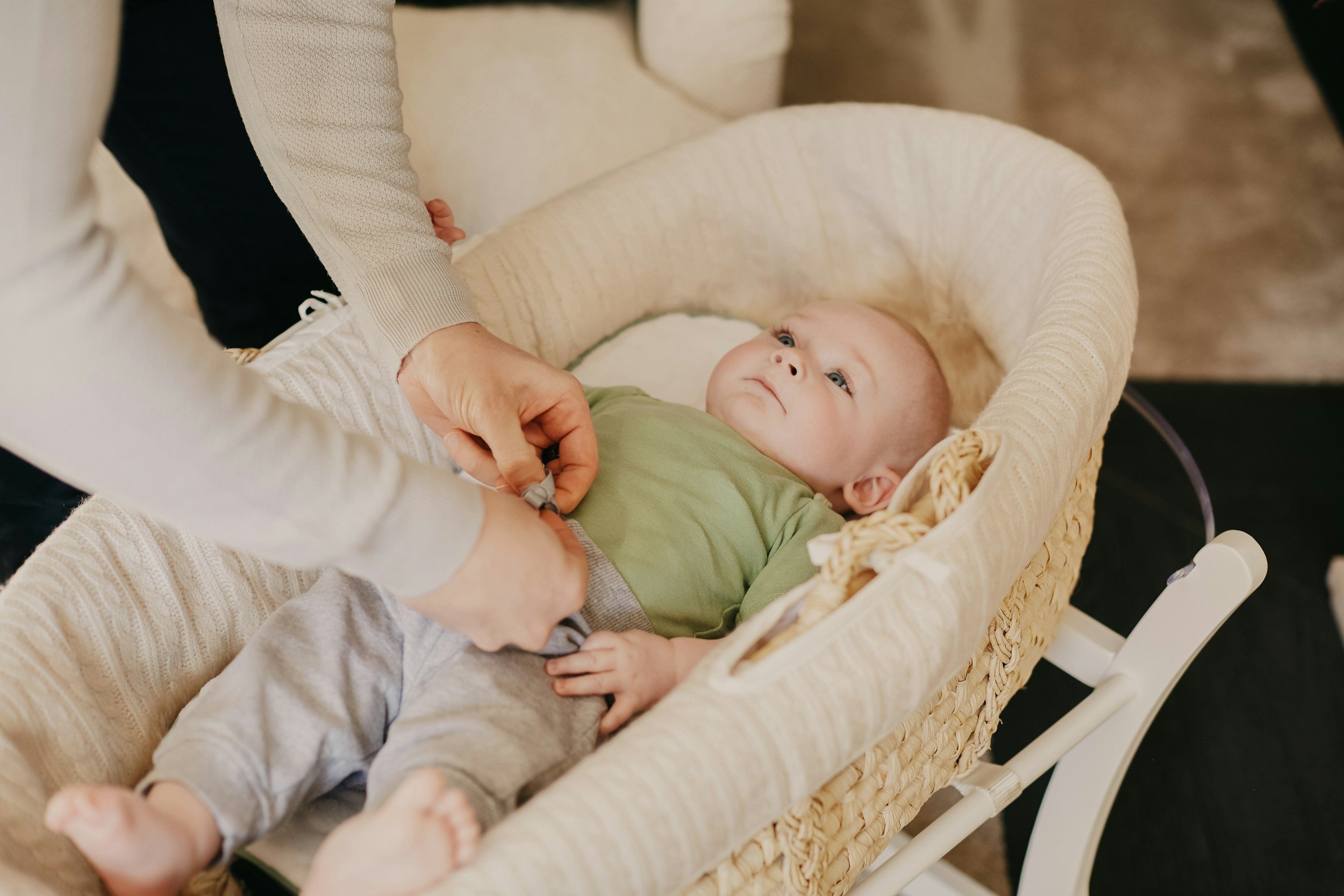
Module 1 — Infant Massage Foundations and Why It Works — 18 Hours


Lesson 1.1: What Infant Massage Is (and Isn't)
A foundational guide to the principles, purpose, and practice of evidence-informed infant massage education
Before you teach a single stroke, you need to understand the full shape of what you are offering — and just as importantly, what you are not. This lesson builds your conceptual foundation: the philosophy behind baby-led touch, the science that supports it, the scope that defines it, and the practical wisdom that makes it genuinely useful to the families you will serve.
Learning Objectives — By the End of This Lesson, You Will Be Able To:
01
Define infant massage education and explain its role in family-centered care
02
Identify what infant massage may support — and clearly state what it cannot claim to treat or fix
03
Describe the specialist's scope of practice and explain how it fits within the broader care picture
04
Read infant behavioral cues and explain how to teach caregivers to do the same
05
Recognize when a family's needs require referral to a medical or mental health professional
06
Apply consent-centered and baby-led principles to real caregiver education scenarios
Part One: What Infant Massage Really Means
The phrase "infant massage" is one of those terms that can mean very different things to different people. To some, it conjures images of spa-like wellness sessions with soft lighting and essential oils. To others, it sounds like a niche parenting trend. Neither picture is complete — and neither serves as a working definition for a certified specialist.
In the context of professional education, infant massage is the practice of teaching parents and caregivers how to use purposeful, responsive, baby-led touch in ways that support the infant's neurological development, emotional regulation, physical comfort, and relationship with their caregiver. The key word in that definition is "teaching." The specialist's primary work is not touching the baby — it is equipping the caregiver to do so with skill, awareness, and genuine attunement.
This distinction matters enormously. When you teach a parent to read their baby's cues before beginning, to adjust pressure based on the baby's response, and to end a session when the baby signals "enough" — you are not just passing along a set of techniques. You are helping build a relational language between two people who are still learning each other. That language will outlast every session you facilitate. It will be there at 2 a.m., and at six weeks, and at four months, long after you have left.
Infant massage education centers the caregiver-baby relationship — touch as a language, not a technique.
The Historical Roots of Infant Touch
Structured touch and massage have been part of infant care across cultures for centuries. In India, the tradition of daily infant oil massage — rooted in Ayurvedic practice — is so deeply embedded that new mothers are often taught by their own mothers or midwives within days of birth. In West Africa, rhythmic carrying, skin-to-skin contact, and daily body massage are routine practices in many communities, often beginning in the first hours of life. In parts of Southeast Asia, infant massage with coconut oil is a daily ritual for the first several months.
These traditions did not originate from clinical research — they emerged from generations of observation. Parents noticed that babies who were touched regularly were calmer, grew well, and seemed more connected. The modern research base for infant massage has largely confirmed what caregivers in these traditions understood intuitively: that warm, responsive, consistent touch is not a luxury — it is a developmental necessity.
In the Western clinical world, systematic research into infant massage began gaining serious momentum in the 1980s and 1990s, largely through the work of Dr. Tiffany Field and colleagues at the Touch Research Institute at the University of Miami School of Medicine. Their studies on preterm infants demonstrated that structured tactile stimulation could accelerate weight gain, improve behavioral organization, and shorten hospital stays — findings that shifted how neonatologists and NICU teams thought about the role of touch in infant care (Field et al., 2010).
21%
Greater weight gain in preterm infants receiving massage vs. controls (Field et al., 2010)
6 days
Earlier average hospital discharge for massaged preterm infants (Field et al., 2010)
↑ Oxytocin
Elevated in both parent and infant during warm, responsive skin-to-skin contact (Feldman et al., 2016)
What Makes This Education, Not Treatment
It is essential — practically and ethically — to be clear about what infant massage education is and what it is not. As a Certified Infant Massage Specialist (CIMS), you are an educator and a family support provider. You are not a medical practitioner, a physical therapist, or a mental health clinician. This is not a limitation — it is a definition. And it is a definition that protects you, protects the families you serve, and keeps your work grounded in what you can genuinely and skillfully offer.
✓ What Infant Massage Education Is
- Family-centered, non-medical caregiver education
- Teaching parents to observe and respond to infant cues
- Guiding safe, gentle touch techniques and sequences
- Supporting bonding, attachment, and caregiver confidence
- Providing evidence-informed context for why touch matters
- Creating sustainable routines families can use independently
- Recognizing when referral to a professional is appropriate
✕ What Infant Massage Education Is Not
- Medical diagnosis or clinical treatment
- Physical or occupational therapy
- A cure or treatment for colic, reflux, or any condition
- Mental health counseling for parents
- The specialist massaging the baby as the primary service
- Prescribing oils, supplements, or topical treatments
- Overriding medical or therapeutic care a family is receiving
⚠ Language Matters
Be mindful of how you describe your work to families and on any marketing materials. Phrases like "cures colic," "treats reflux," or "fixes sleep" overstate what infant massage education can claim and may expose you to professional and legal risk. Instead, use accurate, grounded language: "may support," "can help families build," "evidence suggests," and "designed to teach." Precision builds trust and protects everyone.
Part Two: What Infant Massage May Support — and What It Can't Fix
One of the most important skills you will develop in this program is the ability to communicate clearly and honestly about what infant massage can reasonably offer. Overpromising damages trust. Underpromising leaves families without information that could genuinely help them. The goal is accurate, nuanced, evidence-grounded communication — and this section gives you the foundation for that.
Areas Where Evidence Supports Infant Massage Education
| Area | What the Research Suggests | How Specialists Apply It |
|---|---|---|
| Bonding & Attachment | Responsive touch elevates oxytocin in both caregiver and infant, supporting mutual attunement (Feldman et al., 2016) | Teaching caregivers to observe and respond to cues builds reciprocal connection over time |
| Regulation & Settling | Vagal activation through gentle touch reduces cortisol and promotes calm behavioral states (Field et al., 2010) | Consistent bedtime massage routines help infants anticipate transitions and settle more easily |
| Infant Crying | Structured massage programs associated with meaningful reductions in crying frequency and duration (Underdown et al., 2006) | Teaching abdominal and leg strokes with timing guidance for fussy periods |
| Preterm Development | Tactile stimulation linked to faster weight gain, improved behavioral organization, shorter NICU stays (Field et al., 2010) | Specialist teaches parents kangaroo care and gentle containment holds, with provider clearance |
| Parental Wellbeing | Infant massage programs improve mother-infant interaction quality in mothers with postnatal depression (Onozawa et al., 2001) | Skill-building approach gives parents concrete, effective actions during a vulnerable period |
| Sleep Patterns | Regular bedtime massage associated with faster sleep onset and longer sleep duration in some populations (Field, 2019) | Supporting predictable evening routines that incorporate consistent, calming touch |
| Gastrointestinal Comfort | Abdominal massage strokes may support gut motility and help move gas; some benefit for colic-like distress (Sheidaei et al., 2016) | Teaching "I Love You" and clockwise abdominal strokes with appropriate safety guidance |
Common Myths — and How to Respond to Them
"Infant massage will cure my baby's colic."
Colic is not well understood, and no single intervention has been shown to reliably eliminate it. What the evidence does suggest is that structured massage with attention to abdominal strokes may help reduce the frequency and duration of fussy periods in some infants — but it is not a cure. Families seeking colic management should also consult their pediatrician to rule out underlying causes such as reflux, food sensitivity, or other medical concerns.
"If I massage my baby the right way, they'll sleep through the night."
Sleep is complex, developmentally variable, and influenced by many factors — feeding, nervous system maturity, environment, and more. A consistent bedtime massage routine may support sleep onset and settling, but guarantees are not something responsible specialists offer. Focus on helping families build predictable, calming routines and set realistic, developmentally appropriate expectations for infant sleep.
"My baby is fussy — should I massage them right now?"
Not necessarily. A fussy, overstimulated, or unwell baby is often telling you that touch is not what they need in this moment. Massage is most effective when the baby is in a calm, alert, and receptive state. Teaching caregivers to recognize readiness — and to respect the baby's "not right now" — is one of the most important things you can do. Forcing a session on an unwilling baby undermines the very relationship you are trying to support.
"Is infant massage safe for newborns?"
Gentle, appropriate touch is safe for healthy, full-term newborns from birth. However, formal structured massage sequences are generally introduced after the umbilical cord stump has healed and once the baby has been assessed by a healthcare provider. For preterm infants or babies with medical complications, specialist involvement should always follow explicit medical clearance. Your role includes helping families understand these distinctions.
"Can I use any oil I have at home?"
Oil choice matters. The evidence base for infant massage generally supports vegetable-based, unscented, food-grade oils — sunflower oil and grapeseed oil are among the most studied for infant skin. Mineral oil, essential-oil blends, and nut-based oils (which may pose allergy risks) are not recommended. Teach families to do a patch test 24 hours before full-body use and to avoid any oil on broken or irritated skin. You are not prescribing treatments — but you can provide safety-grounded guidance within your educational role.
Reflective Pause
Think about a time when someone overpromised what a product or practice could do for you. How did that affect your trust when the results were more modest than advertised?
Now imagine being a sleep-deprived parent at six weeks postpartum, searching for anything that might help. What does it feel like to be in that position? How does that inform how you want to communicate with families — with honesty, but also with genuine warmth?
Part Three: Reading the Baby — Cues, States, and Consent
There is no skill more foundational to infant massage education than cue-reading, and no concept more central to the DNT Network approach than this: the baby is an active participant, not a passive recipient. Babies communicate constantly. Every facial expression, every shift in muscle tone, every movement of the hands and eyes is a message. Learning to receive those messages — and teaching caregivers to do the same — is the heart of what you do.
A calm, alert baby with open hands and focused eye contact is communicating readiness. Cue-reading is a skill — and a teachable one.
Infant Behavioral States: Why They Matter
Before you can teach cue-reading, it helps to understand the underlying concept of infant behavioral states — a framework developed by pediatrician T. Berry Brazelton and refined through decades of developmental research. Babies cycle through six primary states: deep sleep, light sleep, drowsy, quiet alert, active alert, and crying. Each state represents a different level of neurological arousal and a different capacity for interaction.
The quiet alert state — sometimes called the "prime time" state — is when a baby is calm, attentive, and most receptive to learning and interaction. Eyes are bright and focused, body tone is relaxed, breathing is regular, and the baby is awake but not agitated. This is the ideal state for introducing massage. Teaching caregivers to recognize this window — and to seize it gently — is one of the first practical skills you will share.
✓ Engagement Cues — Baby Is Ready
- Bright, focused eye contact
- Open, relaxed hands and fingers
- Smooth, relaxed muscle tone
- Calm or interested facial expression
- Turning toward voice or touch
- Quiet, alert behavioral state
- Regular, even breathing
- Reaching or rooting toward caregiver
→ Disengagement Cues — Baby Needs a Pause
- Turning head or gaze away
- Arching the back
- Splayed, fisted, or fanning fingers
- Facial grimacing or furrowed brow
- Yawning, sneezing, or hiccupping
- Increased muscle tone or stiffening
- Color changes: mottling or flushing
- Fussing, crying, or high-pitched sounds
📘 Teaching Note
When teaching cue-reading to caregivers, avoid framing disengagement cues as "bad" or as rejection. A parent who feels their baby is "refusing" them during a massage may feel hurt or discouraged. Instead, reframe disengagement as information: "Your baby is telling you something really important right now — they need a pause. When you respond to that signal, you are showing them that you are listening. That's exactly what builds trust."
Asking Permission: The Consent-Centered Framework
The concept of asking a baby for permission before beginning a massage session is one of the most powerful — and sometimes most surprising — ideas you will teach. It is not a metaphor or a feel-good ritual. It is a practical, evidence-grounded approach to observing the baby's readiness before proceeding, and it teaches caregivers a habit of attunement that extends far beyond massage.
Here is the basic framework, which you will refine and teach in many variations throughout this course:
-
Create the conditions first. Ensure the room is warm (approximately 75°F / 24°C), lighting is gentle, and you have uninterrupted time. Warm your hands by rubbing them together. Have oil ready but do not apply it yet. Set aside phones and distractions. Help the caregiver arrive in a calm, present state — a regulated caregiver is the single most important environmental factor for the session.
-
Get down to the baby's level. The caregiver positions themselves face-to-face with the baby — on the floor, on a padded surface, or with the baby in their lap. Eye level matters. This is not incidental; it communicates presence and focuses the caregiver's attention on the baby's face and body.
-
Make eye contact and speak softly. The caregiver makes gentle eye contact and says something simple: "Would you like a massage today?" or "I'm going to see if you'd like some touch." The words themselves matter less than the quality of attention they signal — slow, warm, unhurried presence.
-
Offer the first touch and pause. Place one warm, open hand gently on the baby's chest or leg — and stop. Do not begin stroking. Simply hold. This is the moment of observation. What does the baby's body do in response? Does the tone soften or stiffen? Does the baby look toward or away? Does breathing stay even or does it change?
-
Read the response and decide together. If the baby shows engagement cues — relaxing into the touch, making eye contact, staying quiet and open — that is the signal to continue. If the baby shows disengagement cues, this is the moment to pause, comfort if needed, and try again later. Teaching caregivers to honor this step without frustration is part of your work.
-
Continue observing throughout. Consent is not a one-time event at the start of a session — it is an ongoing conversation. Teach caregivers to check in continuously: watching the baby's face and body, pausing when cues shift, and ending the session when the baby signals readiness to stop. A five-minute session that is entirely responsive is more valuable than a twenty-minute session that overrides the baby's signals.
✦ Scenario — Teaching Asking Permission
Keisha is a postpartum nurse completing the DNT Network CIMS certification. She is working with a new parent, Daniel, whose six-week-old daughter, Nyla, is alert but tends to get overstimulated quickly. Daniel is eager — sometimes too eager — to engage and has been attempting massage sequences he found online, becoming frustrated when Nyla fusses.
During their first session together, Keisha sits beside Daniel and asks him to watch Nyla's hands before he begins. Nyla's fingers are loosely open, her breathing is even, and she is making relaxed eye contact with her father.
"She's telling you she's ready right now. See her hands? Open, relaxed. That's your green light. Let's start by just placing your hand on her belly — and then we're going to stop and watch."
Daniel places his hand. Nyla sighs and her shoulders soften slightly. Keisha points it out immediately:
"Did you see that? Her whole body just said yes. That's what we're looking for."
Three minutes into the session, Nyla yawns and turns her gaze toward the ceiling. Keisha gently touches Daniel's arm.
"That's her. She's telling you she's had enough for now — and that's perfect. You followed her the whole time. That's the whole skill, right there."
Daniel looks surprised. "That's it? It felt really short." Keisha nods. "A three-minute session where you both felt good is worth so much more than a ten-minute session where she was crying by the end. You'll build up over time — but it starts exactly like this."
Part Four: Safe Touch, Appropriate Pressure, and Getting the Basics Right
The technical foundations of infant massage — pressure, pace, direction, positioning — are not arbitrary. They are grounded in infant anatomy, sensory neuroscience, and the practical realities of working with a small, developing body that cannot tell you in words when something hurts or feels wrong. Understanding why each element of technique matters allows you to teach it clearly and adapt it wisely.
Pressure: The Most Common Teaching Challenge
New caregivers almost universally underestimate the right amount of pressure for infant massage. Instinct tells people to be extremely light — to barely touch — because babies feel fragile. But skin-to-skin contact that is too light can actually be aversive: it activates tickle receptors and can feel uncomfortable, especially on the back and soles of the feet. Research on tactile stimulation distinguishes between light touch (which tends to be alerting and sometimes irritating) and moderate pressure touch (which activates the vagus nerve and is associated with calm, regulation, and the physiological benefits of massage).
A helpful teaching analogy: moderate pressure is roughly the amount of pressure you would use to press your palm flat against a ripe peach without bruising it — firm enough to feel, gentle enough not to mark. It is the pressure of a confident, unhurried hand, not a hesitant finger. Helping caregivers find this pressure through practice — on their own forearm first, then on the baby — is one of the most useful things you can model in a session.
🌿 Teaching Tip — The Forearm Demonstration
Before working with the baby, have the caregiver practice pressure on their own forearm. First, ask them to stroke with just their fingertips — very lightly. Most people report this feels ticklish or slightly uncomfortable. Then ask them to lay their whole hand flat and stroke with steady, moderate pressure. The difference is usually immediately clear.
"This second feeling — that's what we're aiming for. Confident, warm, consistent. Your baby's nervous system responds best to this kind of touch."
Direction and Sequence: Why They Matter Physiologically
Infant massage sequences are not arbitrary. Many strokes follow specific directional conventions that align with physiological function. Abdominal strokes, for example, are performed clockwise — following the direction of the large intestine — to support digestive motility rather than work against it. Leg strokes typically move from hip to foot, following the direction of lymphatic drainage. Back strokes may be done in either direction depending on the goal: long, slow strokes from neck to tailbone tend to be calming, while shorter strokes across the back may be more stimulating.
Understanding the "why" behind direction allows you to explain your teaching clearly to both parents and to the healthcare professionals who may ask about your work. It also helps you make sensible decisions when adapting sequences for specific babies or situations.
Adapting Massage for a Fussy or Overstimulated Baby
Some of the most common questions specialists receive are about fussy or hard-to-settle babies — which are also, often, the babies whose caregivers are most in need of support. The temptation is to try harder, do more, or add more strokes. In most cases, the right answer is the opposite: do less, go slower, and simplify.
→ For an Overstimulated Baby
- Pause all active strokes; move to still, warm containment holds
- Reduce visual and auditory input — dim lights, minimize voices
- Try swaddled skin-to-skin contact rather than open massage
- Focus on one body area only (legs are often the least sensitive)
- Slow the pace dramatically — one stroke every five to ten seconds
- Match your breathing to a slow, calm rhythm; babies often follow
— For a Fussy but Settable Baby
- Begin with containment rather than strokes — both hands, held still
- Introduce the "I Love You" abdominal stroke slowly for gas discomfort
- Try leg and foot strokes, which most infants tolerate well when fussy
- Use a quiet, rhythmic voice — narrative talking during strokes helps
- Offer a brief pause, then observe whether the baby re-engages
- End early if cues continue — and frame this as success, not failure
🛑 Safety — When Not to Massage
Do not proceed with massage when: the baby is unwell or has a fever; the baby has unhealed skin, rashes, or open wounds; the baby is overly drowsy or difficult to rouse; the baby has had recent vaccinations (wait at least 48 hours at the injection sites); the caregiver has not received clearance from the baby's provider for medically complex infants; or the baby is showing persistent, strong disengagement cues with no settling. When in doubt, pause, comfort, and consult.
Part Five: Supporting Bonding, Attachment, and Caregiver Confidence
Bonding is one of those words that carries enormous emotional weight for new parents — and sometimes, enormous anxiety. Parents who do not feel an immediate rush of connection with their baby may worry that something is wrong with them or with their relationship. One of the most meaningful things you can offer as a specialist is the understanding that bonding is a process, not an event, and that consistent, responsive, attentive interactions — like those practiced in infant massage — actively build and strengthen that connection over time.
The neurobiological basis for this is well-established. When caregivers engage in warm, synchronous touch with their infants, the neuropeptide oxytocin is elevated in both parties simultaneously (Feldman et al., 2016). This shared neurobiological experience is part of what makes the caregiver-infant relationship feel reciprocal rather than one-directional — and it is directly strengthened through consistent, attentive touch. Parents who learn infant massage often describe a qualitative shift in how they feel during and after sessions: more present, more attuned, more confident in their ability to read and respond to their baby.
"When mothers with postnatal depression participated in an infant massage course, their depressive symptoms improved and the quality of their interactions with their infants was significantly enhanced compared to a control group."
— Onozawa et al., Journal of Affective Disorders, 2001
Supporting Non-Birthing Parents and Secondary Caregivers
Infant massage is an extraordinary equalizer in caregiver roles. While much early parenting literature has historically centered the birthing parent, the reality of family life is far more varied: partners, co-parents, grandparents, adoptive parents, foster caregivers, and other attachment figures are all equally capable of using touch to build their relationship with a baby. Infant massage provides a concrete, accessible, skill-based pathway for secondary caregivers to develop their own bond — particularly in the early weeks when the primary caregiver may be the center of the baby's attention through feeding.
When working with families, actively invite the participation of all caregivers who are present and interested. You might say something like: "This is something both of you can learn together. Babies develop strong relationships with everyone who cares for them consistently — and massage is a really accessible way for both of you to build that language with them."
Helping Caregivers Build a Calming Routine
One of the most practical contributions an infant massage specialist makes is helping families establish a sustainable, predictable routine that incorporates massage. Predictability is itself regulating for infants: when a baby can anticipate what comes next — a particular song, the warmth of the oil being rubbed between hands, a certain sequence of strokes — the nervous system begins to prepare for calm before the session even begins. Over time, these contextual cues become anchors for regulation.
-
Choose a consistent time. Evening, following a bath, or before a feeding works well for many families. The specific time matters less than the consistency — babies respond to predictable rhythms.
-
Create a consistent environment. Same room, same lighting, same setup. This signals transition to the baby's nervous system. A simple cue — like placing the oil bottle on a specific surface — can become a powerful environmental anchor over time.
-
Begin with a connection ritual. The "asking permission" sequence doubles as a consistent opening ritual — same words, same hand placement, same pause. Babies recognize and respond to familiar openings.
-
Keep it short and satisfying. Especially in the early weeks, aim for sessions of five to fifteen minutes rather than long elaborate sequences. A session that ends while the baby is still engaged and content is far more beneficial — for both baby and caregiver — than one that ends in fussing.
-
Close with a consistent ending. A gentle "all done" phrase, a warm wrap in a blanket, or a particular holding position signals that the session is complete. Consistent endings help babies process the transition.
🌿 Practitioner Note — Managing Caregiver Expectations
Some families will want to see dramatic results within days. Gently prepare them for a more gradual experience: "Most families notice changes after two to three weeks of consistent practice — not after one session. What we're building here is a relationship pattern, and that takes time to settle in. Be patient with yourselves and with your baby."
Framing this as a long-term investment rather than an immediate fix reduces discouragement and increases follow-through.
Part Six: Knowing Your Role and When to Refer
Being excellent at your scope of practice includes being excellent at recognizing its boundaries. The families who seek out infant massage support sometimes bring with them concerns that are genuinely beyond what massage education can address — and your ability to recognize those situations, respond to them with compassion, and connect families to the right resources is one of the most important things you can offer.
Referral is not failure. It is expertise. A practitioner who oversteps their scope out of a desire to help ends up providing care they are not trained to deliver — and that is a disservice to the family and a risk to everyone involved. A practitioner who knows exactly when to say "that's outside what I can help with, but here's who can" is providing a genuinely valuable service.
When to Refer — and to Whom
Pediatrician / Family Doctor
Unexplained or persistent crying, feeding difficulties, unusual weight gain or loss, suspected reflux or colic, developmental concerns, any sign of illness or injury, fever, skin conditions
Lactation Consultant (IBCLC)
Breastfeeding difficulties, latch challenges, low milk supply, oral tension in the infant, nipple pain, concerns about infant weight and feeding adequacy
Physical or Occupational Therapist
Suspected torticollis or neck tightness, asymmetrical movement patterns, motor developmental delays, sensory processing concerns, hyper- or hypo-tone
Perinatal Mental Health Professional
Signs of postpartum depression, anxiety, or PTSD in a caregiver; intrusive thoughts; significant bonding difficulties; trauma history affecting parenting; suicidal ideation
Social Worker / Family Services
Safety concerns, housing instability, domestic violence indicators, food insecurity, caregiver overwhelm that exceeds typical new-parent adjustment
Pediatric Speech-Language Pathologist
Feeding aversion, oral hypersensitivity, difficulty coordinating suck-swallow-breathe, gagging or choking during feeding, suspected tongue or lip tie complications
✓ How to Refer with Care
The way you make a referral matters as much as whether you make one. Avoid language that alarms or implies the parent has done something wrong. Try: "What you're describing is something a pediatrician would want to know about. It's completely normal to get their input, and it'll give you both more to work with." Or: "This is really outside my lane, and I want you to have support from someone trained for exactly this."
Offer to help the family prepare their questions for the appointment, and follow up afterward if your relationship with the family makes that appropriate. A referral is not an ending — it is a collaboration.
✦ Scenario — Recognizing a Referral Moment
Priya reaches out to infant massage specialist Marcus because her eight-week-old son, Rohan, cries for what feel like hours in the evenings, arches his back intensely during and after feeds, and seems to be in real distress. She has read about infant massage helping with gas and is hoping it will make a difference.
During the intake conversation, Marcus listens carefully. He is hearing a constellation of symptoms — persistent, inconsolable crying, post-feed arching, apparent pain — that go beyond what is typical for a fussy baby. These symptoms are consistent with gastroesophageal reflux and warrant medical evaluation before any massage work begins.
"What you're describing sounds really hard, and I can hear how much you want to help Rohan. What you're noticing — the arching, the distress after feeds, the intensity of the crying — is something his pediatrician really needs to hear about. That kind of evaluation will help you both understand what's actually going on for him. Once you've had that conversation, I'd love to work with you on the things I can genuinely help with. But let's make sure Rohan has the right support first."
Marcus does not massage the baby. He does not guess or try a "gentle approach" to see what happens. He refers — kindly, clearly, and immediately. He also offers to help Priya write down her observations before the appointment. That referral is the most professional and protective thing he can do.
Part Seven: Communicating Your Role to Families and Other Professionals
As a Certified Infant Massage Specialist, you will regularly need to explain what you do — to parents who are curious but unsure, to pediatricians who may not have encountered CIMS-credentialed practitioners before, to hospital administrators, and to colleagues in adjacent fields. Having clear, confident language for this is a professional skill and an essential one.
Explaining Scope to Families
Most families are not asking whether you have a medical license. They are asking whether you can help them. The most effective introductions are warm, specific, and honest about what you offer:
Sample Practitioner Language
"I'm a Certified Infant Massage Specialist — which means I'm trained to teach you, the caregiver, how to use gentle, baby-led touch with your baby in ways that research supports for things like settling, bonding, and building a calming routine. I'm not a medical professional, so if we ever run into something that looks like it needs a doctor's attention, I'll be upfront about that and help you get connected with the right person. My job is to make you feel confident and informed — and to help you and your baby find a rhythm that works for both of you."
Communicating with Healthcare Providers
When working alongside or within healthcare settings, be specific and professional about your credentials and scope. Use your full credential title — Certified Infant Massage Specialist, CIMS, DNT Network — and be ready to explain what the certification involves. Avoid inflating your role (do not use clinical language or imply therapeutic outcomes) but also do not diminish it. Your work is grounded in peer-reviewed research, and you are offering a genuinely valuable family support service.
Build referral relationships proactively. Introduce yourself to local pediatric practices, lactation consultants, and postpartum care providers. Make it easy for them to understand what you do and when a family would benefit from your services — and make it equally clear that you will refer back when something falls outside your scope. Mutual referral relationships are the foundation of collaborative, family-centered care.
Reflective Pause
How would you describe your role to a skeptical pediatrician who has never worked with an infant massage specialist before?
Write out two or three sentences in your own words. What does your work offer that adds to — rather than overlaps with — what the pediatrician provides? Practice saying it aloud until it feels natural and confident, not defensive.
Part Eight: Cultural Sensitivity and Inclusive Practice
Touch is cultural. The way families approach physical contact with infants, the meanings they attach to it, the traditions they carry, and the comfort they have with various forms of bodily care are all shaped by cultural background, personal history, and family norms. As an infant massage specialist, you will work with families whose relationship to touch, body, and care may differ significantly from any assumptions you bring.
Cultural humility — the ongoing practice of approaching each family as the expert on their own experience, without assuming your knowledge or preferences should override theirs — is a core competency in this work. This means asking questions rather than assuming, offering information without prescribing, and adjusting your approach based on what the family finds meaningful and comfortable rather than on a universal standard of what "good" infant massage looks like.
In practice, this might look like asking a family about any existing touch traditions they already use with their baby, and building on those rather than replacing them. It might look like offering culturally flexible language for the "asking permission" practice rather than a scripted phrase. It might look like being thoughtful about oil recommendations when working with families whose cultural traditions specify particular oils with ritual significance. Your role is to offer knowledge — not to override tradition.
✓ Inclusive Practice Principles
Begin each new family relationship with genuine curiosity: "Tell me a little about how your family already uses touch with your baby — are there traditions or routines you're already doing?" This positions the family as knowledgeable, invites their participation, and helps you understand the context you're entering. It also often surfaces rich cultural knowledge that enriches your understanding of the field.
Lesson Summary: The Shape of What You're Beginning
This lesson has covered a great deal of ground — by design. Understanding the full shape of your role before you begin learning the techniques helps you approach those techniques with the right mindset: not as moves to memorize, but as tools within a larger framework of evidence, relationship, respect, and care.
| Core Concept | What to Carry Forward |
|---|---|
| What infant massage is | Family-centered, caregiver education built on responsive, baby-led touch — not clinical treatment |
| What it may support | Bonding, regulation, settling, caregiver confidence — with honest, evidence-grounded language, not overpromising |
| Cue-reading | The foundational skill: observing engagement and disengagement cues before, during, and after every session |
| Consent-centered practice | Asking permission is not metaphorical — it is a practical, observable, teachable framework for responsive touch |
| Scope of practice | Educate; do not diagnose, treat, or overreach. Know your lane with confidence and clarity |
| When to refer | Medical, developmental, feeding, and mental health concerns require referral — and referral done well is excellent care |
| Cultural humility | Enter every family's context with curiosity, not assumption. Their knowledge is part of the practice too |
Looking Ahead — Module 1, Lesson 1.2
In Lesson 1.2, you will move from the conceptual foundation you have built here into the neuroscience and physiology behind it — exploring how the infant nervous system develops, why tactile stimulation matters at the level of the brain and body, and what this means for how you teach and practice. You will also begin encountering the specific massage techniques and sequences that form the practical core of the CIMS curriculum.
Come with your questions from this lesson. They will be answered, and built upon, throughout what follows.
References
Peer-reviewed sources — APA 7th edition
- Feldman, R., Monakhov, M., Pratt, M., & Ebstein, R. P. (2016). Oxytocin pathway genes: Evolutionary ancient system impacting on human affiliation, sociality, and psychopathology. Biological Psychiatry, 79(3), 174–184. https://doi.org/10.1016/j.biopsych.2015.08.008
- Field, T., Diego, M., & Hernandez-Reif, M. (2010). Preterm infant massage therapy research: A review. Infant Behavior and Development, 33(2), 115–124. https://doi.org/10.1016/j.infbeh.2009.12.004
- Field, T. (2019). Social touch, CT touch and massage therapy: A narrative review. Developmental Review, 51, 123–145. https://doi.org/10.1016/j.dr.2019.01.002
- Onozawa, K., Glover, V., Adams, D., Modi, N., & Kumar, R. C. (2001). Infant massage improves mother–infant interaction for mothers with postnatal depression. Journal of Affective Disorders, 63(1–3), 201–207. https://doi.org/10.1016/S0165-0327(00)00198-1
- Sheidaei, A., Abadi, A., Zayeri, F., Nahidi, F., Gazerani, N., & Mansouri, A. (2016). The effectiveness of massage therapy in the treatment of infantile colic symptoms: A randomized controlled clinical trial. Medical Journal of the Islamic Republic of Iran, 30, 351. https://www.ncbi.nlm.nih.gov/pmc/articles/PMC4898846/
- Underdown, A., Barlow, J., Chung, V., & Stewart-Brown, S. (2006). Massage intervention for promoting mental and physical health in infants aged under six months. Cochrane Database of Systematic Reviews, 2006(4), CD005038. https://doi.org/10.1002/14651858.CD005038.pub2
- Walker, S. M. (2019). Neonatal pain. Paediatric Anaesthesia, 29(5), 464–475. https://doi.org/10.1111/pan.13611

❋
Key Topics in Depth
Introduction
Before you learn techniques, you need clarity. Infant massage is simple, gentle touch—but it’s also more than that. It’s about slowing down, noticing a baby’s cues, and responding with care. At the same time, it’s important to understand what infant massage cannot do. It is not medical treatment, and it is not a quick fix for every challenge families face. In this lesson, you’ll build a grounded understanding of your role, your limits, and how to talk about infant massage honestly and confidently. That clarity will shape everything else you learn.
1. What Infant Massage Really Means

By the end of this lesson, you will be able to:
Clearly explain what infant massage is—and what it is not—to families in simple, realistic terms.
Describe the role of cue awareness and why following the baby matters more than following a routine.
Demonstrate a gentle, flexible basic massage sequence while adjusting to the baby’s responses.
Why This Matters
Infant massage sounds simple. It’s just touch, right? But in real life, many parents are overwhelmed. They are tired. They are worried about sleep. They are Googling “colic cure” at 2 a.m. When they hear about massage, they may secretly hope it will fix everything overnight.
As a specialist, your job is not to sell magic. It’s to help families slow down. Massage is not a trick. It is not a medical treatment. It is not a guarantee. It is a relationship practice built on attention and connection. That shift in mindset changes everything.
When parents understand that massage is about being with their baby—not fixing their baby—they relax. Babies often relax too. The pressure drops. Instead of “Did this work?” the question becomes, “What did my baby tell me just now?” That is a powerful change.
This lesson helps you build that foundation. If families understand what massage really means from the beginning, they are more confident, more patient, and less likely to feel discouraged when a baby cries, wiggles away, or only lasts three minutes. That’s success—not failure.
Foundational Concept
At its core, infant massage is responsive touch. That means touch that changes based on what the baby is showing you. It is not about performing a perfect routine. It is about paying attention.
Another key idea is cue awareness. Babies communicate constantly—through body tension, eye contact, breathing patterns, hand movements, and sounds. For example, a baby who turns their head away, stiffens their arms, or arches their back may be saying, “That’s enough for now.” A baby who makes eye contact, softens their hands, or coos may be saying, “I’m okay. Keep going.”
You must also understand co-regulation. Babies borrow calm from adults. If the caregiver is rushed or anxious, babies often sense it. If the caregiver slows their breathing and speaks gently, babies tend to settle more easily. Massage becomes a shared nervous system experience.
It’s important to clarify what infant massage is not. It is not medical treatment. It does not replace pediatric care. It does not cure colic, reflux, or sleep challenges. While some families notice improvements in digestion or sleep, those are possible benefits—not promises. Being honest builds trust.
Another concept to grasp is flexible structure. Yes, there are common sequences—legs, tummy, chest, arms, face, back. But structure is a guide, not a rule. If a baby only tolerates legs today, that is enough. If the baby wants to roll over halfway through, you adapt.
Finally, understand connection over completion. Finishing a full routine does not equal success. A two-minute exchange with eye contact and relaxed breathing may be far more meaningful than a 20-minute routine where the baby is overstimulated. When students internalize this, their practice becomes gentler and more realistic.
Each of these ideas connects: responsive touch requires cue awareness; cue awareness supports co-regulation; flexible structure protects connection; and honest expectations build trust with families.
Common Pitfalls & Safety to Keep in Mind
Pitfall 1: Treating massage like a cure.
Parents may expect it to fix sleep or colic. Be honest that benefits vary. Overpromising damages trust and puts pressure on families.
Pitfall 2: Ignoring baby cues to finish the routine.
If a baby turns away, cries intensely, or stiffens, stop. Continuing despite signals can lead to overstimulation.
Pitfall 3: Using too much pressure or stimulation.
Infant skin and nervous systems are sensitive. Gentle, slow strokes are best. Avoid massage when the baby has a fever, active infection, or medical condition unless cleared by a healthcare provider.
Safety always comes first. Massage should feel calming—not forced.
Infant Massage: An Introduction
Massage in Practice
-
A parent brings their 6-week-old baby to a session. Evenings are hard. The baby cries daily from 6–8 p.m. The parent hopes massage will “stop the colic.” You gently reframe expectations: massage may not eliminate crying, but it can help the parent feel more confident and connected during that time.
Before You Begin:
Choose a warm, quiet space.
Ask permission from the baby (model this for the parent).
Check that the baby is not overly hungry or exhausted.
“Hi baby, we’re going to try some gentle touch. Is that okay?”
Basic Sequence Example:
Start with legs—slow strokes from thigh to ankle.
Pause and watch for relaxation or tension.
If the baby stiffens, lighten pressure or stop briefly.
“I’m going to start with your legs. Let me know how that feels.”
Cue Awareness:
If the baby begins crying harder, model stopping.“It looks like that might be too much right now. Let’s pause.”
Explain to the parent that stopping is responsive—not failure.
-
This baby is alert and curious, constantly looking around. The parent feels discouraged because the baby won’t lie still. You explain that older babies often prefer shorter, playful touch sessions.
Before You Begin:
Keep clothing partially on if the baby seems overstimulated.
Sit facing the baby to allow eye contact.
“We’ll follow her lead. If she wants to roll, we’ll roll with her.”
Basic Sequence Example:
Start with arms while the baby is upright.
Use playful tone and eye contact.
Keep strokes shorter and lighter.
“You’re watching everything! Let’s try your hands.”
Cue Awareness:
If the baby grabs your finger and smiles, stay there longer. If they twist away, move on or stop. Flexibility matters more than finishing. -
The baby is calm, but the parent is tense. They are worried about “doing it wrong.” You focus on slowing the parent down rather than focusing on technique perfection.
Before You Begin:
Invite the parent to take one slow breath.
Encourage skin-to-skin if comfortable.
“There’s no perfect way. Just notice how your baby responds.”
Basic Sequence Example:
Demonstrate one slow stroke.
Have the parent repeat it.
Encourage them to pause between strokes.
“What do you notice in her body right now?”
Cue Awareness:
If the baby relaxes and softens, point it out.“See how her hands opened? That’s her way of saying she feels okay.”
The goal here is building the parent’s confidence, not technical mastery.

Featured Study
Erçelik, Pehlivan, & Gürol (2023). Effectiveness of Infant Massage on Babies’ Growth, Mother–Baby Attachment and Mothers’ Self-Confidence
Reference (APA):
Erçelik, Z. E., Pehlivan, T., & Gürol, A. (2023). Effectiveness of infant massage on babies’ growth, mother-baby attachment and mothers’ self-confidence: A randomized controlled trial. Infant Behavior and Development, 73, 101897. https://doi.org/10.1016/j.infbeh.2023.101897
Full article link (clickable):
https://doi.org/10.1016/j.infbeh.2023.101897
Research Summary:
This randomized controlled trial included 60 healthy full-term infants and their mothers to examine whether structured infant massage would influence infant growth and maternal outcomes. Mothers in the intervention group were trained to perform infant massage regularly over several weeks, while the control group did not receive massage instruction.
Infants who received consistent massage showed significantly greater weight gain by Week 8 and greater length growth by Week 20 compared to infants in the control group. Mothers in the massage group also reported stronger mother-infant attachment and increased caregiving self-confidence. These results suggest that parent-performed infant massage, when practiced consistently, can positively influence both physical growth and emotional bonding.
Implications for Infant Massage Specialists:
This research highlights that your primary role is to teach and empower parents, not to replace them. Helping families establish a simple, repeatable routine—such as incorporating massage into a calm, alert period each day—supports consistency, which appears to be linked with measurable growth outcomes.
The findings also reinforce that infant massage is relational communication. Encouraging parents to maintain eye contact, respond to baby cues, and adjust pacing based on the baby’s signals strengthens attachment and builds parental confidence. When parents understand that their touch supports both growth and bonding, they are more likely to remain engaged in daily practice.
Using peer-reviewed evidence in your client education also strengthens trust. When families see that infant massage is supported by randomized controlled research with measurable outcomes, it increases credibility and improves follow-through at home, where long-term impact occurs.
By the end of this lesson, you will be able to:
Explain to families what infant massage may realistically support, such as relaxation and connection.
Clarify common myths, including the belief that massage instantly fixes colic or sleep problems.
Set healthy expectations while maintaining encouragement and confidence.
Why This Matters
When parents hear about infant massage, many think one thing: Will this help my baby sleep? Others hope it will cure gas, reflux, or constant crying. In a world full of quick fixes and miracle products, it’s understandable. Families are tired and looking for relief.
As an infant massage specialist, you stand in an important place. You are not there to promise outcomes. You are there to guide families toward realistic, helpful expectations. When you do that well, parents feel supported instead of disappointed.
If you oversell benefits, families may feel let down when their baby still wakes at night. If you undersell it, they may miss the real value—connection, bonding, and shared calm. The balance matters.
This lesson helps you speak confidently and honestly. When families understand both the strengths and limits of massage, they trust you more. That trust is the foundation of your work.
Foundational Concept
First, understand that infant massage supports regulation, not perfection. Massage can help babies settle, soften muscle tension, and feel comforted. But babies are still babies. They will still cry. They will still wake at night. Massage does not erase normal infant behavior.
Second, grasp the idea of possible benefits versus guaranteed outcomes. Research and parent reports suggest massage may help with relaxation, digestion comfort, and parent–baby bonding. However, “may help” does not mean “will fix.” For example, a baby with mild gas might seem more comfortable after tummy strokes. A baby with medical reflux will still need medical care.
Another key concept is connection as the primary benefit. The most consistent outcome of infant massage is strengthened attachment. When a parent slows down, makes eye contact, and responds to cues, the baby experiences safety. That safety builds trust over time.
It is also important to understand developmental reality. Newborn sleep cycles are short. Evening fussiness peaks around 6–8 weeks. Four-month-olds become more distracted. Massage does not override biology. It works alongside normal development.
You must also recognize the power of repetition over time. One session rarely changes patterns dramatically. But short, regular, responsive touch can gradually support calmer routines. Think of it like brushing teeth—you don’t see change in one day, but consistency matters.
Finally, hold onto honest encouragement. You can say, “Massage may help your baby relax,” without promising sleep miracles. Families appreciate truth delivered with warmth.
Each of these ideas connects: regulation supports comfort; comfort supports connection; connection builds trust; and trust strengthens family confidence.
Common Pitfalls & Safety to Keep in Mind
Pitfall 1: Promising sleep improvements.
Sleep is influenced by age, temperament, feeding patterns, and development. If you promise better sleep, you risk damaging trust. Instead, explain that massage can be a calming part of a bedtime routine—not a sleep cure.
Pitfall 2: Minimizing medical concerns.
If a baby has persistent vomiting, fever, severe eczema, or ongoing distress, refer to a healthcare provider. Massage complements care; it does not replace medical evaluation. Always stay within your scope.
Pitfall 3: Measuring success by symptom reduction alone.
Parents may focus on whether crying decreased. Help them notice other signs: more eye contact, softer body tone, improved confidence. Success is often relational, not dramatic.
Safety means staying honest, gentle, and within your professional role.
Reflection
Think about how you would respond if a parent asked, “Will this make my baby sleep through the night?”
Write one sentence that sets a realistic expectation while still offering hope.

2. What It Can Help With (and What It Can’t)
How to Massage Your Baby by American Academy of Pediatrics

Featured Study
Underdown, Barlow, Chung, & Stewart-Brown (2006). Massage Intervention for Promoting Mental and Physical Health in Infants Aged Under Six Months
Reference (APA):
Underdown, A., Barlow, J., Chung, V., & Stewart-Brown, S. (2006). Massage intervention for promoting mental and physical health in infants aged under six months. Cochrane Database of Systematic Reviews, (4), CD005038. https://doi.org/10.1002/14651858.CD005038.pub2
Research Summary:
This Cochrane systematic review analyzed multiple controlled trials evaluating infant massage for babies under six months of age. The review examined outcomes related to growth, sleep, crying, parent-infant interaction, and overall development.
The evidence suggested that infant massage may have positive effects on parent-infant interaction and maternal mood. Some studies showed modest improvements in weight gain, particularly in specific populations such as preterm infants. However, the review found insufficient high-quality evidence to conclude that infant massage reliably improves sleep patterns or permanently resolves excessive crying or colic. The overall conclusion emphasized that while infant massage appears safe and beneficial for bonding, stronger evidence is needed for certain physical outcomes.
Implications for Infant Massage Specialists:
This research supports presenting infant massage as a supportive practice rather than a cure. When working with families, it is important to explain that massage may help babies relax, support connection, and possibly reduce stress-related behaviors, but it is not an instant solution for colic or sleep difficulties. Setting realistic expectations protects parent trust and prevents disappointment.
The findings reinforce the importance of focusing sessions on responsive touch and relational communication rather than promising symptom resolution. When parents understand that massage is about supporting regulation and strengthening connection, they are more likely to approach it with patience and consistency.
Using evidence from systematic reviews allows you to address common myths directly and professionally. By explaining what research does and does not show, you position yourself as a credible, ethical specialist who prioritizes informed, evidence-based guidance in real-world client support.
Massage in Practice
-
A parent of a 3-month-old says, “We’re exhausted. Will massage help him sleep longer?” They look hopeful and tired. You acknowledge their experience without making promises.
Explain that massage can help create a calm transition before bedtime. It may help the baby relax. But night waking at this age is still normal. Framing it this way protects trust.
Before You Begin:
Choose a dim, warm space.
Keep stimulation low.
Encourage the parent to take one slow breath.
“Massage can be a calming part of your bedtime routine. Let’s focus on helping him settle right now.”
Basic Sequence Example:
Start with slow leg strokes.
Move to gentle chest strokes.
End with light head or forehead touch.
“We’re not trying to make him sleep. We’re helping his body wind down.”
Cue Awareness:
If the baby becomes alert and playful, shorten the session.“He looks more awake now. Let’s stop here and move into your normal bedtime steps.”
-
A 7-week-old baby seems uncomfortable after feeds. The parent hopes massage will “get rid of gas.” You explain that tummy massage may help support digestion comfort, but it won’t eliminate all fussiness.
Set realistic expectations: some babies respond quickly; others need time.
Before You Begin:
Wait at least 30–45 minutes after feeding.
Ensure the baby is calm enough to tolerate touch.
“Let’s try a few gentle strokes that may help move things along.”
Basic Sequence Example:
Gentle clockwise tummy strokes.
Knees-to-tummy movement.
Repeat slowly.
“We’ll go slowly and see how your baby responds.”
Cue Awareness:
If the baby stiffens or cries harder, stop.“That might be enough for now. We can try again later.”
Remind the parent that comfort is gradual, not instant.
-
A parent says, “We tried massage once and nothing changed.” They seem discouraged. This is a teaching moment about repetition and connection.
You explain that one session rarely transforms behavior. Encourage short, daily practice focused on connection rather than outcome.
Before You Begin:
Normalize their frustration.
Encourage manageable goals (2–5 minutes).
“Let’s think of this as connection time, not a fix.”
Basic Sequence Example:
Choose just one body part (legs).
Maintain eye contact.
Use slow, consistent strokes.
“Even a few minutes like this can build comfort over time.”
Cue Awareness:
Point out subtle changes: softer hands, slower breathing, eye contact.“See how she’s relaxing into your touch? That’s something to notice.”
The goal is helping families shift from instant results to steady support.
By the end of this lesson, you will be able to:
Clearly define the professional role of an Infant Massage Specialist.
Recognize situations that are within your scope and those that require referral.
Communicate the need for extra support in a calm, respectful, and confident way.
Why This Matters
When families trust you with their baby, it’s an honor. They may ask you questions about sleep, feeding, reflux, rashes, development, and even medical concerns. Sometimes you’ll know how to respond. Sometimes you won’t—and that’s okay.
One of the most professional things you can do is stay within your role. Families feel safest when you are clear about what you can offer and what you cannot. Trying to act like a medical provider does not increase credibility—it weakens it.
Parents are often overwhelmed. If something seems concerning, they may hesitate to call their pediatrician. The way you respond matters. You are not dismissing them when you suggest medical care. You are supporting them.
This lesson helps you build confidence in your boundaries. Clear boundaries do not limit your work—they protect it.
Foundational Concept
The first concept to understand is scope of practice. Your role as an Infant Massage Specialist is to teach caregivers how to use safe, responsive touch to support bonding and relaxation. You are not diagnosing conditions. You are not prescribing treatment.
Next, recognize support versus treatment. Massage supports comfort and connection. Treatment addresses medical conditions. For example, you can teach tummy strokes for mild gas discomfort. You cannot diagnose reflux or recommend medication changes.
Another key concept is observing without diagnosing. You may notice signs that concern you—persistent rash, unusual muscle stiffness, constant high-pitched crying. Your job is not to label the issue. Your job is to gently encourage further evaluation.
It is also important to grasp collaborative care. Infant massage works best alongside pediatric care, lactation support, physical therapy, or other services when needed. You are part of a team, even if informally. Saying, “It might be helpful to check in with your pediatrician,” strengthens—not weakens—your role.
Understand red flag awareness. These include fever, persistent vomiting, poor weight gain, lethargy, seizures, significant developmental delays, unexplained bruising, or inconsolable crying that feels different from typical fussiness. These situations require medical attention.
Another foundational idea is confident humility. You can say, “That’s outside my scope,” without sounding unsure. Confidence does not mean knowing everything. It means knowing your boundaries.
Finally, remember relationship-centered referral. When suggesting extra support, avoid alarmist language. Keep your tone steady and respectful. Families are more likely to follow through when they feel supported rather than judged.
Each of these concepts connects: clear scope protects families; observation guides referral; collaboration strengthens outcomes; and confident humility builds trust.
Common Pitfalls & Safety to Keep in Mind
Pitfall 1: Giving medical advice.
Even well-meaning suggestions can cross boundaries. Recommending supplements, medications, or specific medical treatments is outside your role. When in doubt, redirect to a healthcare provider.
Pitfall 2: Ignoring red flags because you don’t want to worry the family.
Avoiding difficult conversations does not protect families. If something seems concerning, gently encourage medical evaluation. It’s better to over-refer than under-refer.
Pitfall 3: Over-referring minor, normal behaviors.
Newborns grunt, spit up, cry, and wake often. Not every concern requires medical escalation. Learn typical developmental patterns so you can reassure families appropriately while still watching for warning signs.
Staying within your role keeps babies safe and your professional integrity intact.
Reflection
Think about a situation where a parent might ask you something outside your scope.
Write one sentence you could use to respectfully suggest that they speak with their pediatrician.

3. Knowing Your Role and When to Suggest Extra Support
Baby Massage: A Practical Approach

Featured Study
Field (2010). Touch for Socioemotional and Physical Well-Being: A Review
Reference (APA):
Field, T. (2010). Touch for socioemotional and physical well-being: A review. Developmental Review, 30(4), 367–383.
https://doi.org/10.1016/j.dr.2011.01.001
Research Summary:
This peer-reviewed review article examined decades of research on touch and massage in infancy, including studies on preterm and full-term infants. The review found that positive, responsive touch is associated with improved weight gain in preterm infants, reduced stress behaviors, improved sleep patterns in some cases, and enhanced parent-infant interaction.
At the same time, the research consistently distinguishes between supportive developmental touch and medical treatment. While massage may support regulation and well-being, it is not a substitute for medical care. The review emphasizes that touch works best as part of a broader caregiving and healthcare context, particularly when infants have medical concerns or developmental complications.
Implications for Infant Massage Specialists:
This research reinforces the importance of clearly understanding and communicating your scope of practice. Infant massage supports regulation, bonding, and caregiver confidence, but it does not diagnose, treat, or cure medical conditions. When families raise concerns such as persistent feeding issues, failure to gain weight, severe reflux, unusual muscle tone, or developmental delays, referral to a pediatrician or appropriate healthcare provider is essential.
Grounding your practice in research helps you explain that massage complements, rather than replaces, medical care. By confidently acknowledging your limits and encouraging collaboration with healthcare providers when needed, you strengthen trust and professionalism. Clear boundaries protect both families and your practice, ensuring that infant massage remains a safe, supportive, and ethically grounded service.
Massage in Practice
-
A parent mentions that their baby spits up after every feed and sometimes seems uncomfortable. They ask, “Should we switch formulas?” This is a moment to stay within scope.
You can explain that massage may support comfort, but feeding changes should be discussed with a pediatrician.
Before You Begin:
Acknowledge the parent’s concern.
Keep your tone calm and non-alarming.
“That sounds stressful. I’m glad you’re paying attention to it.”
Basic Sequence Example:
Gentle leg strokes to help settle.
Light tummy strokes only if the baby is calm and at least 30–45 minutes post-feed.
Keep pressure minimal.
“We can try a few comfort strokes, but for feeding decisions, your pediatrician would be the best person to guide you.”
Cue Awareness:
If the baby seems distressed or arches frequently, pause.“Let’s stop here. It may be helpful to mention this pattern to your doctor.”
-
During massage, you notice the baby’s arms feel unusually rigid and the baby resists gentle movement. The parent hasn’t mentioned it before.
Avoid labeling or diagnosing. Stay observational.
Before You Begin:
Continue gentle strokes without forcing range of motion.
Keep your voice neutral.
“I’m noticing her arms feel a bit tight today.”
Basic Sequence Example:
Slow, light strokes on legs.
Gentle, minimal movement of arms—no stretching.
Watch carefully for discomfort.
“If this stiffness continues, it might be helpful to check in with your pediatrician just to be safe.”
Cue Awareness:
If the baby becomes upset with movement, stop immediately. Safety over completion. -
A parent asks, “Should we let him cry it out?” This question goes beyond massage education.
You can acknowledge the question while staying in role.
Before You Begin:
Validate their exhaustion.
Avoid giving direct behavioral sleep advice.
“Sleep can be really hard at this stage.”
Basic Sequence Example:
Model calming pre-sleep massage strokes.
Encourage consistent bedtime routine.
Emphasize relaxation rather than strategy.
“Massage can be one calming piece of your routine. For specific sleep methods, your pediatrician or a sleep specialist would be better equipped to guide you.”
Cue Awareness:
If the baby relaxes during strokes, highlight it.“See how he’s softening? That calm feeling is something you can build into your evenings.”
The goal is to remain supportive while clearly honoring your professional boundaries.
Revisit Key Terms
-
Responsive touch means adjusting your massage based on the baby’s cues in the moment. Instead of following a strict routine, you watch for signs like eye contact, relaxed limbs, turning away, or fussing. Infant massage is not about “finishing the whole sequence”—it’s about connection. For example, if a baby pulls their legs in and looks away, you might pause or stop instead of continuing. If a baby smiles and kicks gently, that’s a sign they’re engaged and comfortable. The baby’s response guides what you do next.
-
Infant massage uses slow, gentle strokes—not deep pressure or force. The goal is comfort and communication, not muscle manipulation. This kind of touch supports bonding and relaxation rather than “fixing” something physically. For example, you might use a slow stroke down the baby’s leg while maintaining soft eye contact. You are not pressing hard or trying to stretch the baby’s body. The focus is calm, loving interaction.
-
Infant massage can support relaxation, bonding, and body awareness. Some families notice babies sleep more calmly or pass gas more easily—but these results are not guaranteed. It does not cure colic, reflux, or medical conditions overnight. For example, a parent may say, “My baby seemed more relaxed after,” which is a reasonable benefit. But promising, “This will solve all sleep problems,” would be misleading. Staying realistic builds trust and professionalism.
-
Your scope of practice defines what you can and cannot do as an Infant Massage Specialist. You provide education and guidance—not medical diagnosis or treatment. If a baby has a rash, fever, or feeding difficulty, that’s outside your role. For example, you might say, “That’s a great question for your pediatrician,” rather than offering medical advice. Knowing your limits protects families and protects you professionally.
-
Infant massage is about slowing the pace—for both baby and caregiver. It encourages parents to pause, observe, and respond instead of rushing through tasks. In many households, life feels busy and overstimulating. Massage time becomes a small ritual of calm connection. For example, instead of quickly rubbing lotion after a bath, a parent may spend five quiet minutes making eye contact and gently stroking the baby’s arms. The power of infant massage often comes from this intentional slowing down.
👉 Knowledge Check
Module 1: Infant Massage Foundations and Why It Works
Lesson 1.1 Quiz: What Infant Massage Is (and Isn't)
Test your understanding of what infant massage truly is, what it can and cannot help with, and where your role as a specialist begins and ends. Several questions present real client scenarios — choose the most thoughtful, baby-led response.
1. Which of the following best describes what infant massage actually is?
✓ Correct! Infant massage is fundamentally relational: gentle, loving, baby-led touch — slowing down, noticing how the baby responds, and adjusting as you go. It's not a rigid protocol or a clinical treatment.
✗ Not quite. Infant massage isn't a strict routine, a medical treatment, or deep-tissue work. It's gentle, baby-led touch that adapts in the moment.
2. Scenario: A Parent Wants a Routine
Case Study
A parent says, "Just give me the exact 10-step massage I should do every day at the same time." How should you respond as their infant massage specialist?
✓ Correct! Explaining that massage works best when it's responsive — and teaching parents to read their baby's signals and adjust based on what they see — is far more valuable than a rigid script. The whole point is connection, not choreography.
✗ Not quite. A rigid routine misses the point, and there's no reason to abandon massage or refer out. The right response is teaching parents to be responsive to their baby's cues and adjust in real time.
3. Which of the following is something infant massage MAY genuinely support?
✓ Correct! Infant massage may help babies relax and strengthen the bond between parent and child. These are realistic, well-supported benefits.
✗ Not quite. Infant massage isn't a cure or a replacement for medical care. It may genuinely help with relaxation and connection — those are the realistic benefits.
4. Scenario: A Parent Asks About Colic
Case Study
A parent is exhausted from their baby's colic and asks, "Will infant massage instantly fix my baby's colic?" What's the most honest, ethical response?
✓ Correct! Honesty matters. Massage isn't a guaranteed cure for colic, but gentle touch may help with calm and connection — and recommending the family speak with their pediatrician is the responsible move.
✗ Not quite. Overpromising, dismissing, or framing massage as a sole solution for colic are all unhelpful. The honest response combines realistic expectations with a gentle referral.
5. Which of the following is OUTSIDE the role of an infant massage specialist?
✓ Correct! Diagnosing and treating medical conditions are clinical roles. Infant massage specialists teach, support, and refer — they don't diagnose or treat.
✗ This is actually within your role. Look for the option involving medical diagnosis or treatment — that's outside what an infant massage specialist does.
6. Scenario: Reading the Baby's Signals
Case Study
During a session, the baby starts arching their back, turning their head away, and fussing while the parent attempts massage. What's the most appropriate guidance to offer?
✓ Correct! Infant massage is consent-based. Arching, turning away, and fussing are clear "no" cues. Pausing, comforting, and trying again when the baby is more receptive teaches parents to honor their baby's signals.
✗ Not quite. Pushing through "no" cues, going firmer, or labeling the baby "fussy" all undermine the consent-based foundation of infant massage. Pause, comfort, and try again later.
7. True or False: Infant massage can permanently solve serious medical issues like reflux or chronic sleep disorders.
✓ Correct! Infant massage is not a cure for medical conditions. It may support comfort and connection, but serious or chronic issues need to be evaluated by a healthcare provider.
✗ Actually, false. Infant massage isn't a cure for medical conditions. It can support relaxation and bonding, but families with serious concerns should see a healthcare provider.
8. Scenario: A Baby Showing Concerning Symptoms
Case Study
During a class, you notice a baby with persistent irritability, poor weight gain, and a parent who mentions feeding difficulties. What's the most appropriate response?
✓ Correct! Recognizing when something is beyond your role — and gently encouraging a consultation with a pediatrician or another qualified healthcare provider — is one of the most important things you can do as a specialist.
✗ Not quite. Specialists don't diagnose, prescribe massage as a "fix," or dismiss concerns. Acknowledge with empathy and encourage the family to see a pediatrician.
9. Why is "consent-based" infant massage important?
✓ Correct! Honoring the baby's signals — knowing when they're a "yes" or a "no" — teaches early body autonomy and makes the experience safe, calm, and bonding.
✗ Not quite. Consent-based infant massage is about reading the baby's cues and respecting them — not about extreme positions or denying that consent matters in infancy.
10. Which statement best summarizes the role of an infant massage specialist?
✓ Correct! That's the heart of the role — teaching gentle, responsive touch that builds connection, while staying grounded in your scope and referring families to qualified healthcare providers when needed.
✗ Not quite. An infant massage specialist isn't a clinician, a strict-routine instructor, or a guarantee-maker. They guide responsive, baby-led touch — and refer when something falls outside their scope.
-
Infant massage is responsive touch—not treatment.
It is a gentle way to connect and comfort a baby. It does not replace medical care or “fix” conditions overnight.Stay honest about benefits.
Avoid promising outcomes like curing colic or guaranteeing sleep improvements. Clarity builds long-term trust.Know your role.
You are a guide and educator, not a healthcare provider. When concerns fall outside your scope, refer appropriately. -
1) Preconception Nutrition Study
Title: Nutrition and lifestyle in the preconception period and its importance for future health
Link: https://pmc.ncbi.nlm.nih.gov/articles/PMC6075697/Summary:
This widely cited review shows that a woman’s health and nutritional status before conception strongly influence both her chances of a healthy pregnancy and her child’s health later in life. The authors summarize evidence from high-, middle-, and low-income countries demonstrating that poor diet, obesity, and inadequate nutrient reserves are common and linked to worse pregnancy outcomes. They emphasize that many women do not realize the preconception period matters because diet quality in this phase affects fertility, early embryo development, and long-term child health. This research supports why nutrition before pregnancy should be a focus even when clients are not actively trying to conceive.2) Pregnancy Nutrition Study
Title: Nutrient Intake during Pregnancy and Post-Partum: ECLIPSES Study
Link: https://pmc.ncbi.nlm.nih.gov/articles/PMC7285175/Summary:
This large study followed nearly 800 women through pregnancy and the postpartum period to compare what nutrients they actually consumed versus what is recommended. Researchers found that while most women met basic calorie and macronutrient needs, many fell far short for key micronutrients like iron, vitamin D, and folate—both during pregnancy and after birth. The findings highlight that increased nutritional demands during pregnancy and lactation are often not met by diet alone, placing women at risk of deficiencies with implications for maternal health and infant development. The results support the need for focused dietary guidance and support throughout pregnancy and into the postpartum period.3) Postpartum Nutrition Study
Title: Nutritional Status of Postpartum Mothers and Associated Risk Factors in Shey-Bench District, Ethiopia
Link: https://pmc.ncbi.nlm.nih.gov/articles/PMC9044780/Summary:
This community-based study assessed the nutritional status of 359 postpartum women within the first six weeks after childbirth. It documents that both undernutrition and overnutrition are present among mothers, and that factors like dietary diversity, breastfeeding frequency, and socioeconomic status were significantly linked to nutritional outcomes. The study illustrates that the postpartum period is a distinct stage with elevated nutritional needs and that inadequate or unbalanced diets at this time can lead to poor maternal health and nutritional risks. These findings underline the importance of targeted nutrition education and support for women after delivery. -
1. Nutrition Across the Reproductive Life Course
Stephenson, J., Heslehurst, N., Hall, J., Schoenaker, D. A. J. M., Hutchinson, J., Cade, J. E., Poston, L., Barrett, G., Crozier, S. R., Barker, M., Kumaran, K., Yajnik, C. S., Baird, J., & Mishra, G. D. (2018). Before the beginning: Nutrition and lifestyle in the preconception period and its importance for future health. The Lancet, 391(10132), 1830–1841.
https://www.sciencedirect.com/science/article/pii/S0140673618303118This landmark review synthesizes evidence showing how nutritional status before conception influences fertility, pregnancy outcomes, and long-term maternal and child health. It establishes the importance of supporting clients who may not identify as “preconception.”
2. Nutrient Needs and Physiological Adaptations During Pregnancy
Institute of Medicine & National Research Council. (2009). Weight gain during pregnancy: Reexamining the guidelines. National Academies Press.
https://nap.nationalacademies.org/catalog/12584/weight-gain-during-pregnancy-reexamining-the-guidelinesThis report reviews physiological changes and nutrient demands during pregnancy, emphasizing variability and adaptation rather than rigid targets. It provides foundational context for explaining why nutritional needs shift across pregnancy stages.
3. Continuity of Nutrition From Preconception to Postpartum
King, J. C. (2016). A summary of pathways or mechanisms linking preconception maternal nutrition with birth outcomes. The Journal of Nutrition, 146(7), 1437S–1444S. https://doi.org/10.3945/jn.115.223099
https://www.sciencedirect.com/science/article/pii/S0022316623006600This review explains biological pathways connecting preconception nutrition, pregnancy demands, and postpartum outcomes, including nutrient stores, hormonal regulation, and metabolic adaptation. It supports a life-stage continuum approach rather than isolated nutrition advice.