Can You Become a Fertility Coach Without a Medical Background?
This is one of the most common questions we hear from people exploring fertility coaching. Many prospective fertility coaches come from education, wellness, doula work, or personal experience with infertility and wonder whether the lack of a medical background is a barrier.
The short answer is no. You do not need a medical degree to become a fertility coach. In fact, many fertility coaches intentionally enter the field without clinical training because the role itself is non-medical. What matters far more than prior credentials is proper education, ethical clarity, and the ability to support clients thoughtfully and responsibly.

Why Fertility Coaching Is Not a Medical Role
Fertility coaching exists alongside medical care, not in place of it. Doctors and nurses diagnose, treat, and manage fertility conditions. Fertility coaches focus on the emotional, educational, and practical realities that surround that care.
Clients often seek out fertility coaches because they need space to process what’s happening, prepare for appointments, understand their options, or feel less alone during long fertility journeys. These are areas that are often overlooked in clinical settings, simply due to time constraints.
Because fertility coaching does not involve diagnosis or treatment, it does not require a medical license. Reputable certification programs are built with this distinction in mind and emphasize clear professional boundaries from the start.
What Matters More Than Having a Medical Degree
Effective fertility coaching is grounded in communication, empathy, and ethical practice. Clients don’t need another medical authority—they need someone who can listen, reflect, and help them navigate decisions without pressure.
A strong fertility coach certification teaches you how to:
Understand fertility-related concepts without practicing medicine
Communicate clearly and compassionately with clients
Maintain professional boundaries and scope of practice
Know when to refer clients back to licensed providers
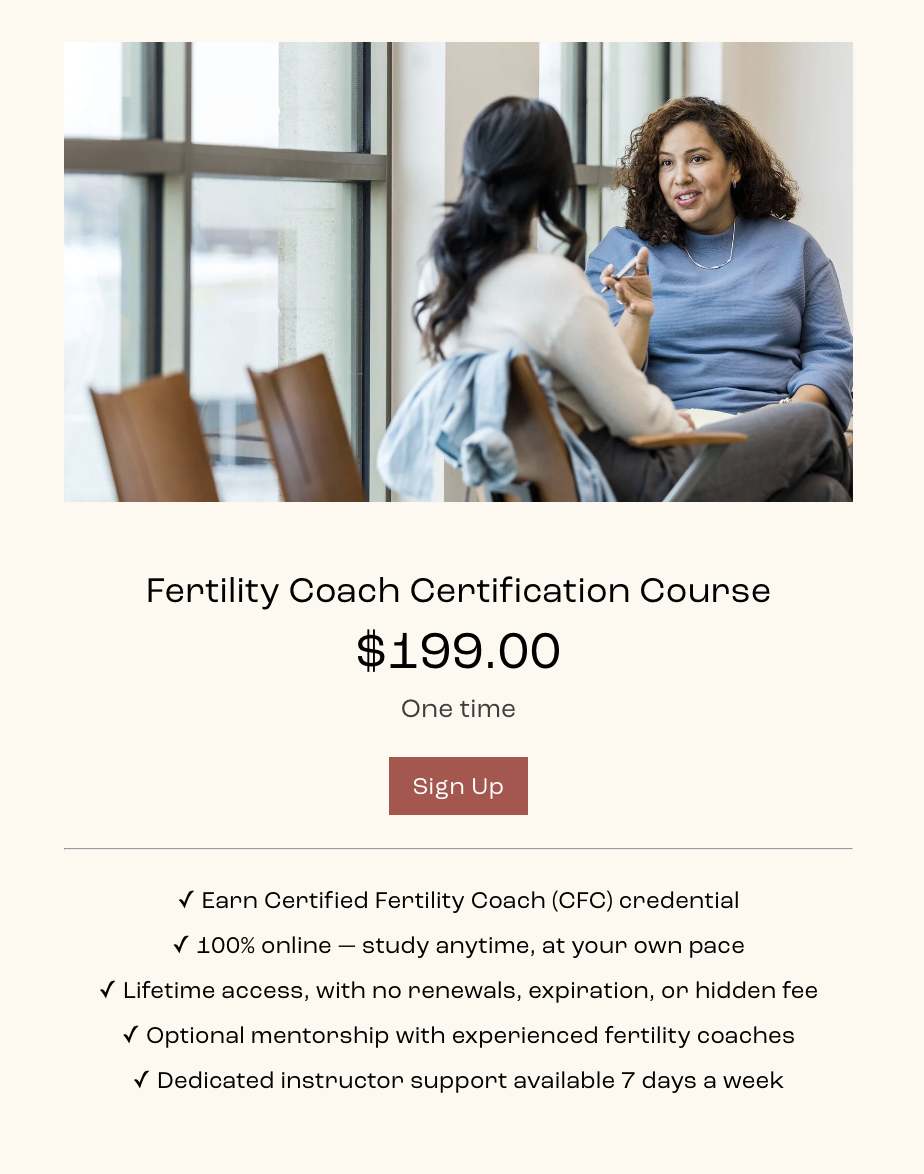
The DNT Network Fertility Coach Certification is designed specifically for students without medical backgrounds. It provides evidence-informed education in accessible language while reinforcing that fertility coaches are not medical decision-makers.

Common Backgrounds Among Fertility Coaches
Fertility coaches come from a wide range of professional and personal backgrounds. Many are drawn to this work because they’ve supported others through complex emotional experiences—or lived through them themselves.
It’s common to see fertility coaches who previously worked as doulas, wellness coaches, educators, advocates, yoga instructors, or mental health professionals operating within a non-therapy scope. Others enter the field after their own fertility or IVF journey and want to offer the kind of support they once needed.
When paired with proper training, these backgrounds often enhance a coach’s ability to connect with clients on a human level.
How Certification Fills the Knowledge Gap
For those without medical training, certification is essential. A well-designed program teaches fertility fundamentals clearly and responsibly, without requiring clinical expertise.
In the DNT Network Fertility Coach Certification, students learn the basics of reproductive health, an overview of fertility treatments like IVF and IUI, and the emotional and psychosocial impact of infertility. Just as importantly, the program reinforces what fertility coaches should not do—such as interpreting lab results, recommending treatments, or offering medical advice.
This clarity protects both the coach and the client and helps build trust from the very beginning.

Will Clients Trust a Fertility Coach Without Medical Training?
This is a common concern, but in practice, many clients actively prefer working with non-medical fertility coaches. They already have doctors. What they’re seeking is support that feels personal, consistent, and emotionally safe.
Clients tend to trust fertility coaches who are transparent about their role, clearly certified, and confident in their boundaries. Certification through a recognized program like DNT Network helps establish that credibility while making your scope of practice clear.
Trust is built through presence, communication, and professionalism—not through medical credentials alone.

When a Medical Background Can Be Helpful (But Isn’t Required)
Some fertility coaches do come from healthcare backgrounds, and that experience can be valuable. Nurses, midwives, and allied health professionals sometimes pursue fertility coaching as an extension of their work.
However, even those with clinical training must approach fertility coaching differently. Coaching requires collaboration rather than instruction and support rather than diagnosis. This is why certification programs emphasize coaching skills regardless of a student’s prior education.
Our Take
You don’t need a medical background to become a fertility coach—but you do need thoughtful training, clear boundaries, and a genuine commitment to supporting clients responsibly. Fertility coaching is about helping people navigate uncertainty, emotions, and decisions during one of the most vulnerable times in their lives.
With a structured, accessible program like the DNT Network Fertility Coach Certification, individuals from many different backgrounds can step into this role with confidence. For many, not having a medical background is not a limitation—it allows them to show up as a steady, human presence in a process that often feels overwhelming and impersonal.