Module 6: CPR, AED & First Aid Fundamentals
CPR, AED & Pediatric First Aid Fundamentals
Module 6 · Lesson 6.3
Essential First Aid & Emergency Preparedness
Bleeding, burns, seizures, allergic reactions, poisoning, and fever — the everyday emergencies of infancy and early childhood — plus the preparation, safety practices, and documentation that define a professional response.
In this lesson
- Safe emergency response: the first-aider’s priorities and personal protection
- Bleeding control, from scraped knees to life-threatening hemorrhage
- Burns and scalds, including chemical and electrical injuries
- Seizures, including febrile seizures
- Allergic reactions and anaphylaxis: recognizing them and using epinephrine
- Poisoning and ingestions, including button batteries and magnets
- Fever-related emergencies in infants
- Infant-specific safety: safe sleep, falls, head injury, and abusive head trauma
- Building your professional first aid kit and documenting incidents
6.3.1 Safe emergency response: priorities and protection
First aid follows a fixed order of priorities. Whatever the injury, run this sequence before you treat anything:
- Scene safety. Hot stove still on? Chemical spilled? Sibling about to touch the same outlet? Remove the hazard or move the child.
- Life threats first. Unresponsive and not breathing → CPR (Lesson 6.1). Severe bleeding → direct pressure. Anaphylaxis → epinephrine. These come before anything else, including calming the child or calling the parents.
- Call for help when the situation exceeds what first aid can resolve. The thresholds for calling 911 are listed throughout this lesson — learn them, because hesitation is the most common failure.
- Protect yourself. Gloves before contact with blood or body fluids; wash hands thoroughly afterward. A barrier device for breaths. If you’re exposed to blood through broken skin or mucous membranes, wash immediately and seek medical advice the same day.
- Treat, monitor, and communicate. Give first aid, watch for changes, and inform the parents promptly and factually.
Consent and your role
As a non-medical professional, you act under implied consent for a child in your care when a parent is not present: the law presumes a reasonable parent would want you to give first aid. Give the care you are trained for, stay within that scope, and hand off to parents or EMS as soon as you can. Good Samaritan laws in all U.S. states protect people who give reasonable emergency aid in good faith.
6.3.2 Bleeding
Minor cuts and scrapes
- Gloves on. Rinse under clean running water for several minutes to flush dirt; don’t scrub.
- Apply gentle direct pressure with clean gauze until bleeding stops — usually 2 to 5 minutes.
- Apply an adhesive bandage or non-stick dressing. Antibiotic ointment only with the family’s permission.
- Over the next few days watch for infection: spreading redness, warmth, swelling, pus, red streaks, or fever.
Severe bleeding
Bleeding that spurts, flows steadily, soaks through a dressing, or won’t stop with pressure is life-threatening. A toddler has only about 1 liter of blood; a newborn about 250 mL — a volume that would be a nuisance in an adult can be an emergency in a child.
- Call 911, or direct someone else to.
- Apply firm, direct pressure with both hands over a thick pad of gauze or clean cloth. Press harder than feels comfortable. Keep pressing continuously — don’t lift to check.
- If blood soaks through, add more dressing on top. Removing the first layer tears away the clot that is forming.
- If bleeding from an arm or leg does not stop with pressure and a commercial tourniquet is available, apply it 2 to 3 inches above the wound (not over a joint), tighten until bleeding stops, and write the time on the tourniquet or the skin. Tourniquets are safe for children and should not be loosened once applied.
- Lay the child down, keep them warm, and watch for shock: pale, cool, clammy skin, rapid breathing, drowsiness, or unusual quietness.
Watch
The full response to severe bleeding: call 911, direct pressure, and when to escalate. Source: American Red Cross.
Watch
Direct pressure done correctly — both hands, firm, continuous, adding layers rather than lifting. Source: American Red Cross.
Watch
Applying a tourniquet 2–3 inches above a limb wound when pressure fails; note the time. Source: American Red Cross.
Special cases
- Nosebleeds: sit upright, lean forward, pinch the soft part of the nose for a full 10 minutes without releasing. Seek care if it lasts beyond 20 minutes or follows a head injury.
- Embedded objects: don’t remove glass, a nail, or a stick. Pad around it, bandage to stabilize, and get medical care.
- Amputated part (fingertip injuries are common in toddlers and doors): control bleeding, wrap the part in moist gauze, seal in a plastic bag, place the bag on ice — don’t put the part directly on ice — and bring it to the ER with the child.
A wound needs a clinician when it is
Gaping, deeper than about a quarter inch, on the face or over a joint, a bite (animal or human), contaminated with dirt or debris you can’t rinse out, from a dirty or rusty object, a puncture, or still bleeding after 10 minutes of direct pressure. Ask parents about tetanus status.
6.3.3 Burns and scalds
Scalds — from hot drinks, bath water, and microwaved bottles — are the most common burn in children under 4. A child’s skin is thinner than an adult’s, so the same temperature burns deeper, faster. Water at 140°F (60°C) causes a full-thickness burn in about 3 seconds; many home water heaters are set that high.
- Stop the burning. Move the child away from the source. For scalds, remove wet clothing and diapers right away unless stuck to the skin — fabric holds heat against the body.
- Cool with running water for 10 to 20 minutes. Cool tap water, not ice-cold. This is the single most effective step; it reduces depth, pain, and scarring and is still beneficial if started up to 3 hours after the injury. Never use ice, butter, oil, toothpaste, or egg.
- Remove jewelry, watches, and tight clothing near the burn before swelling begins.
- Cover loosely with a non-stick dressing or clean plastic wrap laid (not wrapped) over the burn. Don’t break blisters; don’t apply fluffy cotton.
- Keep the child warm. Cool the burn, not the baby. Infants lose heat fast; cover the rest of the body with a blanket while the burn is cooling.
Watch
Cooling a child’s burn under running water and covering it loosely. Source: British Red Cross.
Watch
The key action for any burn or scald: cool with running water for at least 20 minutes. Source: British Red Cross.
| Type | Additional steps |
|---|---|
| Chemical | Brush off dry chemical first, then flush with large amounts of running water for at least 20 minutes. Remove contaminated clothing. Call Poison Control (1-800-222-1222). For eyes, flush continuously from the inner corner outward. |
| Electrical | Turn off the power before touching the child. Call 911 — the entry and exit wounds may look small while internal injury is extensive. Be ready to begin CPR. Mouth burns from biting cords are common in toddlers and need medical evaluation even when they look minor. |
| Sunburn | Cool compresses, fluids, loose clothing. Blistering sunburn or any sunburn in an infant under 6 months should be seen by a provider. |
Call 911 or go to the emergency department for a burn that is
Larger than the child’s palm; on the face, hands, feet, genitals, or across a major joint; deep (white, leathery, charred, or painless); caused by chemicals or electricity; circling a limb or the chest; or on an infant under 1 year. A burn with a pattern that doesn’t match the explanation — a glove or stocking line, a cigarette-shaped mark, a clear object outline — must be reported under your mandated reporter obligations.
6.3.4 Seizures
A seizure is a surge of abnormal electrical activity in the brain. In young children the most common type is the febrile seizure: a brief convulsion triggered by a rapid rise in temperature, usually between 6 months and 5 years. Febrile seizures are frightening to witness, but most last under 2 minutes and do not cause brain damage. Seizures can also result from epilepsy, head injury, poisoning, low blood sugar, or a serious infection.
What you may see
- Stiffening followed by rhythmic jerking of the arms and legs
- Eyes rolling back, drooling, lips turning dusky
- Loss of responsiveness; loss of bladder or bowel control
- In infants: subtle signs such as lip smacking, bicycling movements, staring, or brief stiffening
- Afterward: deep sleep or confusion (the post-ictal period), which can last 30 minutes or more
What to do
- Note the time the seizure starts. Duration determines whether this is an emergency.
- Lay the child on their side on a safe, flat surface (floor, not a bed they can fall from). Move furniture and hard objects away. Put something soft under the head.
- Do not restrain the child and do not put anything in the mouth — a child cannot swallow their tongue, and objects break teeth and block airways.
- Loosen tight clothing around the neck. Stay with the child and speak calmly.
- When the seizure stops, keep the child on their side, check breathing, and let them rest. Don’t give food, drink, or medicine until fully awake.
Watch
Protecting a seizing child from injury, timing the seizure, and what not to do. Source: British Red Cross.
Watch
Febrile seizure in a baby: side-lying, cooling the room, and when to call for help. Source: British Red Cross.
Call 911 when
The seizure lasts longer than 5 minutes; a second seizure follows without full recovery; the child has trouble breathing or stays blue afterward; the seizure happened in water; it followed a head injury or possible poisoning; the child has diabetes; or it is the child’s first seizure ever. Any first febrile seizure needs same-day medical evaluation even if it stopped on its own.
6.3.5 Allergic reactions and anaphylaxis
Food allergy affects about 1 in 13 children in the U.S. The most common triggers in early childhood are cow’s milk, egg, peanut, tree nuts, soy, wheat, fish, shellfish, and sesame; insect stings, latex, and some medications also cause reactions. At the start of every contract, ask about allergies, read the family’s written allergy action plan, and confirm where the epinephrine is kept.
Mild reaction
Hives in one area, mild itching, a few sneezes, a runny nose, mild stomach upset. Give an oral antihistamine only if the family’s plan authorizes it, then watch closely for at least an hour — mild reactions can progress. Tell the parents the same day.
Anaphylaxis — a life-threatening emergency
Suspect anaphylaxis when there are symptoms in two or more body systems, or any breathing or circulation symptom after a known exposure:
| System | Signs |
|---|---|
| Skin | Widespread hives, flushing, swelling of face, lips, eyelids, or tongue |
| Breathing | Wheezing, repetitive coughing, hoarse voice, tight throat, difficulty swallowing, noisy or labored breathing |
| Circulation | Pale or bluish skin, weak pulse, dizziness, fainting, floppiness or limpness in an infant |
| Gut | Repeated vomiting, severe cramping, diarrhea |
| Behavior | Sudden anxiety, “something is wrong,” an infant who becomes unusually fussy or very quiet and limp |
- Give epinephrine immediately. It is the only medication that reverses anaphylaxis; antihistamines do not. Use the child’s own auto-injector according to the family’s plan. Give it at the first signs — early epinephrine saves lives, and the risks of giving it unnecessarily are minimal.
- Call 911 every time epinephrine is given, even if the child improves. Symptoms can return hours later (a biphasic reaction).
- Inject into the outer mid-thigh, through clothing if needed. Hold for the time the device specifies (usually 3 seconds). Note the time.
- Position: lying down with legs raised if faint or pale; sitting up if breathing is the main problem; an infant held upright on your lap. Don’t let the child stand or walk.
- If there is no improvement in 5 to 15 minutes and a second device is available, give a second dose in the other thigh.
- Be ready to begin CPR if the child becomes unresponsive and stops breathing normally.
Watch
Recognizing a severe allergic reaction in a child and using an auto-injector. Source: British Red Cross.
6.3.6 Poisoning and ingestions
Children under 6 account for nearly half of all poison exposures reported in the U.S. The most common culprits are medications (including gummy vitamins and adult pills in purses), cleaning products, cosmetics, laundry and dishwasher pods, plants, and nicotine products.
- If the child is unresponsive, having trouble breathing, seizing, or very drowsy, call 911.
- Otherwise, call Poison Control: 1-800-222-1222 (U.S., 24 hours, free). Have the container in hand so you can read the label. Follow their instructions exactly.
- Do not induce vomiting and do not give anything by mouth unless Poison Control tells you to. Vomiting can cause a second burn with caustic substances and can lead to aspiration.
- For something on the skin, remove clothing and rinse for 15–20 minutes. For something in the eye, flush with lukewarm water for 15–20 minutes.
- For inhaled fumes, get the child to fresh air immediately.
Always an emergency
Button batteries can burn through the esophagus in as little as 2 hours. Go to the ER immediately; if the child is over 1 year and can swallow, give 2 teaspoons of honey every 10 minutes on the way (up to 6 doses) — this is current National Capital Poison Center guidance. Two or more magnets can attract through intestinal walls; go to the ER. Liquid nicotine and cannabis edibles cause serious toxicity in small children — call Poison Control immediately.
6.3.7 Fever-related emergencies
Fever itself is a symptom, not a disease, and in most children over 3 months it is a normal immune response. The emergency is in the age and the accompanying signs.
| Age | Threshold and response |
|---|---|
| Under 3 months | A rectal temperature of 100.4°F (38°C) or higher is a medical emergency regardless of how well the baby looks. Newborns can have serious bacterial infections with few other signs. Contact the parents and the pediatrician immediately; go to the ER if advised. Don’t give fever medication without medical direction. |
| 3 to 6 months | Fever of 102°F (38.9°C) or higher, or any fever with unusual fussiness, lethargy, or poor feeding → contact the pediatrician the same day. |
| Over 6 months | Judge the child, not the number. Seek care for fever lasting more than 2–3 days, or for any of the red flags below. |
Red flags at any age — call 911 or go to the ER: difficulty breathing; a stiff neck; a purple or red rash that doesn’t fade when pressed with a glass; a bulging soft spot; inconsolable crying or a high-pitched cry; extreme drowsiness or difficulty waking; a seizure; signs of dehydration (no wet diaper in 6–8 hours, no tears, sunken eyes or soft spot); or a child who simply looks very ill to you.
Rectal temperatures are the most accurate in infants under 3 months. Forehead and ear thermometers are acceptable for screening in older children. Never use a glass mercury thermometer. Don’t sponge with cold water or alcohol — it causes shivering, which raises temperature.
Watch
Comforting a feverish child and recognizing when a fever needs medical help. Source: British Red Cross.
6.3.8 Infant-specific safety considerations
Safe sleep
Sudden unexpected infant death remains the leading cause of death between 1 month and 1 year. Every sleep you supervise should follow the American Academy of Pediatrics’ recommendations: alone, on the back, in a crib — a firm, flat mattress with a fitted sheet and nothing else. No pillows, blankets, bumpers, positioners, or soft toys. No inclined sleepers, swings, or car seats for sleep outside the car. Room-sharing without bed-sharing for at least the first 6 months. Avoid overheating; dress the baby in one more layer than you would wear. Offer a pacifier at sleep time once breastfeeding is established. As a professional, you may be asked to accommodate family practices that conflict with these guidelines; document the conversation and your recommendation.

Falls and head injuries
Falls are the leading cause of non-fatal injury in infants — from changing tables, beds, bouncers placed on counters, and arms. Never leave an infant unattended on any raised surface, even for a second; keep one hand on the baby during diaper changes.
After any fall, observe the child closely for 24 hours and tell the parents immediately. Call 911 for: loss of consciousness, even briefly; vomiting more than once; a bulging soft spot; unequal pupils; clear or bloody fluid from the nose or ears; inability to wake or unusual drowsiness; a seizure; a visible dent or large swelling on the skull; any fall over 3 feet in an infant, or from any height onto a hard surface in a baby under 6 months. For minor bumps, apply a cold pack wrapped in cloth for 20 minutes and continue to observe.
Abusive head trauma (shaken baby syndrome)
Shaking an infant — even for a few seconds — can cause bleeding in the brain and eyes, permanent disability, or death. The trigger is almost always inconsolable crying, which peaks between 6 and 8 weeks of age. As a newborn care professional, you are both a protective presence and an educator: teach caregivers that it is always acceptable to put a safely swaddled baby down in the crib and step away for a few minutes to calm themselves. If you ever suspect a child has been shaken (extreme irritability, vomiting, poor feeding, lethargy, seizures, with or without visible injury), seek emergency care and fulfill your mandated reporting duty.
Other infant-specific hazards
- Drowning can occur in 2 inches of water. Never leave a baby alone in a bath, even to answer the door; empty buckets and tubs immediately.
- Strangulation and suffocation: keep cords, strings, necklaces, and plastic bags away. Pacifier clips must be short. No cords within reach of the crib.
- Car seats: rear-facing until at least age 2 and as long as the seat allows; chest clip at armpit level; no bulky coats under the straps. Never leave a child in a vehicle.
- Hot liquids: never hold a baby while drinking coffee or tea. Test bottle temperature on the inside of your wrist; never microwave breast milk or formula.
Watch
Safe sleep, safe handling, and home hazards in the newborn period. Source: The Ottawa Hospital.
6.3.9 Your professional first aid kit
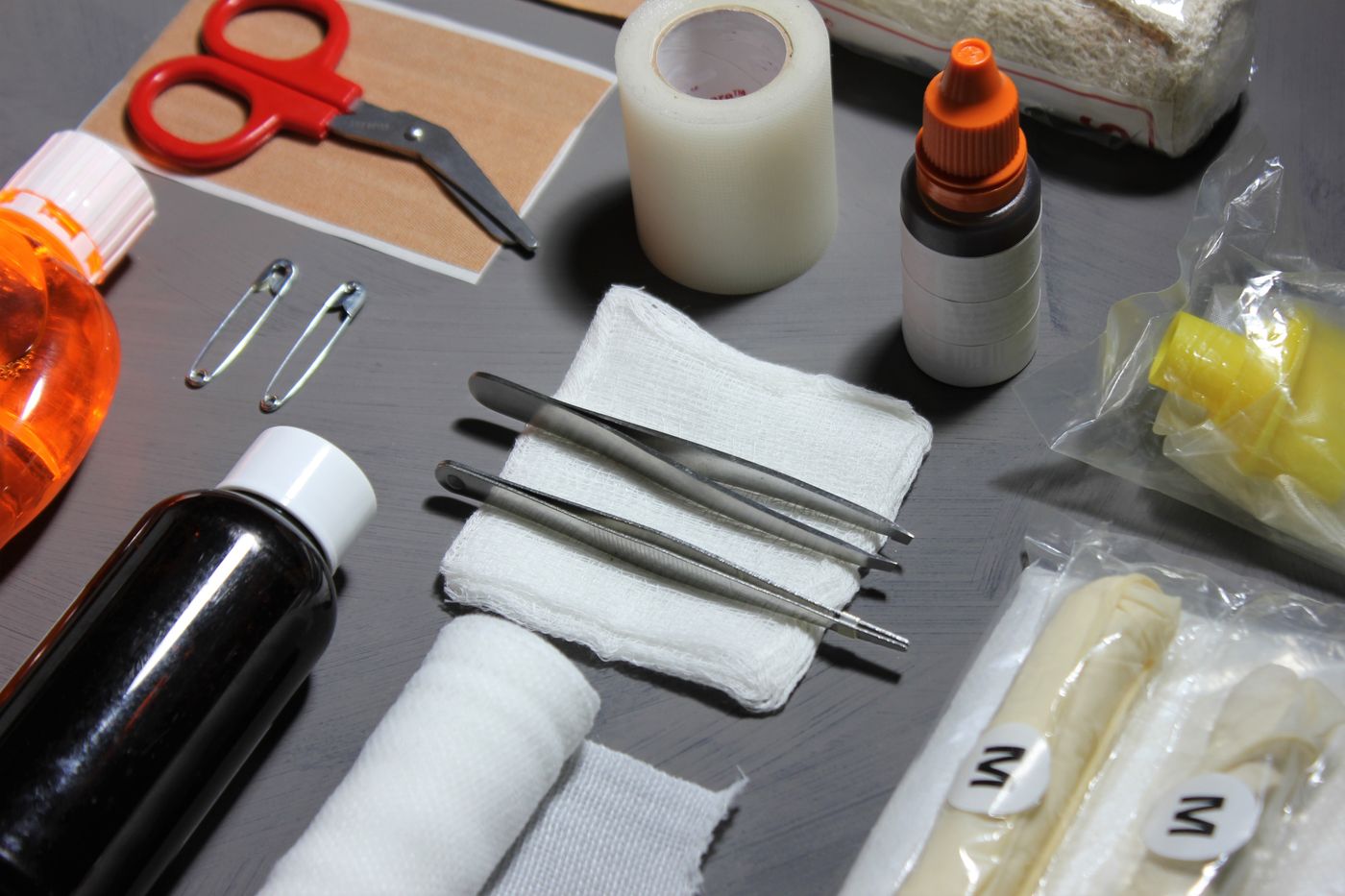
Essentials
- Nitrile gloves, several pairs
- CPR face shield or pocket mask (adult and infant)
- Sterile gauze pads (2×2, 4×4) and roller gauze
- Adhesive bandages, assorted
- Non-stick dressings and clean plastic wrap
- Medical tape, elastic bandage
- Trauma shears or blunt scissors, tweezers
- Instant cold packs
Also recommended
- Digital rectal thermometer with disposable covers
- Saline wound wash, antiseptic wipes
- Emergency foil blanket
- Small flashlight, pen, incident report forms
- Card with Poison Control (1-800-222-1222) and the family’s emergency contacts
- Copy of each client’s allergy action plan
- Nearest AED locations saved in your phone
Check expiration dates quarterly and restock after every use. Keep the kit where you can reach it in 30 seconds — not in a car trunk.
Watch
A pediatrician’s walkthrough of what belongs in a kit built for babies and toddlers. Source: Pediatrician’s Inbox.
6.3.10 Documenting and communicating an incident
After any incident — a fall you caught, a minor burn, a reaction to a new food — write it down while details are fresh:
- Date, time, and location
- What happened, in observable terms (“Fell from sitting position on carpet, hit back of head”) — not interpretations
- What you observed afterward (crying, redness, vomiting, behavior)
- What first aid you gave and when
- Who you contacted and when (parents, pediatrician, Poison Control, 911)
- How the child was at the end of your shift
Share it with the parents the same day in plain, calm, non-defensive language, and keep a copy. Documentation protects the child (clinicians get accurate information), the family, and you. For anything involving a 911 call, EMS, or a possible safeguarding concern, inform your agency or supervisor as well.
Key takeaways — Lesson 6.3
Scene safety, life threats, call, protect yourself, treat. Bleeding: gloves, direct pressure, don’t peek, add layers; tourniquet for life-threatening limb bleeding. Burns: cool running water 10–20 minutes, no ice, cover loosely, keep the child warm. Seizures: side-lying, nothing in the mouth, time it, 911 past 5 minutes or for a first seizure. Anaphylaxis: epinephrine first, 911 always, outer thigh, second dose at 5–15 minutes. Poisoning: Poison Control 1-800-222-1222, no induced vomiting, button batteries and magnets straight to the ER. Fever under 3 months at 100.4°F is an emergency. Safe sleep: alone, back, crib. Never shake a baby. Document everything.
Lesson 6.3 Knowledge Check
10 questions · Select an answer to see immediately whether it is correct, with an explanation.
1. You are applying direct pressure to a deep cut and the gauze soaks through. You should:
Not quite. Removing the soaked gauze tears away the clot that is forming and restarts the bleeding.
Correct. Add more gauze on top of the soaked layer and keep pressing firmly. The first layer stays in place to protect the forming clot.
Not quite. Rinsing is for minor cuts and scrapes. A deep, actively bleeding wound needs continuous pressure, not water.
Not quite. Elevation alone does not stop serious bleeding. Direct pressure is the treatment.
2. The most effective first aid for a scald burn is:
Not quite. Ice on a burn causes further tissue damage and can lead to frostbite on already injured skin.
Not quite. Butter and oil trap heat against the skin and increase infection risk. Never apply them.
Correct. Cool running tap water for 10–20 minutes reduces burn depth, pain, and scarring, and it still helps if started up to 3 hours after the injury. Cool the burn, not the whole child.
Not quite. Blisters protect the healing skin underneath; never pop them. Cotton fibers stick to the burn and must be picked out later.
3. During a seizure, you should:
Not quite. Restraining a seizing child can cause injury to both of you and does not shorten the seizure.
Not quite. A child cannot swallow their tongue. Objects in the mouth break teeth and can block the airway.
Not quite. A cool bath causes shivering and creates a drowning risk during a seizure.
Correct. Side-lying keeps the airway clear if the child vomits, clearing the area prevents injury, and the start time tells you whether the seizure has crossed the 5-minute emergency threshold.
4. Call 911 for a febrile seizure that:
Correct. Call 911 for any seizure lasting longer than 5 minutes, a second seizure without recovery, breathing trouble afterward, or a first-ever seizure. Even a short first febrile seizure needs same-day evaluation.
Not quite. Most febrile seizures last under 2 minutes and stop on their own. Thirty seconds is not the threshold.
Not quite. Age alone does not determine whether 911 is needed; duration and recovery do.
Not quite. Fever is the usual trigger of a febrile seizure, not a sign of emergency by itself.
5. The only medication that reverses anaphylaxis is:
Not quite. Antihistamines relieve hives and itching but do nothing for the airway swelling or blood-pressure collapse of anaphylaxis.
Correct. Epinephrine is the only medication that reverses anaphylaxis. Give it at the first signs and call 911 — early epinephrine saves lives and the risk of an unnecessary dose is minimal.
Not quite. Ibuprofen is a pain reliever and has no role in treating an allergic reaction.
Not quite. An inhaler may ease wheezing but does not treat the whole-body reaction. It is not a substitute for epinephrine.
6. A child improves within minutes of receiving epinephrine. You should:
Not quite. Symptoms can return hours later in a biphasic reaction. The child needs medical observation.
Not quite. A second dose is given only if there is no improvement after 5–15 minutes, not immediately after the first.
Correct. Call 911 every time epinephrine is given, even if the child improves. Anaphylaxis can recur hours later, and the child needs monitoring in a medical setting.
Not quite. The decision to call 911 after epinephrine is not optional. Make the call, then contact the parents.
7. A toddler has swallowed an unknown number of adult vitamins and is alert. Your first call should be to:
Not quite. Inform the parents right after Poison Control. They cannot tell you whether the ingestion is dangerous.
Not quite. A pediatrician’s office is not set up for real-time poison triage. Poison Control specialists are.
Not quite. 911 is for a child who is unresponsive, having trouble breathing, seizing, or very drowsy. An alert child goes to Poison Control first.
Correct. Poison Control (1-800-222-1222) is free, available 24 hours, and will tell you exactly what to do based on the product and the child’s weight. Have the container in hand.
8. A rectal temperature of 100.4°F (38°C) in a 6-week-old infant is:
Not quite. Normal is below 100.4°F. In an infant this young, that number is the emergency threshold.
Correct. Any rectal temperature of 100.4°F (38°C) or higher in a baby under 3 months is a medical emergency, even if the baby looks well. Newborns can have serious bacterial infections with few other signs.
Not quite. Sponge baths cause shivering, which raises temperature. They are not a treatment, and this baby needs a provider, not home care.
Not quite. In infants under 3 months the response is immediate, not after three days.
9. Which sleep setup follows safe sleep guidelines?
Correct. Alone, on the back, on a firm flat crib mattress with a fitted sheet and nothing else — this is the American Academy of Pediatrics safe-sleep standard.
Not quite. Inclined sleepers have been linked to infant deaths and are no longer sold or recommended. Blankets are a suffocation hazard.
Not quite. Side sleeping lets a baby roll to the stomach, and bed-sharing is a leading risk factor for sleep-related death.
Not quite. Stomach sleeping, bumpers, and pillows are three of the most significant SIDS risk factors.
10. After an infant falls from a changing table, which sign means you should call 911?
Not quite. Crying immediately after a fall is actually reassuring — it shows the baby is responsive and breathing well.
Not quite. A small red mark on its own can be observed. Apply a wrapped cold pack and watch closely for 24 hours.
Correct. Repeated vomiting and difficulty waking are signs of possible brain injury. Call 911, along with any loss of consciousness, bulging soft spot, unequal pupils, fluid from the nose or ears, or a seizure.
Not quite. Wanting to be held is a normal comfort-seeking response after a scare.
References. American Red Cross. (2024). First Aid/CPR/AED Participant’s Manual. · American Heart Association & American Red Cross. (2024). Focused Update on First Aid Guidelines. · American Academy of Pediatrics Task Force on Sudden Infant Death Syndrome. (2022). Sleep-Related Infant Deaths: Updated 2022 Recommendations. Pediatrics, 150(1). · National Capital Poison Center. (2024). Button Battery Ingestion Triage and Treatment Guideline. · Food Allergy Research & Education. (2024). Food Allergy & Anaphylaxis Emergency Care Plan.