Module 1: Foundations of Placenta Science & Professional Practice — 8 Hours
IN THIS LESSON
A Choice After Birth
“Would you like to keep your placenta?”
The parents look at each other. They know the placenta helped their baby grow, but they have never thought much about what happens to it after birth.
A friend mentioned placenta encapsulation, a process in which the placenta is prepared, dried, and placed into capsules.
The mother wonders if these capsules could help with energy, mood, and recovery. Her partner has other questions: Is it safe? Does it really work?
Families have different beliefs and traditions about the placenta. Some bury it, some preserve it, and others consider consuming it after birth.
Placenta encapsulation specialists help families understand their options. They need to know what research says, explain possible health risks, and respect each family's choices without making unsupported promises.
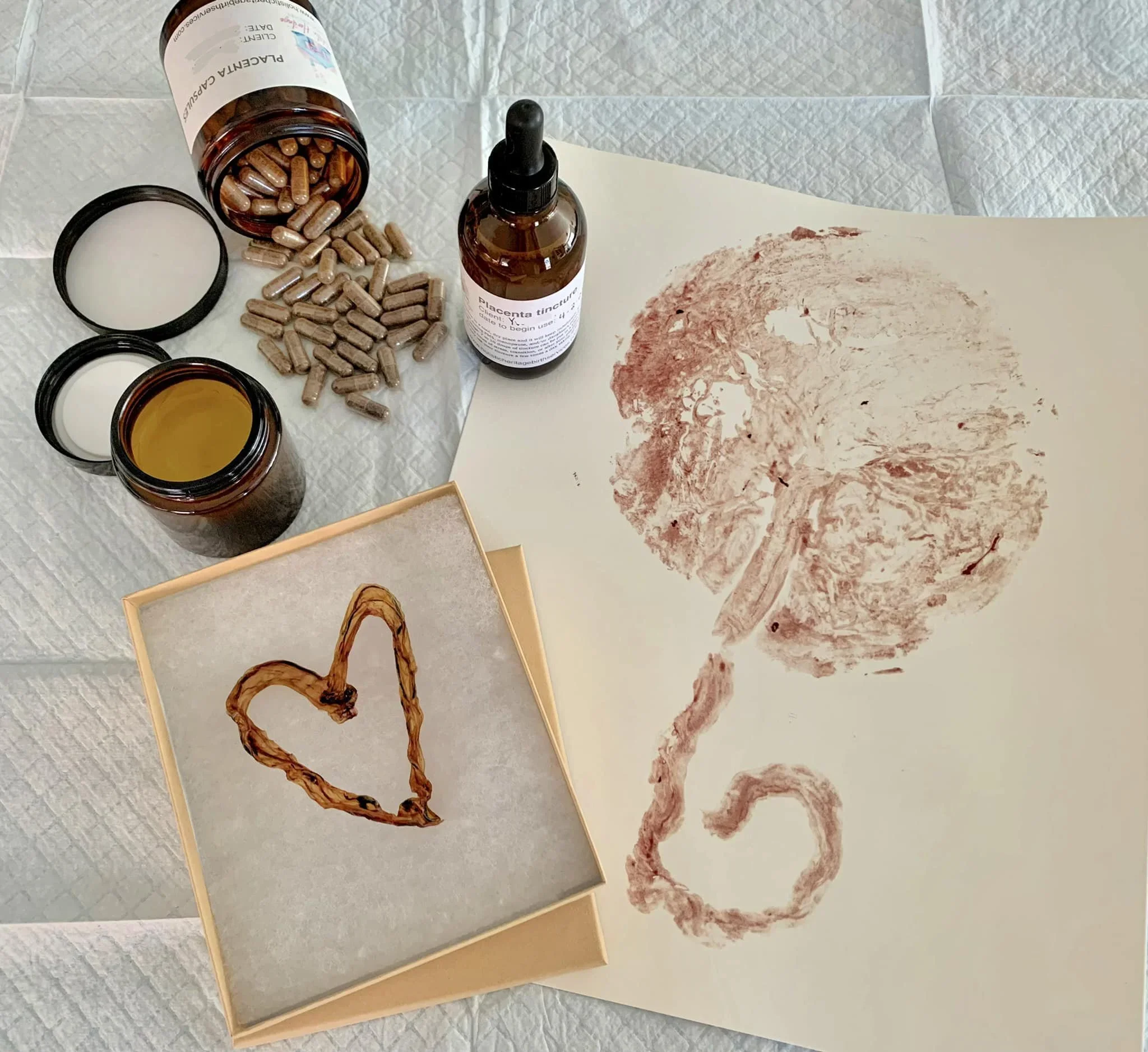
Module 1 · Lesson 1.1 · Foundations
Placenta encapsulation: what it is, why it matters to families, where the practice comes from, and what research can tell us.

What this course does—and does not—prepare you to do
Placenta encapsulation involves real human tissue, personal beliefs, and questions about health. This course teaches you how to explain the practice clearly and work within a non-medical role. You will learn what families may ask, how traditions differ, and what researchers have actually tested. You are not being trained to diagnose illness, give medical advice, or promise that placenta capsules will improve recovery. A doctor or midwife should answer medical questions. The later modules discuss handling and preparation, but completing a course does not make placenta capsules proven safe or legal to provide in every location.
☰
Lesson at a glance
- What eating the placenta meansPlain-language definitions, animals, and human history
- What the placenta means in different culturesHow families in different communities treat the placenta
- How placenta capsules became popularAn easy-to-follow timeline from the 1970s to today
- Why some families consider placenta capsulesCommon reasons people are interested in the service
- What scientists have actually foundWhat studies found, what they did not find, and safety concerns
- What a placenta encapsulation specialist can doWhat specialists can do, what they cannot, and how to talk with clients
- Think about what you learnedThree short writing activities
- Knowledge check10 practice questions, with explanations
By the end of this lesson, you should be able to
ExplainDescribe what the placenta does during pregnancy and how encapsulation turns tissue into powder-filled capsules. Distinguish this modern service from historical medical uses and ceremonies.
UnderstandDescribe several traditions without treating all cultures as the same. Explain why a family may value the placenta without wanting to consume it.
Talk with clientsSeparate hopes and personal stories from scientific evidence. Describe infection concerns in everyday language and know when to refer a health question to a clinician.
1
What eating the placenta means
The placenta is a temporary organ that develops during pregnancy. It attaches to the inside of the uterus. Through the umbilical cord, it helps deliver oxygen and nutrients to the developing baby and move certain waste products away. After the baby is born, the placenta is delivered too. Some families call it the afterbirth. Placentophagy (pla-sen-TOF-uh-jee) is the word used for eating placenta tissue. The term describes the act itself; it does not mean the practice has a medical benefit.

Photo: תמרה דהן - דולה · CC BY-SA 3.0 · Source and license. Clinical photographs show human tissue and may be graphic.

Photo: תמרה דהן - דולה · CC BY-SA 3.0 · Source and license. Clinical photographs show human tissue and may be graphic.

Photo: Drscholarnick · CC0 (public-domain dedication) · Source and license. Clinical photographs show human tissue and may be graphic.
In modern placenta encapsulation, the tissue is dried, ground into powder, and placed inside capsules. Some methods include a steaming step before drying; others dry tissue without steaming. People may also eat cooked placenta or add it to drinks. The capsule form feels familiar because it looks like a vitamin or supplement. But that is only a change in form. It does not tell us whether the contents are safe, how they were processed, or whether taking them changes someone’s health (Botelle & Willott, 2020; Farr et al., 2018).
A useful comparison is an ordinary dried food. A fresh apple and a dried apple are made from the same fruit, but they look and feel very different. Drying changes moisture and texture. It does not automatically prove that every harmful germ has been removed. The same distinction matters even more with human tissue. A capsule can look clean and professional on the outside while telling us very little about the safety of what is inside.

If other mammals eat the placenta, does that mean people should?
Many mammals eat the placenta after giving birth. Researchers have suggested several reasons, including cleaning the birth area, reducing smells that could attract predators, and getting some nutrients back. These ideas help us understand animal behavior. They do not tell us whether a human parent benefits from swallowing prepared capsules (Young & Benyshek, 2010). Think of another familiar animal behavior: a dog may eat things that a person should not eat. Seeing an animal do something is not evidence that it is a good choice for human health. Researchers have also proposed the fire hypothesis to explore why placentophagy is uncommon in human historical records. It is an explanation researchers considered, not a proven history of what all humans did (Young, Benyshek, & Lienard, 2012).
How to explain the history to a client
A simple way to explain the history is: “People in many cultures have cared for the placenta through burial, ceremony, or traditional medicine. But researchers have not found strong historical evidence that mothers regularly ate their own placentas. Making capsules from a mother’s placenta became popular much more recently.” This does not mean nobody ever did it in the past. It means we should not claim a long, widespread tradition when the historical records do not support that claim.
What about traditional Chinese medicine?
Traditional Chinese medicine has included dried human placenta, known as zǐhéchē (紫河车), in some historical remedies. However, traditional medical use is not the same thing as a mother choosing capsules made from her own placenta after childbirth. The source of the placenta, the people involved, the reason it was used, and the preparation may all differ. A client might say, “So this has been done in Chinese medicine for hundreds of years?” A careful answer is: “Dried placenta has a history in certain traditional remedies, but modern maternal encapsulation is a different practice.” This respects the historical record without suggesting that modern capsules have a proven treatment effect (Young & Benyshek, 2010).
Watch and reflect
Watch: Let’s Look at a Real Placenta
An anatomy educator shows the organ itself. You do not need to memorize every anatomical term in this lesson; focus on recognizing the placenta and how it connects with the baby.
Video: Institute of Human Anatomy (2022). Watch on YouTube if the player does not load.
Think about it
Can you describe the placenta in your own words? Which side is connected to the cord? Why might a family who sees this organ feel that it deserves respectful treatment?
Flashcards
Six useful words to know
Click a card to flip it. Click again to flip back.
Placentophagy
tap to revealEating placenta after birth. Many mammals do this; written cultural records do not show it was a routine practice for human mothers (Young & Benyshek, 2010).
Placenta encapsulation
tap to revealDrying placenta, grinding it into powder, and filling capsules. These steps do not prove germs have been removed or health benefits have been achieved (Buser et al., 2017).
Raw dehydration
tap to revealDrying tissue without steaming it first. “Raw” describes the method, not a scientifically proven way to protect useful nutrients or make safe capsules (Farr et al., 2018).
Zǐhéchē 紫河车
tap to revealA Chinese term for dried human placenta used in some traditional remedies. It is different from a mother consuming her own placenta as modern capsules (Young & Benyshek, 2010).
Clinical waste
tap to revealTissue handled or discarded under clinical rules. A family’s ability to take the placenta home depends on the facility and local requirements (Burns, 2014).
Self-report survey
tap to revealA study that asks people what they remember or experienced. It can describe opinions and experiences, but cannot prove the capsules caused a reported benefit (Selander et al., 2013).
2
What the placenta means in different cultures
For some families, the placenta is not simply something left after delivery. It can be connected with belonging, ancestry, the child’s future, or a family’s spiritual life. A family may want to bury it, keep it until a ceremony, or make a print or keepsake. Another family may want the hospital to handle it and feel no special attachment to it. None of these choices tells you whether the family wants to eat placenta. Ask instead of assuming.
In a 2010 cross-cultural study, Young and Benyshek reviewed written accounts from 179 societies. They found many different ways people handled or disposed of placentas. They did not find evidence in those records that mothers routinely ate their own placentas. The distinction matters. A community may care deeply about the placenta and still have no tradition of consuming it. The study described 169 handling and disposal customs. That number describes what researchers found in those written records; it is not a count of how many traditions exist in the world.
Imagine a client who says, “My grandmother wants us to bury the placenta near our family home.” Your response should be curious and respectful: “Is there a special way your family would like it handled? Would it help to ask your birth facility about release and storage before your due date?” You do not need to know the details of every tradition. You do need to listen, avoid stereotypes, and check which practical arrangements are allowed.
| Belief or tradition described in the research | How often it appeared in the records | Example |
|---|---|---|
| How the placenta is treated may affect the child's future | 54.4% | Burying the placenta near a tree believed to protect the child |
| Concern about animals touching or eating the placenta | 17.8% | Burying it deeply or protecting the burial place |
| Belief that the placenta should be kept away from others | 11.9% | Placing it away from the home or limiting who can touch it |
| Concern that someone could use it to cause harm | 8.9% | Keeping the burial place private |
| Use in a traditional remedy | 2.0% | Uncommon; usually not a mother eating her own placenta |
| Giving the placenta a family or companion name | 29 societies | Some names compared it with a family member or friend; others meant "blanket," "house," or "twin" |
How to read the cultural-history table
The percentages describe patterns in the material the researchers reviewed. They do not mean, for example, that 54.4% of all families worldwide share one belief. Some records were more detailed than others, and different customs could appear together.
Think of the study as looking through a collection of old travel journals and cultural accounts. It can tell us what those documents reported. It cannot tell us exactly what every family practiced, including families whose customs were never written down.
Source: Young & Benyshek (2010). These numbers refer to the cultural records the researchers examined, not to all families or births around the world.

Watch and reflect
Watch: Ojibwe Teaching — Placenta Care
A community-focused video from Families First explains why placenta care and burial can be meaningful. This is one particular community perspective, not a statement about all Indigenous traditions.
Video: Families First (2025). Watch on YouTube if the player does not load.
Think about it
What matters most to the families described in the video? How could you ask about a client’s wishes without assuming they share the same customs?
How to talk respectfully with families
- Begin with an open question. Try, “What would you like to happen to the placenta after birth?” A parent might want a ritual, a keepsake, or no service at all. Listening first avoids suggesting capsules to someone who never asked for them.
- Ask what part of the tradition matters. A parent might care about the date of burial, who performs the ceremony, or whether the placenta can be returned after clinical examination. Ask permission before discussing these details with anyone else.
- Make hospital arrangements early. A facility might need the placenta for pathology, which is medical examination of tissue to understand pregnancy or birth complications. This can affect whether or when it can be released. Explain that you cannot override clinical or legal requirements (Burns, 2014; see Lesson 3.3).
- Respect different choices within the same culture. Two family members may disagree, or a family may adapt a tradition to their circumstances. Avoid saying “people from this community always do this.” The individual client’s wishes still matter.
3
How placenta capsules became popular
Today’s placenta encapsulation services became more visible in North America in the late twentieth century and expanded with the internet. Family stories, books, birth-worker networks, and social media made it easier to hear about capsules or find a provider. Scientists then began asking whether the expected benefits actually occur, and whether the practice can cause harm. The timeline below follows those different threads: popularity, research, and safety.
Imagine two people in different decades. In 1980, someone might hear about placenta consumption from a small birth community. In 2026, someone might see a short social-media clip showing neat rows of capsules and a glowing testimonial. The second person may encounter the practice much more easily, but convenience and popularity still cannot answer whether it improves health. That question needs research.
Interactive timeline
How the practice developed: 1970s to 2026
Select a date to learn what happened. On a phone, swipe sideways to see more dates.
1970s
First documented US cases1979
Medical literature notices2010
The 179-society study2013
189 consumers surveyed2015
First systematic review2016–18
Placebo-controlled pilots2017
Oregon GBS case report2018
Prevalence & the AJOG review2020
UK forum discourse2023–26
Reviews & the professional turn
Photo: dictionarydeshea · Pixabay Content License · Source and license. Clinical photographs show human tissue and may be graphic.

4
Why some families consider placenta capsules
Families do not all ask about placenta capsules for the same reason. One person may have heard that they improve mood. Another hopes they will help with milk supply or energy. Someone else may be drawn to the idea of using something from the birth itself. These are reasons for being interested, not evidence that capsules can deliver those results. A good conversation makes room for the family’s hopes while explaining what studies have and have not found.
What surveys can tell us
A 2013 survey asked 189 women who had consumed placenta about their experiences. Most respondents lived in the United States (91%), identified as White (93%), and were married (90%). More than half (58%) reported household incomes above $50,000. These details matter because the survey describes the people who chose to respond, not a random sample of everyone who has given birth. Another study of planned home and birth-center births found that about 30.8% of participants in that particular group reported placenta consumption (Benyshek et al., 2018). That figure is not a national rate for all U.S. births.
A simple example: why a survey cannot prove a benefit
Suppose ten friends take placenta capsules. Seven say they feel less tired two weeks after birth. Did the capsules help? We still do not know. Many people gradually recover, get more sleep, receive support, or have changing hormone levels during those weeks.
Now imagine another ten parents who do not take placenta capsules. If seven of them also feel less tired, the first group’s improvement may have happened without the capsules. A comparison group helps researchers ask that question. A survey that asks only capsule users how they felt cannot do the same job.
| What the 189 survey participants said | Rank | What to keep in mind |
|---|---|---|
| Reported benefit Improved mood | #1 | These women said they noticed changes, but the study did not compare them with women taking other capsules. We cannot tell whether the placenta caused those changes. |
| Reported benefit Increased energy | #2 | |
| Reported benefit Improved lactation | #3 | |
| Reported problem Unpleasant burping | #1 | These were problems some participants noticed. The survey could not tell whether the capsules caused them or how common serious problems might be. |
| Reported problem Headaches | #2 | |
| Reported problem Unappealing taste or smell | #3 |
Source: Selander, Cantor, Young & Benyshek (2013), Ecology of Food and Nutrition, 52(2).
Hopes are not the same as proven results
In 2020, researchers read messages posted to parenting forums in the United Kingdom. People often talked about hoped-for benefits, especially changes in mood after birth. Risks received less attention (Botelle & Willott, 2020). Forum posts can show which questions people ask and how they describe their experiences. They cannot show whether a treatment works, because researchers did not give participants capsules and compare their health outcomes under controlled conditions.
A client may tell you, “My sister took capsules and felt wonderful.” You can respect that experience without calling it proof. Try: “I’m glad she felt well. Recovery is different for everyone, and we cannot know from one person’s experience what caused the change. The studies done so far have not shown a clear health benefit.” This approach is more useful than either dismissing someone’s story or treating it like a medical study (Schuette et al., 2017).

Photo: AlbertCahalan · Public domain · Source and license. Clinical photographs show human tissue and may be graphic.
Important: worries about depression after birth
There is no good evidence that placenta capsules prevent postpartum depression. Never suggest that they can replace medical care, counseling, or a plan for emotional support after birth. If a client is worried about depression, encourage them to discuss those concerns with a doctor, midwife, or mental-health professional. Your job is to listen, share accurate information, and help the person find the right support—not to diagnose or treat depression.
5
What scientists have actually found
Scientists have studied placenta consumption in several ways. Some studies ask people about their experiences. Others test the contents of placenta tissue in a laboratory. A few compare people taking placenta capsules with people taking other capsules. These approaches answer different kinds of questions. A 2024 review examined 64 publications, but many discussed existing work instead of reporting new trials (Morais et al., 2024). The number of publications alone does not tell you how convincing the evidence is.
When you read a study, start with four questions: Who took part? What did researchers compare? What did they measure? What else could explain the result? If a study measured iron levels with a blood test, it can help answer an iron question. It cannot automatically tell us about mood or milk supply. If a study tested hormones in dried powder, it can tell us what was found in the powder. It cannot prove what happens after a person swallows it.

Photo: Ravedave · Public domain · Source and license. Clinical photograph may be graphic.
The main studies, in everyday language
| Study | How it was studied | Size | What researchers asked | What they found | What kind of evidence |
|---|---|---|---|---|---|
| Selander et al. (2013) | Survey of personal experiences | 189 | Why do women do it, and what do they notice? | Women reported changes, but the survey could not show whether capsules caused them | Survey |
| Coyle et al. (2015) | Review of 4 human and 6 animal studies | 10 studies | Is there evidence of benefit? | Researchers could not confirm health benefits and needed more information about risks | Review |
| Young et al. (2016) | Laboratory test | — | What survives processing? | Some hormones were present in the powder. That does not mean swallowing it changes health. | Laboratory |
| Gryder et al. (2017) | Small trial comparing two kinds of capsules | 23 | Does encapsulated placenta improve postpartum iron? | Placenta capsules did not improve iron levels more than the comparison capsules | Compared groups |
| Buser et al. (2017) | CDC report about one infant | 1 infant | Can capsules transmit infection? | An infant became sick twice. Harmful bacteria in the capsules matched bacteria from the baby. | Safety warning |
| Young et al. (2018) | Small trial comparing two kinds of capsules | 27 | Mood, bonding, fatigue? | No clear improvement in mood, parent-baby bonding, or tiredness | Compared groups |
| Benyshek et al. (2018) | Records from planned community births | 23,000+ births | How common, and any neonatal harm? | About 30.8% used placenta. The study did not find a higher rate of the newborn problems it measured, but could not prove safety. | Records |
| Farr et al. (2018) | Review of existing research | — | Overall verdict for clinicians | Review found no proven health benefit and recommended advising against eating the placenta | Review |
| Botelle & Willott (2020) | Study of online discussions | 1,752 posts | How do people talk about it? | People often discussed hoped-for benefits; they talked about risks less often | Discussions |
| Dhirja & Dhama (2026) | Research review | — | Where does the field stand now? | Review found no proven benefit and urged attention to possible harm | Review |
Four study terms, explained with everyday examples
Survey: like asking customers what they thought of a restaurant. Their answers matter, but they cannot prove the restaurant caused a change in health. Laboratory study: like measuring how much iron is in a food. It tells you what is present, not what effect eating it will have.
Comparison trial: one group receives the item being studied and another receives a comparison item. Researchers then check whether their outcomes differ. Placebo: a look-alike treatment used to help separate the effect of an item from expectations. In the iron trial here, the comparison capsules contained dried beef.
Systematic review: researchers gather and assess earlier studies using a planned method. A review can reveal patterns and gaps, but it cannot turn weak original studies into a strong proof simply by putting them together.
Two important studies to remember
1. Do placenta capsules help with iron? Iron helps the body make healthy red blood cells. Low iron after delivery may cause symptoms such as tiredness or dizziness, but only a clinician can check the cause. In a small 2017 trial, 23 women received either placenta capsules or capsules made from dried beef. The participants and the research team did not know who received which until the trial was completed. This is called double-blinding. It helps reduce expectations and bias. The researchers found no meaningful advantage in iron status for the placenta group (Gryder et al., 2017). If someone says, “But there is iron in the placenta,” explain the difference between containing iron and raising someone’s iron levels. A food label can tell you a snack contains protein. It does not prove that eating that snack will cure muscle weakness. The same logic applies here. People worried about anemia need medical assessment, not capsule claims.
2. What happened in the Oregon infection case? In 2016, a baby in Oregon developed an infection caused by Group B streptococcus (GBS), bacteria that can make newborns seriously ill. After treatment, the baby went home and then developed another infection. The mother had been taking capsules made from her placenta. Investigators found GBS in the capsules and found that the bacterial strain matched the one found in the baby. The report could not establish exactly how every transmission occurred, but it raised serious concern about the capsules as a possible source of repeated exposure. The CDC explained that the encapsulation process had not been shown to reliably eliminate harmful germs and advised avoiding placenta capsules (Buser et al., 2017). One case report does not tell us how often an event happens. It can still reveal an important danger.
There is another easy way to see the difference between measuring and proving a benefit. A laboratory might find several hormones in processed placenta powder (Young et al., 2016). Finding a hormone is a measurement of the powder. It does not tell us how much is absorbed through digestion, whether enough reaches the bloodstream to have an effect, or whether that effect is useful or harmful. Those are separate questions for separate studies.

Watch and reflect
Watch: What Are Randomized Controlled Trials?
Cochrane Complementary Medicine, an independent research group, explains how researchers compare treatments to find out whether they work. This helps you understand the placenta capsule studies in this section without promoting another certification organization.
Video: Cochrane Complementary Medicine (2024). Watch on YouTube if the player does not load.
Think about it
In the 2017 placenta iron study, one group took placenta capsules and another took dried-beef capsules. Why was that comparison more useful than simply asking people whether they felt better? What questions does this small trial still leave unanswered?
Decision-support flowchart
Check a claim you hear from a client
Choose what the client wants to know. Follow the questions to practice a clear response.
Interactive process simulation
What makes a study more trustworthy?
Try changing the number of people and the way a study is conducted. Watch how your confidence changes. This score is only a learning example—not a real scientific rating.
Practice score: how much can we trust the result?
—
6
What a placenta encapsulation specialist can do
A placenta encapsulation specialist works in a non-medical role. This may include explaining the service, listening to a family’s wishes, sharing accurate research summaries, helping families ask about a facility’s release policy, and keeping records when services are permitted. The specialist does not diagnose illness, prescribe a capsule dose, assess whether a person is medically safe to consume placenta, or promise that capsules prevent depression, improve milk supply, or treat anemia.
The practical limits matter just as much as a kind manner. Handling or distributing products made from placenta may be subject to local laws, facility rules, and infection-control requirements. These vary by location. More importantly, no preparation approach discussed in this course has been shown to make placenta capsules reliably free of dangerous germs. Records and informed consent are important professional practices; they cannot turn an unproven product into a medically approved one. Before offering any hands-on service, a specialist should check applicable laws and consult qualified safety and legal professionals (Buser et al., 2017; Marraccini & Gorman, 2015).
What would you say? Three situations
Situation 1: “Will these capsules increase my milk?” You might reply, “Some people hope for that, but studies have not shown that the capsules reliably increase milk production. If you are concerned about feeding, a lactation professional can help you assess what is happening.”
Situation 2: “Can you tell me if my placenta is safe to eat?” You might reply, “I cannot determine that. Appearance and normal handling records cannot rule out harmful germs. Please discuss the risks with your healthcare provider.”
Situation 3: “I only want to keep the placenta for a family ceremony.” You might reply, “I can help you identify the questions to ask the hospital about release and storage. Tell me what arrangements are important to your family.”
Photo: תמרה דהן - דולה · CC BY-SA 3.0 · Source and license. Clinical photographs show human tissue and may be graphic.

Put the steps in order
Put the possible service steps in order
Move the steps into the order they would normally be discussed. This is a learning activity, not instructions proving that processing is safe.
- ⋮⋮If permitted, transport the placenta in a labeled, cooled container and record who handled it
- ⋮⋮Meet with the client before birth to explain the service, research, risks, and your role
- ⋮⋮If supplying a product is legal, explain its risks and document the handover—without claiming it is safe or effective
- ⋮⋮Collect relevant health information and get written informed consent, with medical questions referred to a clinician
- ⋮⋮Only if allowed by law and reviewed by qualified safety professionals, carry out and record the planned process while acknowledging that safety is not proven
- ⋮⋮Ask the hospital or birth center about releasing the placenta before birth
Practice conversation
Meet Maya: 34 weeks pregnant with her first baby
Choose what you would say to Maya. You will see why some answers are more helpful and accurate than others.
Your learning checklist
Can you explain these ideas?
Check each item when you can explain it in your own words. Your choices are saved on this device.
0%
7
Think about what you learned
Think about what you learned
Three questions to think about
Write your answers in your own words. They are saved only on this device. Download a copy if you want to keep them for your course portfolio.
✓
Knowledge check
These 10 questions help you review the main ideas. Answer every question, then select Check answers. Aim for at least 8 out of 10. Read the explanations for any questions you miss. The short written answers are checked by keywords, so an instructor should still review them when needed.
1
Multiple choice
What did researchers find when they reviewed records from 179 societies?
The records described many ceremonies and ways of handling the placenta, but not a regular custom of mothers eating their own placentas. That does not prove nobody ever did it.
2
Multiple choice
In the 2017 iron study, what did the comparison group take?
One group took placenta capsules and the other took dried-beef capsules. The researchers found no clear difference in iron levels. Placenta capsules should not be recommended to treat low iron.
3
Select all that apply
What happened in the 2016 Oregon infection case?
The mother’s earlier Group B strep test was negative. Later, tests found matching bacteria in the baby and capsules. The CDC advised against eating placenta capsules because processing has not been proven to remove harmful germs.
4
Matching
Match each study with what researchers did.
Selander et al. (2013)
Coyle et al. (2015)
Young et al. (2018)
Botelle & Willott (2020)
Different studies answer different questions. Surveys tell us what people report. Forum studies tell us what people discuss. Trials compare groups to test a result. Reviews bring earlier research together.
5
Short answer
A client says, “Placenta capsules have been used in Chinese medicine for centuries.” What part of that claim is true, and what is different about modern capsules?
Example answer: Dried placenta was used in some traditional Chinese remedies. But that is different from the modern practice of a mother taking capsules made from her own placenta. Modern maternal encapsulation became more widely discussed in the 1970s (Young & Benyshek, 2010).
6
Multiple choice
Why did capsules become a popular way to consume placenta?
Capsules were more appealing to some people than eating tissue, and the internet made providers easier to find. Neither reason proves a medical benefit.
7
Select all that apply
Which tasks are appropriate for a non-medical placenta encapsulation specialist?
A specialist can share information, keep records, and encourage medical follow-up. Diagnosing infection, deciding whether someone is medically safe, and prescribing capsules are not part of this non-medical role.
8
Matching
Match each number with what it means.
179
30.8%
1,752
23
These numbers come from very different studies. They do not all describe the same group of people, and they do not prove that capsules work.
9
Short answer
A client hopes capsules will prevent depression after birth. What did the 2018 study find, and what would you say to her?
Example answer: In a small study of 27 people, placenta capsules did not clearly improve mood, bonding, or tiredness more than the comparison capsules. I would explain this kindly and encourage her to talk with her healthcare provider about support for her mental health.
10
Multiple choice
What did a 2024 review find about the research on eating placenta?
The 2024 review looked at what kinds of articles had been published. Many were reviews. Knowing how much research exists is useful, but it does not tell us whether placenta capsules improve health.
0 / 10
§
References
- Benyshek, D. C., Cheyney, M., Brown, J., & Bovbjerg, M. L. (2018). Placentophagy among women planning community births in the United States: Frequency, rationale, and associated neonatal outcomes. Birth, 45(4), 459–468. https://doi.org/10.1111/birt.12354
- Botelle, R., & Willott, C. (2020). Birth, attitudes and placentophagy: A thematic discourse analysis of discussions on UK parenting forums. BMC Pregnancy and Childbirth, 20, Article 134. https://doi.org/10.1186/s12884-020-2824-3
- Burns, E. (2014). More than clinical waste? Placenta rituals among Australian home-birthing women. The Journal of Perinatal Education, 23(1), 41–49. https://doi.org/10.1891/1058-1243.23.1.41
- Buser, G. L., Mató, S., Zhang, A. Y., Metcalf, B. J., Beall, B., & Thomas, A. R. (2017). Notes from the field: Late-onset infant group B Streptococcus infection associated with maternal consumption of capsules containing dehydrated placenta — Oregon, 2016. MMWR. Morbidity and Mortality Weekly Report, 66(25), 677–678. https://doi.org/10.15585/mmwr.mm6625a4
- Coyle, C. W., Hulse, K. E., Wisner, K. L., Driscoll, K. E., & Clark, C. T. (2015). Placentophagy: Therapeutic miracle or myth? Archives of Women's Mental Health, 18(5), 673–680. https://doi.org/10.1007/s00737-015-0538-8
- Davidson, J. R. (1985). The shadow of life: Psychosocial explanations for placenta rituals. Culture, Medicine and Psychiatry, 9(1), 75–92. https://doi.org/10.1007/BF00048538
- Dhirja, & Dhama, V. (2026). Human placentophagy: An appraisal of benefits, risks and beliefs. International Journal of Community Medicine and Public Health, 13(8), 4715–4719. https://doi.org/10.18203/2394-6040.ijcmph20262765
- Farr, A., Chervenak, F. A., McCullough, L. B., Baergen, R. N., & Grünebaum, A. (2018). Human placentophagy: A review. American Journal of Obstetrics and Gynecology, 218(4), 401.e1–401.e11. https://doi.org/10.1016/j.ajog.2017.08.016
- Gryder, L. K., Young, S. M., Zava, D., Norris, W., Cross, C. L., & Benyshek, D. C. (2017). Effects of human maternal placentophagy on maternal postpartum iron status: A randomized, double-blind, placebo-controlled pilot study. Journal of Midwifery & Women's Health, 62(1), 68–79. https://doi.org/10.1111/jmwh.12549
- Hayes, E. H. (2016). Consumption of the placenta in the postpartum period. Journal of Obstetric, Gynecologic & Neonatal Nursing, 45(1), 78–89. https://doi.org/10.1016/j.jogn.2015.10.008
- Helsel, D. G., & Mochel, M. (2002). Afterbirths in the afterlife: Cultural meaning of placental disposal in a Hmong American community. Journal of Transcultural Nursing, 13(4), 282–286. https://doi.org/10.1177/104365902236702
- Manulata, Sharma, S., & Shubham. (2025). Placentophagia in tribal and modern societies: Navigating the thin line between risk and benefit. Journal of Family and Reproductive Health, 19(3), 161–166. https://doi.org/10.18502/jfrh.v19i3.20053
- Marraccini, M. E., & Gorman, K. S. (2015). Exploring placentophagy in humans: Problems and recommendations. Journal of Midwifery & Women's Health, 60(4), 371–379. https://doi.org/10.1111/jmwh.12309
- Moeti, C., Mulaudzi, F. M., & Rasweswe, M. M. (2023). The disposal of placenta among Indigenous groups globally: An integrative literature review. International Journal of Reproductive Medicine, 2023, Article 6676809. https://doi.org/10.1155/2023/6676809
- Morais, P. E. O., Nassif, M. S., Costa, A. C. B., Freitas, P. S., Sampaio, R. S., & Costa, I. C. P. (2024). Online scientific research on placentophagy: A bibliometric analysis. Revista Brasileira de Ginecologia e Obstetrícia, 46, e-rbgo4. https://doi.org/10.61622/rbgo/2024AR04
- Schuette, S. A., Brown, K. M., Cuthbert, D. A., Coyle, C. W., Wisner, K. L., Hoffman, M. C., Yang, A., Ciolino, J. D., Newmark, R. L., & Clark, C. T. (2017). Perspectives from patients and healthcare providers on the practice of maternal placentophagy. The Journal of Alternative and Complementary Medicine, 23(1), 60–67. https://doi.org/10.1089/acm.2016.0147
- Selander, J., Cantor, A., Young, S. M., & Benyshek, D. C. (2013). Human maternal placentophagy: A survey of self-reported motivations and experiences associated with placenta consumption. Ecology of Food and Nutrition, 52(2), 93–115. https://doi.org/10.1080/03670244.2012.719356
- Young, S. M., & Benyshek, D. C. (2010). In search of human placentophagy: A cross-cultural survey of human placenta consumption, disposal practices, and cultural beliefs. Ecology of Food and Nutrition, 49(6), 467–484. https://doi.org/10.1080/03670244.2010.524106
- Young, S. M., Benyshek, D. C., & Lienard, P. (2012). The conspicuous absence of placenta consumption in human postpartum females: The fire hypothesis. Ecology of Food and Nutrition, 51(3), 198–217. https://doi.org/10.1080/03670244.2012.661349
- Young, S. M., Gryder, L. K., Cross, C., Zava, D., Kimball, D. W., & Benyshek, D. C. (2018). Placentophagy's effects on mood, bonding, and fatigue: A pilot trial, part 2. Women and Birth, 31(4), e258–e271. https://doi.org/10.1016/j.wombi.2017.11.004
- Young, S. M., Gryder, L. K., Zava, D., Kimball, D. W., & Benyshek, D. C. (2016). Presence and concentration of 17 hormones in human placenta processed for encapsulation and consumption. Placenta, 43, 86–89. https://doi.org/10.1016/j.placenta.2016.05.005
Up nextLesson 1.2 — How the Placenta WorksNext, learn how the placenta supports a baby during pregnancy, what it is made of, and why placentas are not all exactly alike.
Module 1 · 6 hours
-
1. The placenta means different things to different cultures.
Some families bury the placenta, others include it in special ceremonies, and some choose to consume it. These traditions have different meanings. Understanding them helps you respect each family's beliefs and choices.
2. Just because something is traditional doesn't mean it's medically proven.
Placenta-related traditions have existed for generations, but modern placenta capsules are a different practice. A long history does not automatically mean something is safe or beneficial for health.
3. Respect the client's choice, but always share the facts.
Your role isn't to convince someone to consume their placenta. It's to listen, answer questions, explain the possible risks, and be clear about what science has and hasn't proven.