Module 1: Professional Foundations, Ethics & the Household Workplace — 18 Hours
Module 1 · Lesson 1.1
The Modern Professional Nanny: Roles, Scope & your Philosophy of Care
A nanny is the adult a family trusts with the people they love most, in the place they feel safest. This lesson shows you what that job really is, where it stops, and what kind of nanny you want to be.
About 3.5 hours6 activities5 videos1 badge to earn
Welcome to your first shift

Picture a Monday at 7:00 AM. A parent opens the door with a coffee in one hand and a toddler on one hip. In the next two minutes they tell you about a rough night, a new tooth and a meeting they are late for. Then they leave, and the day is yours.
What you do with that day is the subject of this whole course. This lesson gives you the map. You will learn what a professional nanny is, how the job grew into a profession, the many shapes the role can take, and the line between your work and the work of parents, teachers, therapists and doctors.
Prefer to listen? Press the yellow play button on the floating player, or tap Read from here beside any heading. Each sentence is highlighted as it is read. The sidebar is your Nanny Station. Its clock shows your progress as a working day. The Age Lens changes the examples to fit the children you care for. Each activity you finish packs one item into your Nanny Bag.
By the end of this lesson you can
Explain the role
Describe what a professional nanny does and how the job became a profession.
Tell roles apart
Compare a nanny with a babysitter, au pair, newborn care provider, family assistant, household manager and governess-style educator.
Hold your scope
Sort tasks into in scope, ask the parents first, and out of scope.
Back up the parents
Support a child's bond with their parents while building your own warm bond.
Show the qualities
Name the qualities families pay for and what each looks like on an ordinary day.
State your philosophy
Write a short, honest philosophy of care you can share with families.
From nursemaid to professional
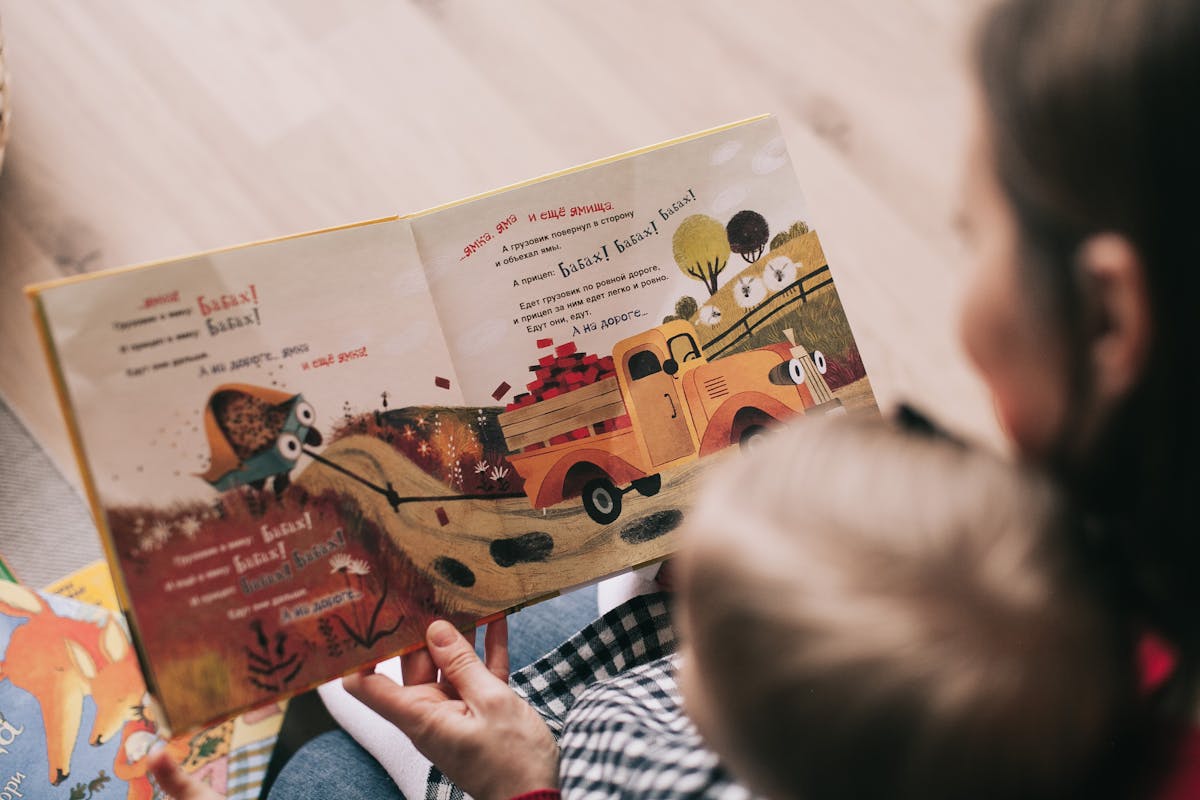
Families have always shared the care of children. Grandparents, older siblings, neighbors and paid helpers have done this work in every culture. What changed over time is how the paid role is seen, trained and protected.
Knowing this history matters for a practical reason. It explains why some families still treat a nanny as "help" and others as a professional colleague. It also explains why written agreements, fair pay and clear scope are now part of the job.
- 1800s: the nursery. In wealthier European and American homes a nursemaid or "nurse" ran the nursery. She lived in, worked long hours and had little say over her conditions.
- Late 1800s: training begins. The first formal training schools for nursery nurses opened. For the first time, caring for young children was taught as a skill with standards, not treated as something any woman simply knew.
- 1938 to 1974: left out, then included. When the United States set a federal minimum wage in 1938, domestic workers were not covered. Coverage for most domestic workers came with changes to the law in 1974.
- 1970s to 1990s: two working parents. As more mothers of young children took paid jobs, demand for in-home care grew quickly, and the word "nanny" became common in everyday American speech.
- 1993 to 1994: the "nanny tax". News stories about public figures who had not paid taxes for household workers made families aware that a nanny is usually an employee. A 1994 law simplified how families report those taxes.
- 2010 onward: rights on paper. New York passed the first state Domestic Workers' Bill of Rights in 2010. Other states and cities followed with rules on overtime, rest and paid time off.
- Today: a skilled profession. Families look for training, a clear philosophy of care, safety knowledge and strong communication. That is the standard this certification is built on.
Two interviews, one week. Marisol meets two families. The first says, "We just need someone to watch the kids." The second hands her a job description and asks about her approach to tantrums. Both families love their children. The second already thinks of the role as a profession. Marisol's task in the first interview is to show, kindly, what a professional brings. She does it by asking good questions about the children's routines, health and personalities.
Watch: the work that makes all other work possible
TED talk by Ai-jen Poo (about 16 minutes). As you watch, listen for why care work has often been undervalued, and what changes when it is treated as real, skilled work.
What families need now

No two families hire a nanny for the same reason. Some have two parents with demanding jobs. Some are single parents who need one steady, reliable adult. Some work nights, travel often or work from home. Some have a child with a disability or a health condition who does best with one-to-one care.
Under the different reasons, most families want the same five things:
Safety
They need to know their child is protected every minute you are in charge.
Consistency
The same caring adult, the same routines, the same rules, day after day.
Development
Play, talk and activities that fit the child's age and help them grow.
Communication
Honest updates, so they never have to guess how the day went.
Respect
For their home, their privacy, their culture and their right to make the decisions.
Notice that only one of the five is about the child's activities. The other four are about trust. This is why a nanny with average craft skills and excellent judgment is often valued more than a nanny with wonderful crafts and poor communication.
Through your Age Lens: what "consistency" means
For a baby, consistency is the same arms, the same voice and the same response when they cry. Babies learn that the world is safe when their signals get a predictable answer.
For a toddler, consistency is knowing what comes next. The same order of snack, nappy change, story and nap lowers the number of battles, because the routine does the telling for you.
For a preschooler, consistency is rules that do not change with your mood. If "we hold hands in the car park" is true on Monday, it is true on Friday, and it is true with Mom, Dad and you.
For a school-age child, consistency is follow-through. If you say homework comes before screens, and you hold that calmly every day, the argument fades within a couple of weeks.
Activity 1 of 6
Myth or Fact?
Read each card. Choose Myth or Fact, and the card flips to show the answer and the reason. Finish all five to pack the teddy into your Nanny Bag.
The role spectrum

"Nanny" describes a relationship more than a schedule. A professional nanny is employed by a family to care for their children in the family's home, on an ongoing basis. Inside that definition there are many arrangements. Knowing them helps you choose jobs that fit your life and helps you ask the right questions at interview.
| Arrangement | What it looks like | Ask before you accept |
|---|---|---|
| Live-out, full-time | You travel to the home each day, often 40 to 50 hours a week. | What are the guaranteed hours? How is overtime paid? |
| Live-in | You have a private room in the home. Work hours are still set and limited. | When am I off duty? Is my room private? What are the house rules? |
| Part-time or after-school | School pick-up, snack, homework, activities and dinner start. | Who covers school holidays and sick days? |
| Overnight | You care for children through the night, often for shift-working or traveling parents. | Is sleep time paid? Where do I sleep? |
| Nanny share | Two families employ you together and you care for both sets of children. | Whose home? Who pays what? What happens when one child is ill? |
| Travel | You go with the family on trips and keep the children's routines steady away from home. | What counts as working time? Who pays my costs? |
| Rotational | Two or more nannies take turns, for example two weeks on and two weeks off. | How do we hand over? Who decides when we disagree? |

None of these is better than the others. A live-in role can suit someone who is saving money or new to a city. A nanny share can pay well and gives children playmates, but it doubles the number of employers you need to keep happy. Later lessons cover work agreements and specialized roles in detail. For now, simply notice which arrangements appeal to you and why.
The live-in surprise. Tomás takes his first live-in job. In week two the parents knock on his door at 9:30 PM to ask if he can "just listen out" while they go for a drink. He likes the family and says yes. By week six it happens three nights a week. Nothing was written down, so nobody is sure what is fair. A professional prevents this at the start by agreeing, in writing, when the working day ends and how extra hours are asked for and paid.
Related roles and where each begins and ends

Families often use these titles loosely. A parent may advertise for a "babysitter" and describe a full nanny job, or ask a nanny to run the whole household. When you know the differences, you can name the job correctly, price it fairly and avoid slowly taking on a second role without agreeing to it. People in the field call that slow growth job creep.

Use the explorer below to compare seven roles. Pay attention to the line called "Where it ends". That line is where one job stops and another begins, and it is the line families most often blur.
Activity 2 of 6
Role Explorer
Tap each role to see its focus, typical duties and where it ends. Open all seven to pack the compass.
Choose a role above to begin.
Naming the job. A family asks Priya, their nanny of one year, to start booking the plumber, ordering all the groceries and managing the cleaner. Priya is happy to grow. She says, "I'd enjoy taking that on. Those are household manager tasks, so could we sit down and update my agreement and pay to match?" She has named the role, kept the relationship warm and protected her time with the children.
Supporting, never replacing, parents

Here is the most important idea in this lesson. The parents are the parents. They hold the legal responsibility, the lifelong relationship and the right to make decisions about their child. Your role is to extend their care while they are away, in the way they have chosen, and to make their bond with their child stronger.
This is harder than it sounds. You may spend more waking hours with a child than the parents do. You will have opinions, and some of them will be right. A professional shares observations and offers ideas, then follows the parents' decision, unless a child's safety is at risk. Safety is the one exception, and Module 4 covers it fully.
What supporting parents looks like
Talk the parents up
"Mommy picked this book for you." "Let's save this drawing for Daddy." Children hear that the adults in their life are a team.
Save the firsts
If a baby takes a first step with you, many nannies say, "I think she's very close!" and let the parents see it for themselves that evening. Ask each family what they prefer.
Follow their way
Use the parents' words, routines and rules, even when you would choose differently.
Offer, don't correct
"I noticed he settles faster with the lights low. Would you like me to keep doing that?" is an offer. "You're doing bedtime wrong" is a correction.
Ineffective and effective. Four-year-old Noor falls and runs past her father to her nanny, Ellie. Ineffective: Ellie scoops her up and says, "Come to me, I've got you," while Dad stands there. Effective: Ellie kneels, gives Noor a quick squeeze and says, "Ouch, that hurt. Let's show Daddy, he gives the best cuddles," and walks her over. Noor is comforted either way. Only the second response protects her bond with her father.
Watch: 5 steps for brain-building serve and return
Center on the Developing Child at Harvard University (about 6.5 minutes). These five steps work for parents and nannies alike. Notice how simple each step is.
Activity 3 of 6
Week one with the Marlowe family
You are the new nanny for Iris, age 2. Her mother, Dana, works from home. Make a choice at each step and see what follows. You can replay to try other paths.
Your bond matters: attachment and continuity of care

Some new nannies worry that a close bond with a child will harm the child's bond with their parents. The research says otherwise. Attachment is the lasting bond that lets a child use an adult as a safe base. Children can and do form these bonds with more than one caring adult. A nanny who is warm and reliable becomes a secondary attachment figure. That bond sits beside the parents' bond. It does not take its place.
A large long-term study in the United States, the NICHD Study of Early Child Care and Youth Development, followed more than 1,000 children from birth. It found that what parents do and how sensitive they are had a stronger link to children's development than whether or how much the children were in non-parental care. The quality of that other care also mattered. Put simply, good care from a nanny adds to a child's life, and the parents remain the main influence.
Serve and return
How is a bond built? Mostly through thousands of tiny back-and-forth moments. Researchers at Harvard call this serve and return. A baby looks at a spoon and babbles. That is the serve. You look too and say, "Yes, your spoon!" That is the return. These exchanges help build the brain connections a child uses for language, learning and managing feelings.
Simplified educational illustration. Real exchanges are looks, sounds, words and gestures.
Watch: serve and return shapes brain circuitry
Center on the Developing Child at Harvard University (about 2 minutes). A short explanation of what happens in the brain during these exchanges.

What happens when the return stops
In 1975, psychologist Edward Tronick and his colleagues first presented the Still Face experiment. A mother plays with her baby, then holds a blank, unresponsive face for a short time. Within moments the baby tries harder to get a response, then becomes upset. When the mother responds again, the baby recovers.
The lesson for nannies is practical. A child needs your attention as well as your presence. A caregiver who is in the room but absorbed in a phone is, for those minutes, a still face. Nobody can be responsive every second, and children cope well with short gaps when the adult reconnects. What matters is the overall pattern across the day.
Watch: why responsive care matters
InBrief: The Science of Neglect, Center on the Developing Child at Harvard University (about 6 minutes). The video describes a range, from the everyday lapses in attention that children cope with well, to serious neglect. Notice where ordinary, good-enough care sits on that range.
Continuity of care
Continuity of care means a child has the same familiar caregivers over time. Each change of caregiver asks a young child to build trust again from the start. This is one reason families value a nanny who stays. It is also why leaving a job well, with notice and a gentle goodbye, is part of professional practice.
Through your Age Lens: serve and return today
During a nappy change, your baby kicks and coos. Pause, look at their face, copy the sound and wait. Their next coo is the return of your serve. Ten seconds, and you have done real brain-building work.
Your toddler points at a dog and says "Da!" Follow the point. "A dog! A big brown dog. He's wagging his tail." You have named it, added words, and shown that their interests matter.
Your preschooler asks "why" for the fifth time. Instead of an answer, serve back: "Why do you think the moon is out in the day?" Then listen to the whole theory before you add anything.
Your nine-year-old gets in the car and says, "Lunch was weird." That is a serve, and a small one. Return it lightly: "Weird how?" Then leave a silence. Older children talk more when they are not being interviewed.
Scope of practice: what a nanny does, and doesn't

Your scope of practice is the set of things you are trained, authorized and hired to do. Nanny care is non-clinical. You care for, observe, play with, guide and protect children. You do not diagnose, treat or provide therapy, however experienced you are.
Scope protects three people at once. It protects the child from well-meant mistakes. It protects the parents' right to decide. It protects you from being blamed for a decision that was never yours to make. This certification does not grant a license or any healthcare credential, and it does not change what the law in your area allows.
| Who | Their job | Your job beside them |
|---|---|---|
| Parents | Make the decisions about health, schooling, values, discipline and daily rules. | Carry out their plan. Share what you see. Offer ideas when invited or when useful. |
| Teachers | Plan and assess formal learning. | Support homework and reading. Pass messages on only as parents have authorized. |
| Therapists (speech, occupational, behavioral) | Assess needs and design therapy. | Follow the home program you are shown. Note what you observe. Do not change the plan. |
| Nurses and doctors | Diagnose, prescribe and treat. | Follow written instructions. Give medicine only with written parent authorization. Call for help in an emergency. |
The three-light check
When you are asked to do something, or you feel the urge to do something, run this quick check.
Green: in scope, go aheadAmber: ask the parents firstRed: out of scope, refer
Green tasks are ordinary childcare inside the family's rules: meals, play, routines, outings they have approved, daily notes. Amber tasks are allowed only with the parents' say-so, and for some, such as medicine or photos, that say-so should be in writing. Red tasks belong to someone else. When something is red, you still act. You tell the parents what you observed and suggest who could help.
Observation, not diagnosis. Kwame cares for Theo, age 2. He notices Theo uses about ten words and does not yet put two together. Out of scope: "I think Theo has a speech delay." In scope: "This week I wrote down the words Theo used. I counted ten, and I haven't heard him join two words yet. You might like to mention it at his next check-up." Kwame has shared facts and pointed to the right professional. The decision stays with the parents.
Activity 4 of 6 · earns your badge
Scope Sorter
For each request, choose a light. You get a reason straight away and can change your answer. Get all ten right to earn the Scope Savvy badge.
Practitioner tool · keep this
Scope of Practice Map
Print this card or copy it into your notes. Add each family's own rules under "Ask first".
In scope: go ahead
- Feeding, changing, bathing, dressing
- Play, reading, outings on the approved list
- Following the family's routines and rules
- Positive guidance in the parents' style
- Daily log and factual observations
- First aid you are trained in, and calling emergency services
Ask the parents first
- Any medicine (written authorization)
- New foods for a baby, or foods linked to allergy
- Changing a sleep, feeding or discipline routine
- New places, new people, car journeys
- Photos, videos and anything online (written consent)
- Speaking to teachers, doctors or therapists
- Extra household duties
Out of scope: refer
- Diagnosing or labeling a child
- Choosing or adjusting medicine or medical equipment
- Therapy, counseling or treatment plans
- Legal, tax or medical advice to parents
- Physical punishment or any unsafe instruction
- Decisions that belong to the parents
The qualities of a professional

Skills can be taught in a course like this one. Qualities are shown through habits, and families notice them within days. Here are the six that matter most, with what each one looks like on an ordinary Tuesday.
| Quality | What it looks like | What it does not look like |
|---|---|---|
| Reliability | Arriving five minutes early. Giving weeks of notice for time off. | "Running 15 late!" texts twice a week. |
| Patience | Waiting while a toddler puts on their own shoes, even when it takes four minutes. | Doing everything for the child because it is faster. |
| Discretion | Keeping what you see and hear in the home private, including from friends and other nannies. | Sharing a funny story about the parents' argument at the playground. |
| Consistency | The same rules and the same calm tone on good days and bad days. | Strict when tired, easygoing when cheerful. |
| Warmth | Getting down to the child's eye level. Real interest in their world. | Supervising from the sofa. |
| Sound judgment | Stopping to think, "Is this safe? Is this mine to decide?" | Guessing, or doing what the last family did. |

Of the six, discretion is the one most likely to end a job when it fails. You will know a family's finances, health, arguments and schedule. Treat all of it as confidential. Lesson 1.4 covers privacy, cameras and social media in detail.
Through your Age Lens: patience in practice
Patience with a baby is staying calm through a long crying spell. Check the basics, hold them close, breathe slowly. If you feel your own frustration rising, put the baby down in a safe place such as the cot, step back for a moment, and call the parent if you need support.
Patience with a toddler is leaving ten extra minutes so "me do it!" can be honored. The slow, wobbly zip is the lesson for the day.
Patience with a preschooler is hearing the same joke eleven times and answering the eleventh "why" with interest. Repetition is how they practice language and humor.
Patience with a school-age child is sitting beside a hard maths problem without taking the pencil. Ask, "What have you tried?" and wait.
Activity 5 of 6
What would you say?
Three real conversations. Choose the reply a professional would give. Every option shows feedback, so try more than one.
The market, the challenges and the pathways

Nanny work is found through placement agencies, online platforms, word of mouth and direct advertising. Pay varies widely with location, experience, the number and ages of children, and any specialty you bring. Because rates change from city to city and year to year, research current local figures before you interview. Do not rely on a single national number.
In most cases in the United States a nanny is a household employee. The family sets the hours and directs the work, so the family is the employer. This affects taxes, overtime and your protections. The rules differ by country, state and city, so check what applies where you work. Lesson 1.3 goes through this step by step.
Honest challenges
Isolation
You may be the only adult you see all day. Plan regular contact with other caregivers and friends.
Blurred lines
Working inside a home makes it easy for duties and hours to spread. A written agreement is your best protection.
Emotional load
You will love children you will one day say goodbye to. That is a real cost of doing the job well.
Uneven conditions
Some families are excellent employers and some are not. Learning to screen families is a career skill.
Where the career can go
A nanny career does not have to stay flat. With experience and further training you can specialize in newborn care, sleep, early education, children with additional needs, travel, bilingual care or household management. Some nannies move into placement, mentoring or parent education. Each specialty widens the jobs open to you. No course can promise a particular job or salary, but skills you can demonstrate do give you more choices.
Five years, three steps. Aaliyah starts as an after-school nanny for two brothers. In year two she takes newborn training and helps the same family through the arrival of a baby sister. In year four the family moves abroad, and she accepts a full-time role with twins because her newborn experience stands out. She did not change careers. She built one, one skill at a time.
Your philosophy of care

A philosophy of care is a short statement of what you believe about children and how those beliefs shape your day. It is usually three to five sentences. Families ask for it in interviews, often as "Tell us about your approach."
A good philosophy does three jobs. It helps families see whether you are a fit. It guides you when you face a decision with no rule to follow. It keeps you steady when a child, or a parent, is having a hard day.
Four questions to answer
What do children need most?
Safety? Connection? Freedom to explore? Your first answer says a lot.
How do children learn?
Through play, routine, conversation, trying and failing?
How do you guide behavior?
What do you do when a child says no, hits or melts down?
How do you work with parents?
How do you share news, raise worries and handle disagreement?
There is no single correct philosophy. Thoughtful professionals differ on how much structure, how much child-led play and how much independence suit a given child. What matters is that yours is honest, respects the family's right to decide, and stays inside your scope. Expect it to change as you learn.
Watch: building babies' brains through play
UNICEF Mini Parenting Master Class with Dr. Jack Shonkoff of Harvard University. Listen for ideas you might want in your own philosophy.
Through your Age Lens: one belief, different days
"I believe children learn through play." With a baby this means floor time, faces, songs and safe things to mouth and shake, with you close by and talking.
"I believe children learn through play." With a toddler this means water, sand, blocks and mess, and letting them repeat the same game many times.
"I believe children learn through play." With a preschooler this means pretend games, simple board games and questions like "What should we build next?"
"I believe children learn through play." With a school-age child this means sport, making things, card games and protecting some free time from an over-full timetable.
Activity 6 of 6
Philosophy of Care Builder
Pick three values, choose one sentence from each list, then build your draft. Edit it until it sounds like you. Your draft stays on this device and is not sent anywhere.
Key terms
These terms also live in the Key terms tab of your Nanny Station.
Knowledge check
Three questions. You get feedback on every answer and can try again as often as you like.
References and further reading
- NICHD Early Child Care Research Network. The NICHD Study of Early Child Care and Youth Development: findings for children up to age 4½ years. U.S. Department of Health and Human Services, National Institutes of Health.
- NICHD Early Child Care Research Network (1997). The effects of infant child care on infant–mother attachment security. Child Development, 68(5).
- Center on the Developing Child at Harvard University. Serve and return; 5 steps for brain-building serve and return.
- Tronick, E., Als, H., Adamson, L., Wise, S., & Brazelton, T. B. (1978). The infant's response to entrapment between contradictory messages in face-to-face interaction. Journal of the American Academy of Child Psychiatry, 17(1).
- Bowlby, J. (1969). Attachment and Loss, Vol. 1: Attachment. Basic Books.
- U.S. Department of Labor, Wage and Hour Division. Fact sheets on domestic service employment under the Fair Labor Standards Act.
- Internal Revenue Service. Publication 926, Household Employer's Tax Guide.
This lesson is general professional education. It is not legal, tax or medical advice. Employment, reporting and medication rules differ by location.
Listen to this lesson
Ready for the Next Lesson?
You've reached the end of this lesson! To save your progress, click Complete and Continue in your learning portal below.
This will officially mark the lesson as completed in your learning system and take you to the next lesson.
-
Read & Learn: Go through each page at your own pace.
Listen Along: Use the read-aloud feature if you prefer listening.
Try Activities: Complete the interactive exercises to practice what you've learned.
Explore Resources: Watch videos and download helpful materials.
Finish & Continue: Click Complete & Continue when you're ready for the next lesson.